


Cubs Video
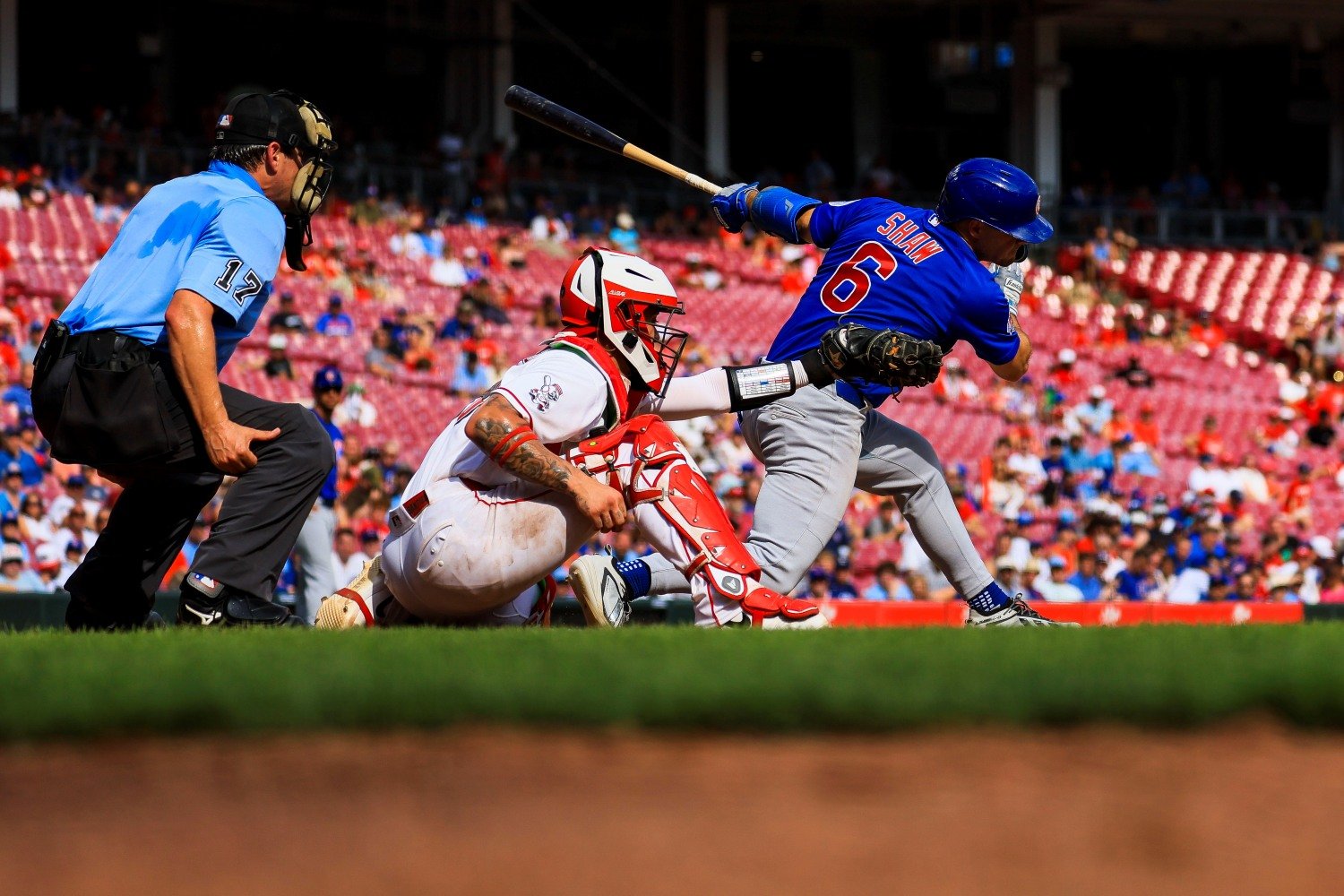
Most of the Cubs' offseason spending this winter will have to go toward remaking their pitching staff. They need to sign multiple starting pitchers and fix their mess of a bullpen. They can't afford, in other words, to splurge on their outfield, even as they reckon with the likely departures of Seiya Suzuki and Ian Happ. They'll have to spend enough to address one of the corner outfield vacancies (even if it be by re-signing one of those incumbents), but they can't go outside the organization to fill both. One of Pedro Ramírez and Matt Shaw almost has to become a regular corner outfielder next year, or else they'll need to platoon.
That's not an exciting proposition, though. Neither player has yet showed the degree of overall offensive competence you want from a corner outfielder. Each has at least some chance to be a plus defender out there, but to realize it, the team would have to sacrifice the value either can provide via versatility. The upside of the duo is real, but tapping into it will require some careful evaluation. Let's weigh the options by examining the two.
A Mess of a Player: Matt Shaw's Approach and Swing Problems
In 202 plate appearances in 2026, Shaw hit .237/.327/.410. He walked a little over 10% of the time and his strikeout rate was a healthy 17%, but overall, that production was the result of good luck. Shaw mostly hit the ball to the big part of the field. He didn't hit it hard very often. He hit a couple of wall-scraping home runs and a couple of doubles that fell in when they shouldn't have. He got some infield hits that resulted primarily from dumb luck. The process underlying his results was poor.
To wit, in 2026, only one hitter in the league took a lower percentage of their swings on balls in the middle of the zone, vertically, than did Shaw: Javier Báez. It's jarring to lay the name of any player walking as much as Shaw did side-by-side with Báez's, but that's where he fell. Shaw got lucky to walk that much, of course. He swung less often at pitches inside the zone than an average batter does (60%, against a league average of 67%) and more often at ones outside the zone than an average batter does (32.5%, against an average just under 29%). But beyond swinging at the wrong pitches, he erred by not knowing what pitch he was even looking for.
Shaw has a greater capacity for manipulating his bat path than a typical hitter. His average tilt on low pitches was about 16° steeper than on high ones, a disparity greater than all but four other hitters: Luis Arraez, Gavin Sheets, Jake Mangum and Marcell Ozuna. Just on the other side of Shaw on that leaderboard are Ildemaro Vargas, Ernie Clement, Ryan O'Hearn and Andrew Benintendi. As those names suggest, that maneuverability of the bat is a sign of a good hit tool. The raw tool goes for naught, though, if not accompanied by good swing decisions. If the Cubs are to trust Shaw with full-time duty, they'll need to see him make better ones.
Having that bendable swing means one can better cover the zone from high to low, so Shaw doesn't need to approach his at-bats like (say) Alex Bregman. The Cubs' veteran third baseman (and Shaw's usurper at the hot corner) took 71% of his swings this year at pitches in that middle vertical segment, better than all but three other hitters in the league. Bregman has average flexibility in his swing tilt and (like Shaw) maintains his bat speed better than an average hitter when he has to change his tilt for a low or high pitch, but he stays locked in on that most productive band. Shaw can be more flexible, but he must be more selective than he was this year, or he'll never make the most of his talent.
Too Flat? The Outlier Swing of Pedro Ramírez
There's nothing (or at least, much less) wrong with Ramírez's swing decisions. He chases about as often as Shaw, but is much more aggressive within the zone. He put up almost identical numbers to Shaw's this season, despite being a year younger; not having played in the majors the previous season; and getting very sporadic playing time. All of that speaks in his favor. So does the fact that he stayed healthy this year, while Shaw was unable to do so.
On the other hand, there are reasons to worry about Ramírez's swing, especially from the left side—the swing he'll need to use at least 70% of the time to be a regular in the bigs. Only two left-handed batters (Ildemaro Vargas, again, and backup Padres infielder Sung-Mun Song) had flatter swings than Ramírez this season. Not all flat swings are bad, but swings with more tilt give a player a wider range of pitches and timing signatures on which they can succeed.
Ramírez catches the ball much farther in front of his body than do Vargas or Song, too. That part is good. Flat swings work best when a batter gets the ball out front, centering it up. Over time, though, swings that flat tend to produce too many balls that aren't centered. Ramírez hit too many high, harmless fly balls and too many grounders, especially from the left side.

There's more to like about Ramírez's development in 2026 than about Shaw's, offensively. His shortcomings are at least as pronounced as Shaw's right now, though. Barring a swing change, Ramírez will struggle to produce at the level the Cubs should want from a left or right fielder for the foreseeable future.
About the Leather
Say Shaw cleans up his approach a bit, and say Ramírez's swing can be adjusted slightly. In that case, they would form a strong timeshare at the plate, with Shaw taking slightly more than the usual short side of a platoon. The question of their overall value, then, would come down to the defense. So, in turn, does the question of which one deserves more time, if a platoon isn't on the cards.
Shaw is faster. He adjusted tolerably well to right field, but between his injuries and the improvement of Suzuki as a defender, he ended up playing very little there. Ramírez, however, played almost exclusively on the infield in the majors, and even his minor-league career has been spent on the dirt. He runs well, for a stocky infielder, but he has no experience to speak of in either left or right field.
Neither player is likely to be more than average in the outfield next year. In the long run, that could change, but the team needs to see at least one of them thrive with the bat in order to determine whether that wait is worth it.
Kevin Alcántara is still around, for now, but he'll be out of options next spring, and he's been given no runway from which to gather developmental momentum and lift off. It's not at all clear that the Cubs were wrong to deny him that playing time. In 935 plate appearances over parts of three seasons at Triple-A Iowa, he's been fairly static. He walks about 12% of the time and he's slugged .482, but that league inflates power numbers, so the latter is not impressive. The former comes at the cost of a strikeout rate pushing 30%. He's toolsy, but Alcántara might never make enough contact (or lift the ball enough) to play productively in the bigs. He's much more likely to play above-average defense in a corner than either Shaw or Ramírez, but the bat can't be trusted.
To build a good enough lineup in 2027, the Cubs have to spend some money for an outfield bat. They also have to achieve an overdue homegrown improvement, though. If they can't, their offense and defense will backslide, and whatever pitching upgrades they manage will have to work overtime to offset the degradation.





Recommended Comments
There are no comments to display.
Create an account or sign in to comment
You need to be a member in order to leave a comment
Create an account
Sign up for a new account in our community. It's easy!
Register a new accountSign in
Already have an account? Sign in here.
Sign In Now