


Cubs Video
Can you believe the 2026 All-Star break is upon us already? Well, it is, and the Chicago Cubs are back to their winning ways. Despite the June gloom, the bats have come back alive and have been able to cover for their suspect pitching staff. The team as a whole should benefit from a much-needed break, while they prepare for what should be a gauntlet of a second half. For the second time since 2021, the Cubs have only one All-Star, in Pete Crow-Armstrong. If Ben Brown hadn't suffered a neck injury a few weeks ago, they might have two, but Cubs fans are certainly more dialed-in for the second half than for the Midsummer Classic.
This marks Crow-Armstrong’s second All-Star nod, as he was selected last season along with Kyle Tucker and Matthew Boyd. While this is surely the second selection of many more to come for the young star center fielder, what we're going to celebrate with this list is the All-Stars that we don’t always remember. These are the players who made one All-Star Game in their careers and were lucky enough to do it wearing Cubbie blue. Since the Cubs are in their 151st season as a franchise, I did have to make the cutoff somewhere. If you're a historian and would like to expand on this, please drop a comment, but for this list, I'm going through the free agency era, which started in 1977.
1977: Jerry Morales
Morales spent seven of his 15 big-league seasons with the Cubs across two different stints, from 1974-1977 and from 1981-1983. He amassed a total of -2.0 bWAR for his career, totaling 95 home runs and an OPS of .695. Although his lengthy career was not colored with accolades, he did join multi-time All-Stars Rick Reuschel, Bruce Sutter, and Manny Trillo at Yankee Stadium. He was hit by a pitch in his only plate appearance, becoming one of only 28 players to be plunked at the All-Star Game.
1981: Bill Buckner
It's hard to believe the 22-year major-league veteran was named to only one All-Star Game, and a shamw that he did it during the year of baseball's midseason strike, which limited him to 106 total games and 1.2 bWAR. He was coming off a season where his .324 batting average led the NL, so he was clearly a popular name. He did lead the NL in doubles that season, with 35; maybe he'd have gotten to 50 in a full campaign. Although he was a reserve, with Pete Rose starting at first base, Buckner was the Cubs’ only representative for 1981.
1988: Vance Law
The 1988 Cubs were a peculiar case. The team finished 77-85, fourth place in the division, but had six representatives during that year’s All-Star Game at Riverfront Stadium. Andre Dawson and Ryne Sandberg were named starters, with Law, Rafael Palmiero and Shawon Dunston on the bench. This was also the first All-Star appearance for Greg Maddux. As for Law, 1988 marked his return to Chicago, but on the North Side this time. After a three-year stint north of the border in Montreal, Law slashed .293/.358/.412 while driving in 78 runs. Along with the RBIs, his .770 OPS and .293 batting average marked the highest of his career, which he did at 31 years old.
1989: Mitch Williams
Like Buckner, Williams is remembered mostly for being on the wrong side of baseball history, as he served up Joe Carter’s walk-off home run to lose the 1993 World Series. That overshadows a career where he racked up 30+ saves three different times—the first being 1989 with the Cubs, when he made his only All-Star team. Drawing comparisons to Rick “Wild Thing” Vaughn, Williams’s mid- to high-90s fastball helped the Cubs win the NL East crown that season, as he notched 36 saves with a 2.76 ERA.
1996: Steve Trachsel
Trachsel was the Cubs’ only representative in 1996, which is a surprise, as Sammy Sosa hit another 40 bombs and drove in 100 and won NL Player of the Month in July. Instead of Sosa, the nod went to Trachsel, who had one of his best seasons, posting 3.7 bWAR. He pitched three complete games, including two shutouts, in over 200 innings. Though this was his only All-Star appearance, Trachsel started 30+ games in eight of nine seasons from 1995 to 2004, making him an underrated symbol of durability on the mound.
2000: Joe Girardi
Girardi was a part-time player for most of his career, eclipsing 400 plate appearances only five times in his 15 campaigns. His 1.6-bWAR season for the Cubs at age 35 is a clear outlier for his career, where he hit .278 in 106 games. He was named to the All-Star team as a replacement for Mike Piazza but was deserving of the honor, as he was one of the Cubs’ better hitters on a team that lost 97 games.
2001: Jon Lieber
Another workhorse of the early 2000s, Lieber led the majors in starts (35) and innings pitched (251) the season before, but was named an All-Star for the first time in 2001 after a first half wherein he pitched a Maddux (long before we called it that) and recorded six straight wins from mid-June through his first start after the break. He did win 20 games that season, and accumulated 3.9 bWAR, which were both career highs. Lieber gave up home runs to both Derek Jeter and Magglio Ordonez in his one inning of action during the game, but the NL was already losing, and the loss went to another one-time All-Star, Chan Ho Park.
2003: Mark Prior
The second overall pick in the 2001 draft and co-ace of the Cubs (next to Kerry Wood) made his only All-Star appearance in 2003—a season wherein he led the N.L. in bWAR with 7.4 and posted the lowest FIP in the league, at 2.47. His first-half highlight was striking out 16 Brewers in a late June start. Sadly, the story of Prior is known all too well among Cubs fans. Just after the break, he collided with Marcus Giles while running the bases, injuring his shoulder. He endured heavy usage by manager Dusty Baker, then dealt with more arm trouble in 2004 and a line drive that broke his elbow in 2005. This would be the only time he was healthy enough to earn an honor very much in line with his talent. Prior did not appear in the game, but Wood did, striking out two. Prior remains one of the prime examples of “what could have been”; he didn't pitch in the majors again after 2006.
2008: Geovany Soto, Kosuke Fukudome, Carlos Marmol
The 2008 Cubs are tied with the 2023 Braves for the most All-Stars from one team in a single season, with eight. Soto, Fukudome, and Marmol joined multi-time All-Stars Ryan Dempster, Carlos Zambrano, Aramis Ramírez, Wood, and Alfonso Soriano as representatives for the eventual NL Central champs.
Fukudome, the Cubs’ first Japanese-born player, got the start in right field after a scorching April wherein he hit .327 and an only slightly less impressive May. He began to struggle as the season changed from spring to summer, but he was a fan favorite and one of the brightest rookies in the league. He finished the season with a .738 OPS and 0.6 bWAR, which was his lowest bWAR of his three and a half seasons on the North Side. He went 0-2 with a strikeout before being replaced by Pirates outfielder Nate McLouth.
Geovany Soto, the eventual NL Rookie of the Year, got the start behind the plate, also going 0-2 with a strikeout. Although he was rookie-eligible, this was actually Soto’s fourth season seeing big-league action. The rookie got the start over Russell Martin and Brian McCann, who have 11 All-Star selections between them. To this day, Soto is the only rookie catcher to start for the NL team at the Midsummer Classic. His 23 homers in 2008 are tied for sixth-most among rookie catchers all-time, and he's one of only 14 catchers to hit over 20 as a rookie.
Carlos Marmol entered 2008 competing with Wood for the closer role, with manager Lou Piniella choosing Wood, who was named as an All-Star himself. Due to a blister, Wood had to be replaced, opening the door for Marmol to claim a spot on the roster. Marmol threw a scoreless 13th inning, striking out two, back when the All-Star game had World Series implications. Although he had two 30 plus save seasons with the Cubs, he was only named an all-star in 2008, where he had a 2.68 ERA in 87 1/3 innings.
2010: Marlon Byrd
The 15-year veteran, who suited up for 10 different squads, was only named an All-Star once and was the Cubs' only representative for the 2010 season. The then-32-year-old had the second-highest bWAR of his career with 3.7, although his .775 OPS and 12 home runs were not near his career peaks. Byrd entered the game as a pinch-hitter and drew a walk from crosstown rival Matt Thornton, and ended up scoring the final run of the game on a Brian McCann double. He later threw out David Ortiz, advancing to second on a single. Byrd was a key piece in helping the NL stop the AL’s 13-year winning streak.
2012: Bryan LaHair
LaHair is one of the more random All-Stars we have seen in the game. His MLB career consisted of only three seasons, wherein he accumulated 599 plate appearances. He was up-and-down between the minors and big-league squad for the Mariners in 2008, before popping up again for 20 games with the Cubs in 2011. With top prospect Anthony Rizzo not ready for the start of the 2012 season, LaHair got a crack as the starter. He was named an All-Star after hitting .284 with 13 homers through the first three months of the season. That was the highlight of his career by far, as he hit only one more home run after the break and was released after the season. He signed with the Fukuoka SoftBank Hawks of NPB and played one season with them, before two unsuccessful attempts at an MLB comeback with Cleveland and Boston.
2013: Travis Wood
Before his heroics in the batter's box in Game 2 of the 2016 NLDS, Wood was one of the few bright spots during a very dark era for the Cubs. The former top prospect of the Reds came to Chicago prior to the 2012 season in the Sean Marshall trade and was a mixed bag of results that year. His second season with Chicago was a much different story, as he became the first Cub since Mordecai Brown to start a season with nine straight quality starts. He accumulated 4.5 of his 5.1 career bWAR during his lone All-Star season in 2013, when he threw 200 innings with an ERA of 3.11. He did not end up pitching in the game, but was the only Cubs representative for a team who nearly lost 100 games.
2016: Dexter Fowler, Addison Russell
The Cubs nearly tied their own record of eight All-Stars in 2016, but fell one short, although they occupied the entire starting infield. Russell and Fowler were the two one-time All-Stars, joining Rizzo, Ben Zobrist, Kris Bryant, Jon Lester and Jake Arrieta.
Fan favorite and World Series hero Dexter Fowler had the best season of his career in 2016, serving as the catalyst for one of the most potent offenses in baseball. His .840 OPS was the third-highest mark of his 14-year career, and his 4.0 bWAR nearly doubled his next-highest total. Although he did not make an appearance for his lone All-Star selection, his legacy for the Cubs remains historic, as he was the first Black player to start a World Series game for the team.
Addison Russell hit 21 homers and drove in 95 in his lone All-Star season, which came in his sophomore season at age 22. He certainly benefitted from the popularity of the 2016 Cubs, as Corey Seager probably should have started, from a sheer numbers standpoint. He was hitting .242 with 11 home runs at the time of his selection. Russell went 0-2 in the game before being replaced by Seager. He shares the same honor as Fowler as being the first Black Cub to start a World Series game, but if one of these guys has the character that should accompany that honor, it's Fowler.
2022: Ian Happ
Were the 2022 Cubs one of the saddest Cubs teams of all-time? They finished third in the division, but gone were the heroes of 2016, and in were the likes of Rafael Ortega, Patrick Wisdom and Alfonso Rivas. At least we had Ian Happ, Willson Contreras, and Nico Hoerner to remind us of the good ol’ days. (Not to mention the signing of Seiya Suzuki to serve as a precursor to today’s team.) But wait, Happ has only been an All-Star once? It sounds weird because of what he has meant to this franchise over the last decade, but yes, 2022 has been his only selection. His .271 average remains his career high, along with his 42 doubles and 4.3 bWAR, His Gold Glove in 2022 was his first in a string of four straight awards. His impending free agency is going to get interesting, especially with Hoerner, Crow-Armstrong, Dansby Swanson, and Alex Bregman locked up, but regardless of where he ends up, he has the ability to make another All-Star team.
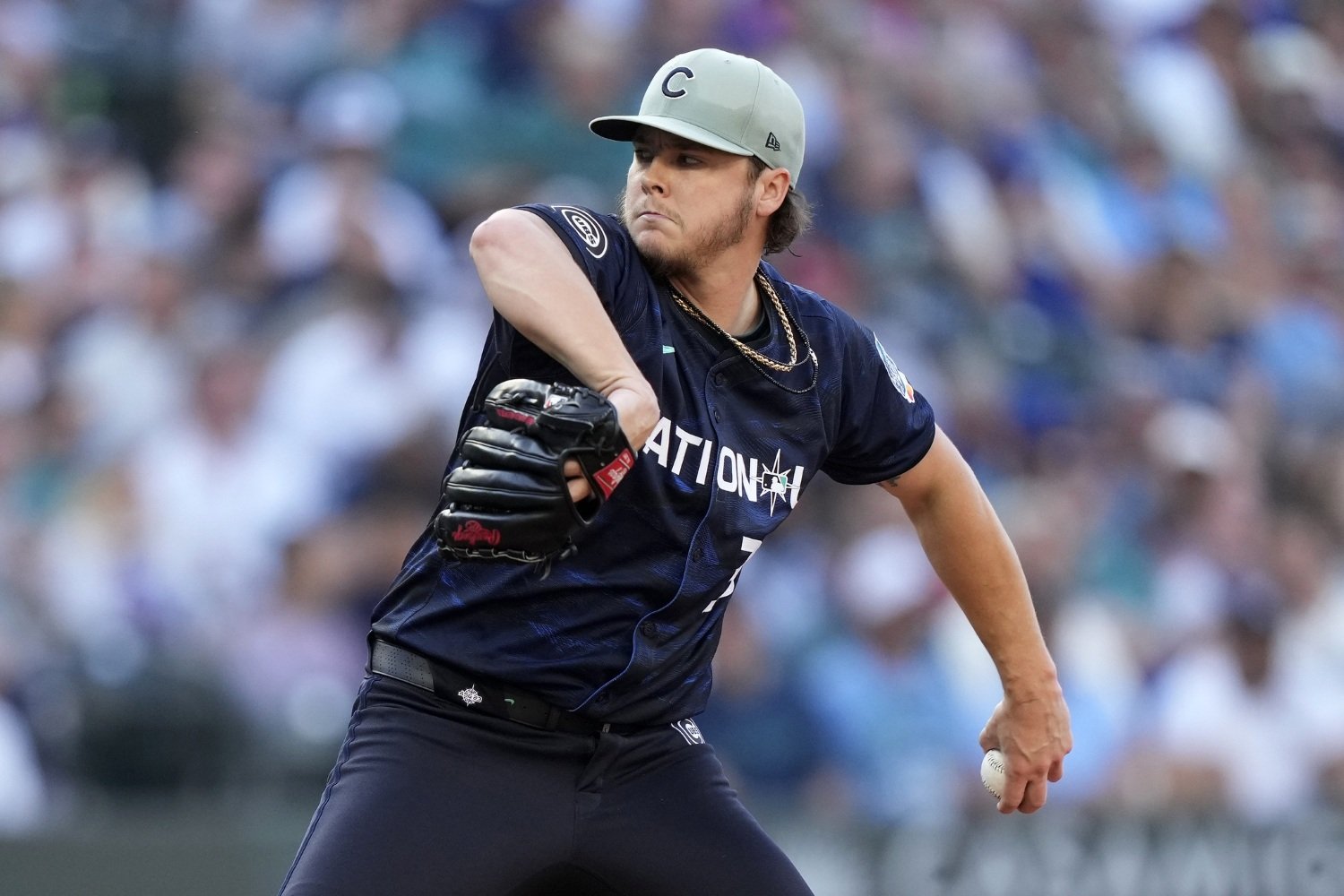
2023: Justin Steele
If he was healthy, there's a good chance Steele would not be on this list, as he has shown he can be one of the best southpaws in the game when he actually pitches. In the first half of 2023, Steele was 9-2 with a 2.56 ERA, making 11 quality starts. He finished fifth in the NL Cy Young race and could conceivably have finished higher, if the Cubs did not fall short in a late-season playoff push. Next season is his final year of arbitration, so his future with the Cubs is quite unclear, but at 30 years old, he has time on his side to become an All-Star again, even if it isn’t with the Cubs.
2024: Shota Imanaga
In an offseason wherein Shohei Ohtani and Yoshinobu Yamamoto stole all the headlines, Shota Imanaga’s deal with the Cubs flew under the radar. He started turning heads as soon as the season began, throwing six shutout innings against the Rockies in the 2024 home opener, as well as leading the NL with a 0.84 ERA through his first nine starts. He pitched one relief inning in the All-Star Game, where he did not allow a hit while striking out Adley Rutschman. As well as being named an All-Star as a rookie, he finished fourth in Rookie of the Year voting and fifth in the Cy Young Award race. Cubs fans know how dominant he can be when he is on, so another All-Star season is not inconceivable, but the impending free agent might not be in the team’s plans moving forward.
2025: Matthew Boyd
When the Cubs signed Boyd to a two-year contract prior to last season, it surprised many. The lefty had not thrown more than 79 innings since 2019 and looked like more of a lottery ticket than anything. Well, we know how that turned out. Boyd had the best season of his career at 34 years old last season, serving as the team’s ace after Steele went on the shelf. He made 19 starts in the first half, going 10-3 with a 2.34 ERA, which trailed only Paul Skenes among NL starters who eclipsed 100 innings. His 2026 has been up and down, as he has had some rough outings mixed in with time on the IL. The ever-thinning Cubs pitching staff needs to rely on Boyd for the rest of this season, but his 2025 All-Star season is a pleasant outlier.
Are you optimistic about the Cubs right now?

Are you interested in Cubs history? Then check out the Chicago Cubs Players Project, a community-driven project to discover and collect great information on every player to wear a Cubs uniform!
View The Players Project



Recommended Comments
There are no comments to display.
Create an account or sign in to comment
You need to be a member in order to leave a comment
Create an account
Sign up for a new account in our community. It's easy!
Register a new accountSign in
Already have an account? Sign in here.
Sign In Now