


North Side Baseball
-
Posts
216 -
Joined
-
Last visited
Content Type
Profiles
Chicago Cubs Videos
Chicago Cubs Trade & Free Agent Rumors
2026 Chicago Cubs Top Prospect Rankings
Chicago Cubs News, Rumors & Analysis
2023 Chicago Cubs Draft Picks & Signing Bonuses
Chicago Cubs Fan Guides & Resources
2024 Chicago Cubs Draft Picks & Signing Bonuses
2025 Chicago Cubs Draft Picks & Signing Bonuses
2026 Chicago Cubs Draft Picks & Signing Bonuses
Blogs
Events
Forums
Store
Gallery
Everything posted by North Side Baseball
-
 To begin taking a look at what the Cubs could get in return for trading one of their pitchers this summer, I thought it would be good to look at the deadline trades over the past two years while the current Collective Bargaining Agreement has been in place. I grabbed this list from the archives at the ever-useful Baseball America website. 2013 Deadline Trades: Trade 1 (July 31): Houston Sends: Bud Norris International Bonus Slot 4 Baltimore Sends: OF L.J. Hoes LHP Josh Hader 2014 Supp First Round pick Norris still had two and a half years of control when he was traded by Houston. In spite of a decent ability to strike people out, Norris' value has always been limited by his inability to keep the baseball inside the park once it has been hit. The return for him was actually still pretty solid, though. Hoes is a light hitting 5th OF, but is alright in that role. Hader, though, is a very solid prospect striking out 29% of the batters he's faced in 2014. The supplemental first round pick brought back Derek Fisher in this year's draft - a promising college bat. This trade should represent an absolute floor for a Samardzija trade. Norris had an extra year of control but was not regarded as anything close to the same quality of pitcher. Trade 2 (July 31): Arizona sends: Ian Kennedy San Diego sends: LHP Joe Thatcher RHP Matt Stites 2014 Supp Second Round pick Kennedy really struggled in 2013 and the relievers Arizona received in return were quality guys. It is tough to apply this trade to either Cub pitcher on the market due to Kennedy's 5.23 ERA and flagging reputation at the time of the deal. Trade 3 (July 30): Chicago WS send: Jake Peavy Chicago WS acquire: OF Avisail Garcia RHP Francellis Montas RHP JB Wendelken SS Cleuluis Rondon Boston Sends: Jose Iglesias RHP Francellis Montas RHP JB Wendelken SS Cleuluis Rondon Boston acquires: Jake Peavy Brayan Villarreal Detroit sends: Avisail Garcia Brayan Villarreal Detroit acquires: Jose Iglesias This three team deal was headlined by Jake Peavy, Jose Iglesias and Avisail Garcia. This is another trade that is difficult to apply to the current situation, though it may give some indication of Hammel's value. Peavy had been hurt for years (as has Hammel) and was clearly no longer the same pitcher in 2013 as he had been in the past (unlike Hammel). Peavy was also under control for an extra year -- but at a very expensive price that surely limited his market significantly (unlike Hammel). This deal was a pretty good one for the White Sox. They acquired a young OF with a fair bit of upside that was extremely likely to produce at a high floor in the majors. Of the other prospects, Montas has a very stong arm but very inconsistent command. Trade 4 (July 22): Cubs send: Matt Garza Texas sends: Mike Olt Justin Grimm CJ Edwards Neil Ramirez To me, this deal is the one with the most similarities to the position the Cubs are in with Hammel. A high upside pitcher with inconsistent results in the majors, at the end of his deal, who has dealt with injuries the past few years, and has been one of the best pitchers in baseball to start the season of the trade. Garza had a superior reputation around baseball, but statistically oriented clubs may prefer Hammel's track record and performance so far. The return on this deal has yet to be written - it still has a lot of promise but ultimately may end up being three relievers. On the other hand, if Edwards can stay healthy in the rotation and Ramirez is converted back to a starter it could pay huge dividends for the Cubs. Trade 5 (July 6) Miami sends: Ricky Nolasco International bonus slot 4 Dodgers send: RHP Angel Sanchez RHP Josh Wall RHP Steve Ames This was a pure salary dump by the Marlins. The return they got was two relievers and a 23 year old in A-ball. Only Ames is likely to ever play for the Marlins. The overall return was not an impressive one for the Marlins. Trade 6 (July 2) Cubs send: Scott Feldman Steve Clevenger Orioles send: Jake Arrieta Pedro Strop International bonus slots 3 and 4 To date, this trade is working out quite nicely for the Cubs. This deal should also set a floor for what could be expected in return for Hammel. Feldman was in a similar position, but was not regarded as well as Hammel, nor was he pitching as well at the time of the deal. I'll take a look at the 2012 deals in Part 2 of the article. View full article
-
To begin, I must start with a huge caveat - this is all my reasoning of the strategy based on observation of what transpired. I believe it is mostly correct, but I do not have any sources within the organization that told me this was the way things happened. It just makes sense to me. That said, let's begin. The Cubs came into the 2014 June Amateur draft with the fourth overall pick. Early in the spring, it looked like that was going to be an enviable position as there seemed to be four elite pitching talents projected to go at the top of the draft. However, that idea “popped” along with Jeff Hoffman’s elbow ligament. At the end of the spring the Cubs were faced with a field that had three elite pitching prospects and a group of about fifteen players in the next tier that could be ranked in just about any order. This caused the Cubs to require a more strategic approach than seemed would be necessary earlier in the spring. To tell the story correctly, though, requires a review of how baseball has changed the draft in recent years. If you are a fellow fanatic and are familiar with the changes, feel free to skip the next couple paragraphs. Prior to the changes to the draft in 2012, MLB teams could spend any amount they wanted in the draft. There were recommended “slots”, or dollar values, associated with each position in the draft. But teams were free to pay any amount they wanted for any draft pick. This led to a number of advisors (In one of the most ridiculous distinctions in sports, amateur players are not allowed to sign an agent, but they can have advisors that receive a commission) attempting to manipulate which teams would sign their players by floating varying bonus requirements to different teams. It also led to teams like Theo’s Red Sox letting players and their advisors know that if they could avoid being drafted until later rounds that the team was willing to give seven figure bonuses in rounds where the “slot” figure was much lower. This allowed them to draft high-talent amateurs later in the draft than where they should. The collective bargaining agreement between MLB and the players union prior to the 2012 draft dramatically curbed the ability of teams and players/agents to game the system (or abuse it, depending on your point of view). A spending cap was implemented that is based on the summation of the “slot” figures associated with the draft picks for each team. If the team spends more than 5% over this amount they lose their first round draft pick in the following year. The penalties get even stiffer for further overages. Also, if a team does not sign a pick, they lose that slot amount from their bonus pool. For the most part these changes have had their desired effect. It is much more difficult to pay players above slot later in the draft because most players drafted early require the entire bonus to get signed. There have still been some exceptions to this and teams have found certain ways to maximize their ability to pay later draft picks large bonus amounts above the MLB recommended value. What the Cubs did in the draft this year was to get very good players in the first two rounds while optimizing the flexibility they would have for picking and signing highly ranked players that were considered difficult to sign going in to the draft. So how did they do it? Once the team found itself likely to have the top three talents off the board, it had to evaluate the next group of players in the draft. Industry consensus was that there were 10-15 players in this tier that were essentially interchangeable. Some had higher upside and lower floors, some were better bets but were limited in other ways, some had higher injury risks associated with them. But in the end, they all graded out about equally in the minds of most observers. In spite of the plethora of options in the second tier of the draft, a sort of expectation developed about which players from this tier would be drafted in what order. This creates an anticipation in the minds of prospects and their advisors about how much money it will take to get them to sign. If a player expects to fall no later than the 5th or 6th pick, he will not agree in advance of the draft to sign for the money a 10th pick would normally receive. So each of the options out there not only had to be graded on their abilities as a player, but also on how much money it would take to get them to sign with the club. For the Cubs, this became a perfect chance to get a player they really liked and also save money to allocate to later picks in the draft. It started with a player in Schwarber who may struggle to find a position defensively. That created the expectation that he would end up drafted in the middle of the first round even though he was the best hitter in the college ranks this year. But the Cubs prized the rare left-handed power and mature approach at the plate that he provides. This gave the team an inefficiency it could exploit. By getting Schwarber to agree to a deal nearly $1.5M below the recommended slot value at #4 in the draft, they created a pool of funds to spend on other players. The key here is that they must have known before the draft what it would take to get him signed. This is what led to the rest of the approach to the draft. The Cubs proceeded to accumulate more savings with their next two picks in the draft. By picking a college senior (albeit the #1 senior in the draft), the team has significant leverage to pay Stinnett well under the value associated with his spot in the draft, as well. His only other option would be to play independent baseball for a year and then reenter the draft next June. This move has yet to work out for any player attempting it. The Cubs also saved a bit by taking a player they liked in the third round that was willing to sign for $100K less than the recommended value of their 3rd round selection. With this war chest built up in advance of day two in the draft (and at the very beginning of it), they were able to select a string of very highly rated but difficult to sign players in the remaining rounds of the draft. They targeted very high upside pitching throughout the second day (rounds 3-10) and have said that they expect to get all those players signed. In addition, they were able to pick many more of players that were ranked among the top 200 prospects in the draft (players that should have been picked in the first five rounds or so) on the third day of the draft. Some of these may simply be fall back options in case they cannot sign the players from day two. But I believe the team built up enough savings from their approach to day one that they will be able to sign several of those players, as well. All in all, the Cubs did a fantastic job of maximizing the value of their position in the draft given the circumstances of how things played out. They were able to get the player they wanted and position themselves to get the largest crop of good prospects possible. View full article
-
CHICAGO – The Chicago Cubs today announced they have signed catcher/outfielder Kyle Schwarber, the club’s first round pick (fourth overall) of the 2014 Draft. Terms of the deal were not disclosed. Schwarber will join the club’s affiliate in Boise, which plays its short Single-A Northwest League season opener at home on Friday. Schwarber, 21, was selected out of Indiana University following his junior season. He batted .341 (238-for-697) with 40 home runs and 149 RBI in 180 games in his three seasons with Indiana, adding 182 runs, 41 doubles, 12 triples and 23 stolen bases. He walked 116 times compared to 91 strikeouts, leading to a .437 on-base percentage. He recorded a .984 career fielding percentage, primarily at catcher while also playing some outfield, and threw out 51 of 154 (33 percent) of attempted base stealers. The six-foot, 235-pound college junior from Middletown, Ohio, hit .358 (83-for-232) with 14 home runs (tied for seventh-most in the nation) and 48 RBI for the Hoosiers in 2014, adding career-highs with 66 runs, 16 doubles, six triples, 44 walks (compared to 30 strikeouts) and 10 stolen bases while starting all 59 of Indiana’s games. Schwarber, a left-handed hitter, recorded a .464 on-base percentage alongside a .659 slugging percentage, good for a 1.123 OPS. Schwarber registered a .992 fielding percentage (3 E/383 TC) this season, and threw out 16 of 43 (37 percent) of attempted base stealers, en route to being named one of three finalists for the 2014 Johnny Bench Award, given to the top Division I catcher in the nation. In 2013, he was named the top catcher in the country and First Team All-American by Perfect Game and the NCBWA after hitting .366 (86-for-235) with 18 home runs (first in the Big Ten and third nationally) and 54 RBI in 61 games. He recorded a .456 on-base percentage, walking 42 times, and slugged .647, best in the Big Ten. He committed just three errors en route to a .989 fielding percentage. He was named Academic All-Big Ten and joined USA’s Collegiate National Team after the season. As a freshman in 2012, Schwarber started all 60 of Indiana’s games, including 54 at catcher. He posted a .300 batting average (69-for-230) alongside a .390 on-base percentage and a .513 slugging percentage while hitting eight homers and driving in 47 runs. Behind the dish, he nabbed 27 would-be base stealers, good for second-most in the conference. Schwarber is a 2011 graduate of Middletown High School in his hometown Middletown, Ohio. He was recommended by Cubs area scout Stan Zielinski. View full article
-
CHICAGO – The Chicago Cubs and the Tennessee Smokies today announced a four-year Player Development Contract extension, keeping the club’s Double-A affiliate in Kodak through the 2018 season. “We are pleased to reach agreement with the Tennessee Smokies on a four-year Player Development Contract extension,” said Jason McLeod, the Cubs Senior Vice President, Scouting and Player Development. “Our front office has enjoyed our relationship with the Smokies and the players who have come through Tennessee have spoken very highly of the Smokies and their fans. We thank Randy Boyd, Doug Kirchhofer, Brian Cox and the entire Smokies family for their commitment to providing a great experience for our Double-A players.” This PDC extension will bring the Cubs and Smokies affiliation to 12 seasons by the end of the 2018 campaign. Since beginning their affiliation with the Cubs in 2007, the Smokies have participated in post-season play in five of seven seasons and have three times advanced to the Southern League Championship series. Tennessee has posted a 553-485 record (.533) as of June 10, with six of seven completed seasons ending with a winning record. The .533 winning percentage is best among all affiliates in Smokies history. “Tom Ricketts, Theo Epstein and Jason McLeod have been great partners,” said Smokies Team Owner Randy Boyd. “The Cubs have strong ownership and an outstanding organization. We look forward to continuing this affiliation for many more years.” “We are thrilled to announce the continuation of this partnership between the Cubs and Smokies,” said Smokies President Doug Kirchhofer. “It is exciting to continue to work with one of the most recognized brands in sports, as well as with one of the best farm systems in Minor League Baseball.” “There’s no question the talent that has come through Kodak recently has been some of the best in baseball and it’s an amazing opportunity for fans to see the stars of tomorrow pass through here,” said Smokies General Manager Brian Cox. “The impact the players and coaches have made in East Tennessee has been tremendous and the future is clearly bright for both the Chicago Cubs and Tennessee Smokies.” Tennessee has seen many of the Cubs top prospects the last two seasons, including top Cubs prospect Javier Baez in 2013 and No. 2 Cubs prospect Kris Bryant this year. In total, 35 Smokies have gone on to make their major league debuts with the Cubs, including Jeff Samardzija, Starlin Castro, Darwin Barney and Welington Castillo. View full article
-
CHICAGO – The Chicago Cubs today completed the second day of the 2014 Major League Baseball First-Year Player Draft. The club thus far has selected 10 players. The third and final day of the draft is tomorrow with rounds 11-40. The Cubs selected right-handed hitting catcher Mark Zagunis out of Virginia Tech with their third pick, and took left-handed pitcher Carson Sands out of North Florida Christian High School in Tallahassee, Fla., with their fourth selection. In the fifth round, the Cubs selected left-handed pitcher Justin Steele from George County High School in Lucedale, Miss. Zagunis was recommended by area scout Billy Swoope, Sands was recommended by area scout Tom Clark and Steele was recommended by area scout JP Davis. Zagunis, 21, batted .330 (69-for-209) with 10 doubles, two triples, two home runs and 39 RBI in 53 games for Virginia Tech this season, his junior year. He walked 32 times (compared to 20 strikeouts), which contributed to a .426 on-base percentage, and stole 16 bases. He was named All-ACC Second Team for the second time in his career and was a 2014 Johnny Bench Award semifinalist. Zagunis owns a .338 (213-for-630) batting average in three seasons at Virginia Tech, recording a .430 on-base percentage thanks in part to 85 walks and only 74 strikeouts. He has recorded a .979 fielding percentage (17 E/797 TC) primarily at catcher, but has also seen time in the outfield. With 52 career stolen bases, he is just the second Hokie to record at least 50 stolen bases since the school joined the ACC. Sands, 19, was 11-1 with a 0.58 ERA and one complete game in 14 outings, 12 starts, for North Florida Christian this past season. He struck out 100 in 60.2 innings, good for an average of 14.8 strikeouts per 9.0 innings, while walking just 24. At the dish, the left-handed hitting Sands batted .361 (26-for-72) with 12 RBI. Sands, who posted a 1.28 ERA while going 7-2 in 11 games (nine starts) in his 2013 junior season, has committed to Florida State University. He pitched for Team USA for three summers, winning a gold medal with the 18-and-under team in 2012. Steele, 18, was 5-1 with a 0.98 ERA in eight games for George County this past season. He struck out 92 in 43.0 innings, good for an average of 19.3 strikeouts per 9.0 innings. He walked just 12 and held the opponent to a .109 batting average while throwing two no-hitters. He was named 5A Player of the Year by state coaches. Steele went 14-4 with a 1.62 ERA in three high school seasons at the varsity level, striking out 210 in 125.1 innings of work for an average of 15.1 strikeouts per 9.0 innings while issuing just 40 walks and allowing one home run. He has committed to the University of Southern Mississippi. Through the first two days, the Cubs have selected eight pitchers (five right-handed and three left-handed) and two catchers. Additionally, the Cubs have selected seven college players and three high school players. Here is a look at Chicago’s first 10 selections from the 2013 First-Year Player Draft: Rd. (pick No.) Player Pos. School Birthday B T Ht. Wt. 1 (4) Kyle Schwarber C Indiana University 3/5/93 L R 6-0 235 2 (45) Jake Stinnett RHP University of Maryland 4/25/92 R R 6-4 205 3 (78) Mark Zagunis C Virginia Tech 2/5/93 R R 6-0 205 4 (109) Carson Sands LHP North Florida Christian H.S. 3/28/95 L L 6-3 205 5 (139) Justin Steele LHP George County H.S. (Miss.) 7/11/95 L L 6-1 180 6 (169) Dylan Cease RHP Milton H.S. (Ga.) 12/28/95 R R 6-1 175 7 (199) James Norwood RHP St. Louis University (Mo.) 12/24/93 R R 6-2 205 8 (229) Tommy Thorpe LHP University of Oregon 9/20/92 L L 6-0 195 9 (259) James Farris RHP University of Arizona 4/4/92 R R 6-2 220 10 (289) Ryan Williams RHP East Carolina University (N.C.) 11/1/91 R R 6-4 220 View full article
-
Here is a smattering of things said about the Cubs pick of Kyle Schwarber today: A poster here at NSBB posts indiana beat writers opinions For his career at Indiana, Schwarber had 114 BB, 89 K and 39 HR. Great plate discipline and power in a pitchers park. In the MLBTV interview, one of the first things he said was, "I model my game after Joey Votto." No matter where he plays on the diamond, that's a great thing to hear. There have been multiple Brian Giles comparisons thrown around based on body, stance, swing, approach and production. Some Tweets: @aaronfitt: Hearing same. Might be best college hitter & best power hitter in class. RT @Clint_BA: Cubs will draft Kyle Schwarber at No. 4 sources say @jazayerli: Kyle Schwarber models his game after Joey Votto? No wonder the Cubs took him. #OBP @ProfessorParks: Interesting move by #Cubs. I like it. Save some money, get a good stick, go heavy on the depth later on. Its smart. @BleacherNation: In release about the pick, Jason McLeod says Schwarber has the power and patience Cubs look for, and also the character. @BruceMiles2112: McLeod added #Cubs felt Schwarber was best bet in draft "hands down" and makeup "off the charts. @BruceMiles2112: #Cubs expect a quick signing of Schwarber. Boise a possible first destination. @CarrieMuskat: #CubsMcLeod: "He does everything that we like from an offensive standpoint in terms of controlling the strike zone, hitting for average ... @CarrieMuskat: ... hitting for power. His makeup is off the charts." McLeod on Schwarber #Cubs @keithlaw: I believe it. They love the bat. RT @NW_7: @keithlaw Any thoughts McLeod saying the Cubs had Schwarber 2nd on their list behind Aiken? @sahadevsharma: McLeod on Schwarber moving quickly (1/3): Bryant has set the bar high & really we need to step back & look at reality @sahadevsharma: McLeod on Schwarber moving quickly (2/3): I don’t want people think he’s going to be in AA, doing what Kris is doing this time next. @sahadevsharma: McLeod on Schwarber (3/3): But we do feel, with his profile & the way that he handles himself as a hitter, that he can move pretty quickly. Clint Longenecker @Clint_BA · 25m: Schwarber walked in 16% of PAs versus 10% SO rate with .283 ISO in pitchers park KendallRogers from Perfect Game: Had a prominent college coach tell me late last year @Cubs pick, #IU’s Kyle Schwarber was the best pure hitter he’d seen in 15 years. @M_Montemurro: McLeod statement on Schwarber: Kyle has been 1 of premier performers in college ranks ... He displays what we look for in patience & power Some video: Cubs scouting director Jason McLeod reviews Kyle Schwarber, the Cubs' top pick in the MLB draft. Schwarber in a tourney game Go to the to see more Schwarber for Indiana. Here's an HS football scouting video of his. There's a play 40 seconds in of him picking the ball and taking it 70 yards to the house that should give you a pretty good idea of his speed. Or at least his speed 3 years ago. An Indiana interview with Schwarber after the selection: http://scoop.hoosiershq.com/2014/06/schwarber-ecstatic-after-selection/ Kyle Schwarber met Theo Epstein in Surprise, Ariz., when Indiana was playing in the Big Ten/Pac 12 Challenge. The Hoosiers catcher talked shop with the Chicago Cubs president of baseball operations and the architect the 2004 and 2007 Boston Red Sox World Series championship teams, and both men came away impressed with each other. “We had a great meeting because we were both on the same page,” Schwarber said. “We agree about hitting and everything and we just had a good time talking to each other. … He came out and watched me, and then their area scout came out to see us and (the scout) told me, ‘Theo really loves you, so just keep going.’” “I was ecstatic and I’m kind of in shock,” Schwarber said by phone Thursday night after watching the draft with family and friends at the clubhouse at Weatherwax Golf Course in his hometown of Middletown, Ohio. “It’s really happened. All the hard work paid off. I just gotta keep going, but I’m very, very, very, very excited right now.” Schwarber wasn’t drafted out of high school in Middletown and was arguably more highly coveted as a middle linebacker as he was a catcher. It’s the second straight year that the Cubs have drafted a powerful college hitter. Schwarber joins 2013 first-round pick Kris Bryant, last year’s Golden Spikes Award winner who hit an astounding 31 home runs as a junior last year at the University of San Diego. They also have a power-hitting shortstop in the organization in Javier Baez, who hit 37 home runs in the minors last year. The left-handed Schwarber thinks he can play off both well if they end up in the majors together. “It’s going to be great,” Schwarber said. “It’s going to be like another (Sam Travis) and I deal.” The lone knock against Schwarber going into the draft was that scouts were uncertain whether or not he would be able to play catcher in the majors and that he might have to make a move to left field or possibly even first base in the minors. He said he and the Cubs have not yet had any of those discussions. “We haven’t even talked about it yet,” Schwarber said. “… Whatever the team wants me to do, I’ll do it.” View full article
-
The Cubs take another catcher, Mark Zagunis from Virginia Tech, in the third round. Join us on the message board and discuss the picks! View full article
-
CHICAGO – The Chicago Cubs tonight made two selections in the opening rounds of the 2014 Major League First-Year Player Draft, including left-handed hitting catcher/outfielder Kyle Schwarber out of Indiana University with the fourth overall pick. In the second round, the Cubs selected right-handed pitcher Jake Stinnett out of the University of Maryland. Schwarber was recommended by area scout Stan Zielinski, and Stinnett was recommended by area scout Billy Swoope. Schwarber, 21, owns a .341 batting average (238-for-697) with 40 home runs and 149 RBI in 180 games in his three seasons with Indiana, adding 182 runs, 41 doubles, 12 triples and 23 stolen bases. He has walked 116 times compared to 91 strikeouts, leading to a .437 on-base percentage. He owns a .984 career fielding percentage, primarily at catcher while also playing some outfield, and has thrown out 51 of 154 (33 percent) of attempted base stealers. The six-foot, 240-pound college junior from Middleton, Ohio, hit .358 (83-for-232) with 14 home runs (tied for seventh-most in the nation) and 48 RBI for the Hoosiers in 2014, adding career-highs with 66 runs, 16 doubles, six triples, 44 walks (compared to 30 strikeouts) and 10 stolen bases while starting all 59 of Indiana’s games. Schwarber, a left-handed hitter, recorded a .464 on-base percentage alongside a .659 slugging percentage, good for a 1.123 OPS. Schwarber registered a .992 fielding percentage (3 E/383 TC) this season, and threw out 16 of 43 (37 percent) of attempted base stealers, en route to being named one of three finalists for the 2014 Johnny Bench Award, given to the top Division I catcher in the nation. Stinnett, 22, posted a 2.65 ERA (33 ER/112.0 IP) and a 7-6 record in 16 games, all but one in a starting role, for Maryland this season in his senior year. He struck out a school single-season record and Atlantic Coast Conference-high 130 batters, good for an average of 10.4 strikeouts per 9.0 innings, and walked just 27. Stinnett also led the ACC in complete games (four) and innings pitched, and became the seventh pitcher in program history to throw a no-hitter when he turned the trick in game one of a March 1 doubleheader against Massachusetts. Stinnett began pitching full-time in 2013, posting a 2.83 ERA (20 ER/63.2 IP) in 16 games (nine starts), after splitting time on the mound and in the field (primarily at third base) his first two seasons with Maryland. The six-foot, four-inch, 205-pounder was selected by the Pirates in the 29th round of the 2013 draft, but did not sign. Stinnett is a graduate of Rancho Buena Vista High School in Vista, Calif. The 2014 Major League Baseball First-Year Player Draft continues tomorrow at 12 p.m. CT with rounds three-through-10 and concludes Saturday with rounds 11-through-40. View full article
-
CHICAGO – The Chicago Cubs tonight selected catcher/outfielder Kyle Schwarber out of Indiana University with the fourth overall pick in the 2014 Major League Baseball First-Year Player Draft. Schwarber was recommended by area scout Stan Zielinski. “Kyle has been one of the premier performers in the college ranks the last few years. He displays what we look for in patience and power at the plate,” said Jason McLeod, Cubs Vice President of Scouting and Player Development. “He is a high character guy we think teammates will rally around.” The six-foot, 240-pound college junior from Middleton, Ohio, hit .358 (83-for-232) with 14 home runs (tied for seventh-most in the nation) and 48 RBI for the Hoosiers in 2014, adding career-highs with 66 runs, 16 doubles, six triples, 44 walks (compared to 30 strikeouts) and 10 stolen bases while starting all 59 of Indiana’s games. Schwarber, a left-handed hitter, recorded a .464 on-base percentage alongside a .659 slugging percentage, good for a 1.123 OPS. Schwarber registered a .992 fielding percentage (3 E/383 TC) this season, and threw out 16 of 43 (37 percent) of attempted base stealers, en route to being named one of three finalists for the 2014 Johnny Bench Award, given to the top Division I catcher in the nation. In 2013, he was named the top catcher in the country and First Team All-American by Perfect Game and the NCBWA after hitting .366 (86-for-235) with 18 home runs (first in the Big Ten and third nationally) and 54 RBI in 61 games. He recorded a .456 on-base percentage, walking 42 times, and slugged .647, best in the Big Ten. He committed just three errors en route to a .989 fielding percentage. He was named Academic All-Big Ten and joined USA’s Collegiate National Team after the season. As a freshman in 2012, Schwarber started all 60 of Indiana’s games, including 54 at catcher. He posted a .300 batting average (69-for-230) alongside a .390 on-base percentage and a .513 slugging percentage while hitting eight homers and driving in 47 runs. Behind the dish, he nabbed 27 would-be base stealers, good for second-most in the conference. Schwarber is a 2011 graduate of Middletown High School in his hometown Middletown, Ohio. The 2014 Major League Baseball First-Year Player Draft continues this evening with the second round, in which the Cubs have pick No. 45. The draft continues tomorrow with rounds three-through-10 and concludes Saturday with rounds 11-through-40. View full article
-
Deal Also Calls For Development Of Exclusive Concert Events To Be Held At Wrigley Field, As Well As Extensive Marketing And Promotional Opportunities For Both Entities CBS RADIO and the Chicago Cubs announced today that WBBM Newsradio 780AM has been named as the team’s new flagship radio station beginning with the 2015 season. Chicago’s all-news station will broadcast regular and postseason games, and select pre-season contests with Pat Hughes and Ron Coomer calling all game day action. The broadcast rights agreement is part of a multi-year sports and entertainment partnership that also includes several promotional initiatives across all seven of CBS RADIO’s local Chicago stations and the Company’s digital and social platforms. Additionally, the two parties will work jointly to create and produce live music events to be hosted at Wrigley Field. “CBS RADIO is a recognized leader in producing and promoting sports, live event and music broadcasts in local markets across the country,” said Crane Kenney, President of Business Operations, Chicago Cubs. “We are excited to partner with CBS RADIO to broadcast Cubs baseball and develop unique activities and events that will entertain millions of Cubs fans and visitors who come to Wrigley Field each year.” “CBS RADIO is honored to serve as the broadcast home of the Chicago Cubs,” said Dan Mason, President and CEO, CBS RADIO. “This storied franchise is among the most well-known clubs in all of sports and we’re pleased to establish this relationship with a team that has such a loyal fan base in Chicago and across this country. “This partnership also capitalizes on the expertise of our local stations to create one-of-a-kind events utilizing the inherent synergies of music and sports. Being able to interact with fans both in and out of the ballpark provides us a unique opportunity to connect with the community and grow our relationships with local businesses and national brands.” Added Rod Zimmerman, Senior Vice President and Market Manager, CBS RADIO Chicago, “This is truly an historic day in Chicago radio. It is a rare opportunity that broadcast rights to such exclusive content like the Chicago Cubs becomes available. We are all beyond excited to move forward with this partnership that will bring Cubs baseball to a new level of engagement with fans throughout Chicago and the nation.” Among additional Cubs programming will be “Cubs Corner,” a one-hour weekly show broadcast during the season featuring game highlights and a preview of upcoming matchups, as well as interviews with players, coaches and Cubs management. The show will air at select times throughout the remainder of the year. CBS RADIO is one of the largest major-market broadcast media operators in the United States and the undisputed leader in news and sports radio. Producing original audio and video content, live events and exclusive programming broadcast via on-air, online and mobile platforms, CBS RADIO reaches more than 72 million consumers nationwide each week. As a part of CBS Corporation, the division owns and operates 126 radio stations in 27 markets – including the top 10 as ranked by Nielsen Audio – and broadcasts play-by-play coverage of more than two dozen professional sports teams including the New York Yankees, New York Giants, New England Patriots, Chicago Bears, Chicago White Sox, and Dallas Cowboys, among others. CBS RADIO distributes its programming via AM, FM and HD Radio stations, Radio.com and CBS Local Digital Media apps, making engaging with audiences easier than ever before. For more information on CBS RADIO, please visit www.cbsradio.com. View full article
-
The Cubs picked college C/OF Kyle Schwarber in the draft today at the #4 overall pick. While some may view this as a disappointment, Schwarber was very worthy of the pick. He was the best bat in the college game this year and perhaps the best overall. He was downgraded because of defensive questions, but very few question his ability to hit. Much more detail later, but the Cubs found a hitter who has a great approach at the plate and can hit the ball over the fence. Whether he sticks at catcher or moves to left field, he should provide another left handed bat in the middle of the order in a few years. View full article
-
CaliforniaRaisin (Navin Dore) posted an excellent pre-draft overview in the forums today. Be sure to follow the draft online here at NSBB! The draft starts today at 6 pm CT and can be seen on the MLB Network and at MLB.com. Also, you can follow along on the draft’s Twitter account.The first two rounds will be today. Rounds 3 – 10 will be tomorrow (starting at 12 pm CT) and rounds 11 – 40 will be on Saturday (starting at 12 pm CT). Days 2 and 3 will not be televised. Draft Order Round 1 1. Houston Astros 2. Miami Marlins 3. Chicago White Sox 4. Chicago Cubs 5. Minnesota Twins 6. Seattle Mariners 7. Philadelphia Phillies 8. Colorado Rockies 9. Toronto Blue Jays 10. New York Mets 11. Toronto Blue Jays (P. Bickford - unsigned) 12. Milwaukee Brewers 13. San Diego Padres 14. San Francisco Giants 15. Los Angeles Angels 16. Arizona Diamondbacks 17. Kansas City Royals 18. Washington Nationals 19. Cincinnati Reds 20. Tampa Bay Rays 21. Cleveland Indians 22. Los Angeles Dodgers 23. Detroit Tigers 24. Pittsburgh Pirates 25. Oakland Athletics 26. Boston Red Sox 27. St. Louis Cardinals 28. Kansas City Royals (E. Santana) 29. Cincinnati Reds (S. Choo) 30. Texas Rangers (N. Cruz) 31. Cleveland Indians (U. Jimenez) 32. Atlanta Braves (B. McCann) 33. Boston Red Sox (Ellsbury) Boston Red Sox (M. Napoli) Boston Red Sox (Drew) 34. St. Louis Cardinals (C. Beltran) Competitive Balance Round A 35. Colorado Rockies 36. Miami Marlins (M. Krook - unsigned) 37. Houston Astros (from the Orioles) 38. Cleveland Indians 39. Pittsburgh Pirates (from the Marlins) 40. Kansas City Royals 41. Milwaukee Brewers Round 2 42. Houston Astros 43. Miami Marlins 44. Chicago White Sox 45. Chicago Cubs 46. Minnesota Twins 47. Philadelphia Phillies 48. Colorado Rockies 49. Toronto Blue Jays 50. Milwaukee Brewers 51. San Diego Padres 52. San Francisco Giants 53. Los Angeles Angels 54. Arizona Diamondbacks 55. New York Yankees 56. Kansas City Royals 57. Washington Nationals 58. Cincinnati Reds 59. Texas Rangers 60. Tampa Bay Rays 61. Cleveland Indians 62. Los Angeles Dodgers 63. Detroit Tigers 64. Pittsburgh Pirates 65. Oakland Athletics 66. Atlanta Braves 67. Boston Red Sox 68. St. Louis Cardinals Competitive Balance Round B 69. Arizona Diamondbacks (from the Padres) 70. Arizona Diamondbacks 71. St. Louis Cardinals 72. Tampa Bay Rays 73. Pittsburgh Pirates 74. Seattle Mariners Round 3 75. Houston Astros 76. Miami Marlins 77. Chicago White Sox 78. Chicago Cubs 79. Minnesota Twins 80. Seattle Mariners 81. Philadelphia Phillies 82. Colorado Rockies 83. Toronto Blue Jays 84. New York Mets 85. Milwaukee Brewers 86. San Diego Padres 87. San Francisco Giants 88. Los Angeles Angels 89. Arizona Diamondbacks 90. Baltimore Orioles 91. New York Yankees 92. Kansas City Royals 93. Washington Nationals 94. Cincinnati Reds 95. Texas Rangers 96. Tampa Bay Rays 97. Cleveland Indians 98. Los Angeles Dodgers 99. Detroit Tigers 100. Pittsburgh Pirates 101. Oakland Athletics 102. Atlanta Braves 103. Boston Red Sox 104. St. Louis Cardinals Supplemental Round 105. Miami Marlins (B. Deluzio - unsigned) Rounds 4-40 Houston Astros Miami Marlins Chicago White Sox Chicago Cubs Minnesota Twins Seattle Mariners Philadelphia Phillies Colorado Rockies Toronto Blue Jays New York Mets Milwaukee Brewers San Diego Padres San Francisco Giants Los Angeles Angels Arizona Diamondbacks Baltimore Orioles New York Yankees Kansas City Royals Washington Nationals Cincinnati Reds Texas Rangers Tampa Bay Rays Cleveland Indians Los Angeles Dodgers Detroit Tigers Pittsburgh Pirates Oakland Athletics Atlanta Braves Boston Red Sox St. Louis Cardinals The Cubs have a bonus pool of $8,352,200 to spend on their 10 picks in the first 10 rounds (or $8,769,810 when you consider the additional 5% overage without forfeiting a future draft pick). The Cubs have the 6th highest bonus pool in the draft. Pick # 4 $4,621,200 Pick # 45 $1,250,400 Pick # 78 $714,900 Pick #109 $480,600 Pick #139 $359,900 Pick #169 $269,500 Pick #199 $201,900 Pick #229 $191,800 Pick #259 $151,000 Pick #289 $141,000 Any team that exceed their bonus pools: a 75 percent tax on a 0-5 percent overage; the loss of a first-round pick and a 75 percent tax for more than 5 and up to 10 percent; the loss of first- and second-rounders and a 100 percent tax for more than 10 and up to 15 percent; and the loss of two-first-rounders and a 100 percent tax for more than 15 percent. Here is a link to all teams’ bonus pools. Draft Boards: Here is a link to Baseball America's top 500 prospects. Here is a link to MLB.com's (Jim Callis/Jonathan Mayo) top 200 prospects. Here is a link to Scout.com's (Kiley McDaniel) top 291 prospects. Here is a link to Perfect Game's top 300 prospects. Here is a link to ESPN's (Keith Law) top 100 prospects. Mock Drafts: The final Baseball America mock draft has the Cubs taking Michael Conforto: 4. CUBS: This may be where the draft really starts. The Cubs want Aiken or Rodon to fall to them, and in a different draft system, they could make it happen with a giant bonus promise. In this system, they might be reduced to seeing who’ll take a cost-saving bonus at No. 4 that would allow them to pay above-slot bonuses later to high-ceiling high school pitchers such as Jack Flaherty, Michael Kopech or Joey Gatto. If Nick Gordon will take a haircut, he makes more sense than the college bats in the mix such as Michael Conforto and Kyle Schwarber. But Gordon would likely fall only one spot, while Conforto and Schwarber won’t go higher than eight if they don’t go at four. Projected Pick: OF Michael Conforto MLB.com's Jim Callis' final mock has the Cubs taking Michael Conforto: 4. Cubs: Michael Conforto, OF, Oregon State The Cubs covet pitching, but if Aiken and Rodon aren't available, they likely will take a position player over Kolek or Nola. The Cubs would bypass Jackson to take Olympia High (Orlando, Fla.) shortstop Nick Gordon if they consider only talent. They're also mulling a discounted deal with one of four college position players, then using the savings to sign pitchers taken later in the Draft. Conforto and Kennesaw State catcher Max Pentecost are higher in Chicago's pecking order than Indiana catcher/outfielder Kyle Schwarber and North Carolina State shortstop Trea Turner. MLB.com 'sJonathan Mayo's final mock has the Cubs taking Kyle Schwarber: 4. Chicago Cubs: Kyle Schwarber, C, Indiana Ideally, the Cubs would like Rodon or Aiken to somehow get here. If they are gone, though, the Cubs could go off the board a bit with a college hitter, perhaps saving money to be more aggressive later on. The final Perfect Game/Baseball Prospectus mock has the Cubs taking Nick Gordon: NICK GORDON - SS - Olympia (Fla.) HS In an ideal world, the Cubs would have a chance to take either Aiken or Rodon, and they may have a chance at Rodon should the Marlins select Alex Jackson. Recent word indicates that they've focused their attention on Nick Gordon, which may indicate they know how the top of the draft is going to shake out. View full article
-
On the one hand, I love draft day each year. The draft in all sports is fun - the guessing, the intrigue, the promise and hope of new players being added to the team. Unfortunately, this has also been the biggest day of the year for the Cubs for the past few years. I look forward to seeing who the Cubs get in the draft this year. Be sure to join us in the forums for general draft discussion and the Cubs picks in particular and let us know what you think! View full article
-
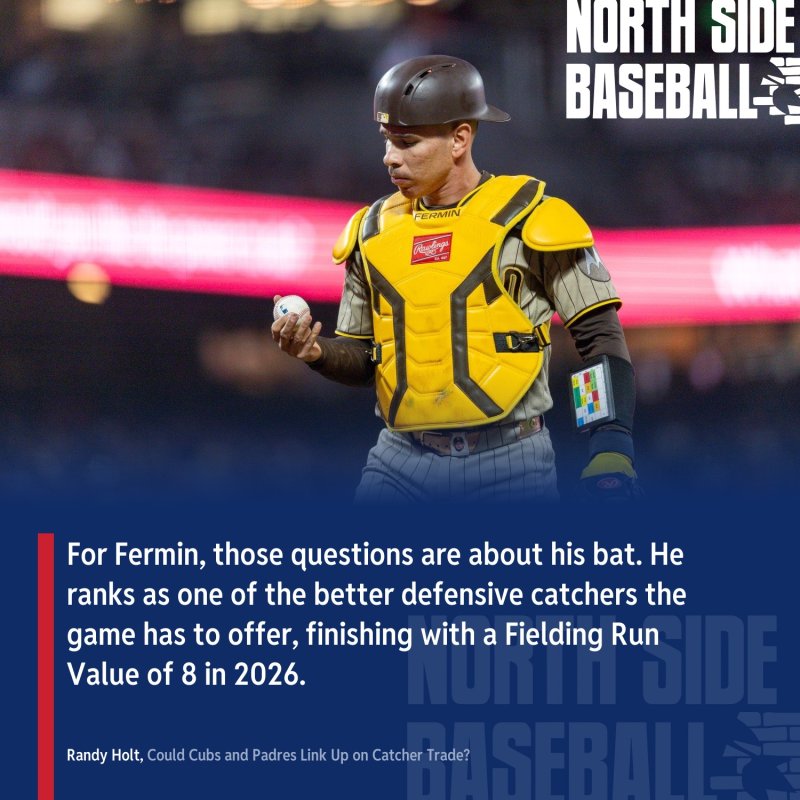 Could Cubs and Padres Link Up on Catcher Trade?
-
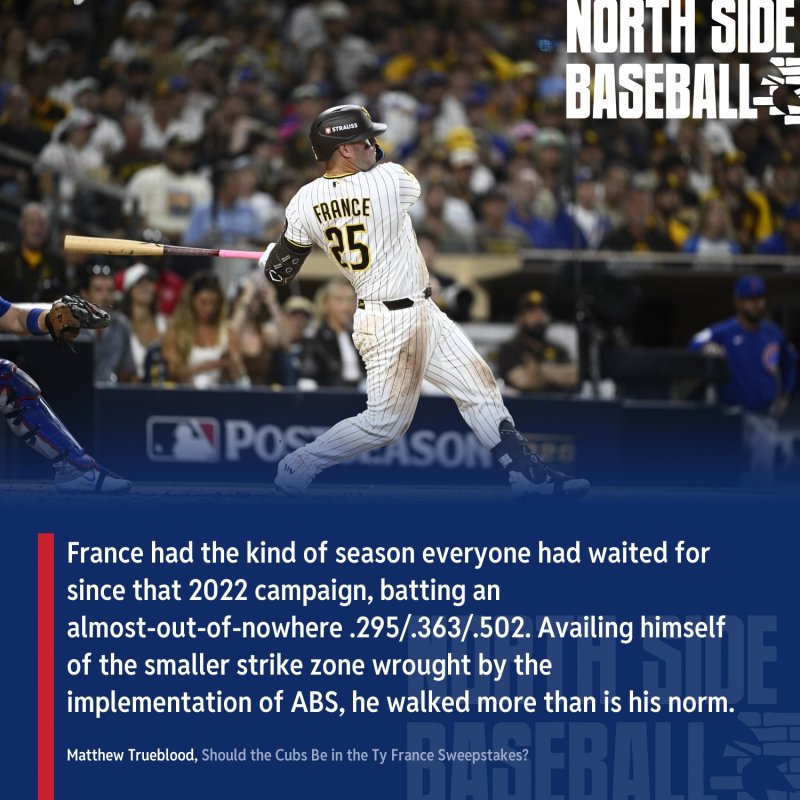 Should the Cubs Be in the Ty France Sweepstakes?
-
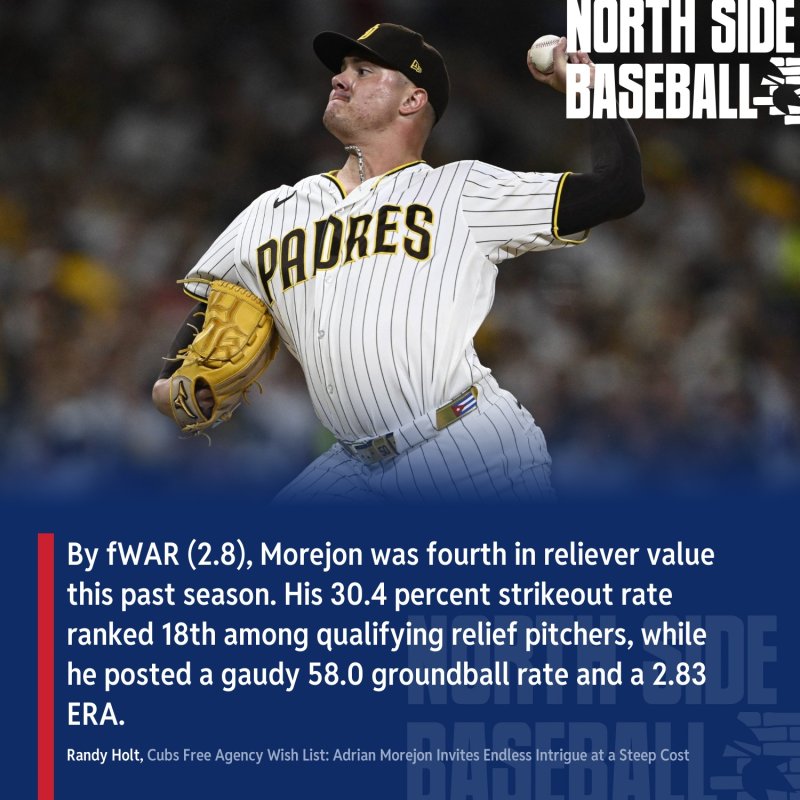 Cubs Free Agency Wish List: Adrian Morejon Invites Endless Intrigue at a Steep Cost
-
Here is some of the latest Cubs analysis and history from around the internet. The roundup covers Alex Bregman's defensive improvements, Pete Crow-Armstrong's historic season, former managers on the Hall of Fame ballot, the 10-year anniversary of the 2016 World Series, the debate over signing Tarik Skubal, and historical moments from November 4. Always solid at third, Bregman found another level. Here's how (MLB.com). Notes how Alex Bregman improved his defensive performance with the Cubs, earning a Gold Glove, and highlights his +9 outs above average, +15 defensive runs saved, and +7 fielding run value in 2025, along with specific adjustments from coach Jonathan Mota. After historic season, PCA named NL MVP finalist (MLB.com). Notes that Pete Crow-Armstrong is named an NL MVP finalist after leading MLB with 10.6 fWAR, 45 homers, 41 steals, and elite defensive metrics, surpassing Cubs' previous MVP winners and setting multiple franchise records. Ex-Cubs managers Dusty Baker, Lou Piniella, Joe Maddon on ‘Contemporary Baseball Era’ Hall of Fame ballot (Chicago Sun-Times). Notes that former Cubs managers Dusty Baker, Lou Piniella, and Joe Maddon are among eight candidates on the Hall of Fame’s "Contemporary Baseball Era" non-player ballot, with Baker, Piniella, and Maddon each leading the Cubs to playoff appearances and Maddon being the only one to win a World Series with the team. The Cubs won the World Series 10 years ago. So much has changed since (The Athletic $$$). Looks back at how the Cubs' 2016 World Series victory marked a turning point, noting changes in the team's culture, roster, and performance since Joe Maddon's leadership led them to their first title in 118 years. Cubs free agent target: Tarik Skubal (Bleed Cubbie Blue). Argues the Cubs should avoid signing Tarik Skubal despite his elite status, citing the team's need to spread spending across multiple pitchers rather than committing over $300 million to one, given the uncertainty of their current rotation and the high cost of Skubal's projected contract. Chicago Cubs history unpacked — November 4 (Bleed Cubbie Blue). Looks back at key moments in Chicago Cubs history, highlighting Ernie Banks' 1959 back-to-back MVP awards and the 2016 World Series victory parade, along with other notable baseball and non-baseball events from November 4.
-
Let's talk Chicago Cubs free agency! What areas should be the primary focus? Will any familiar faces be back in the mix? Listen on Apple Podcasts: https://podcasts.apple.com/us/podcast/the-north-side-baseball-podcast/id1798599313 Listen on Spotify: https://open.spotify.com/show/75wMGhBwlrDDYPt3kaF453 Listen on iHeartRadio: https://www.iheart.com/podcast/263-the-north-side-baseball-po-268998437/ Listen on Pocket Casts: https://pca.st/eey7h6ih Watch on YouTube: https://www.youtube.com/@northsidebaseball View full article
-
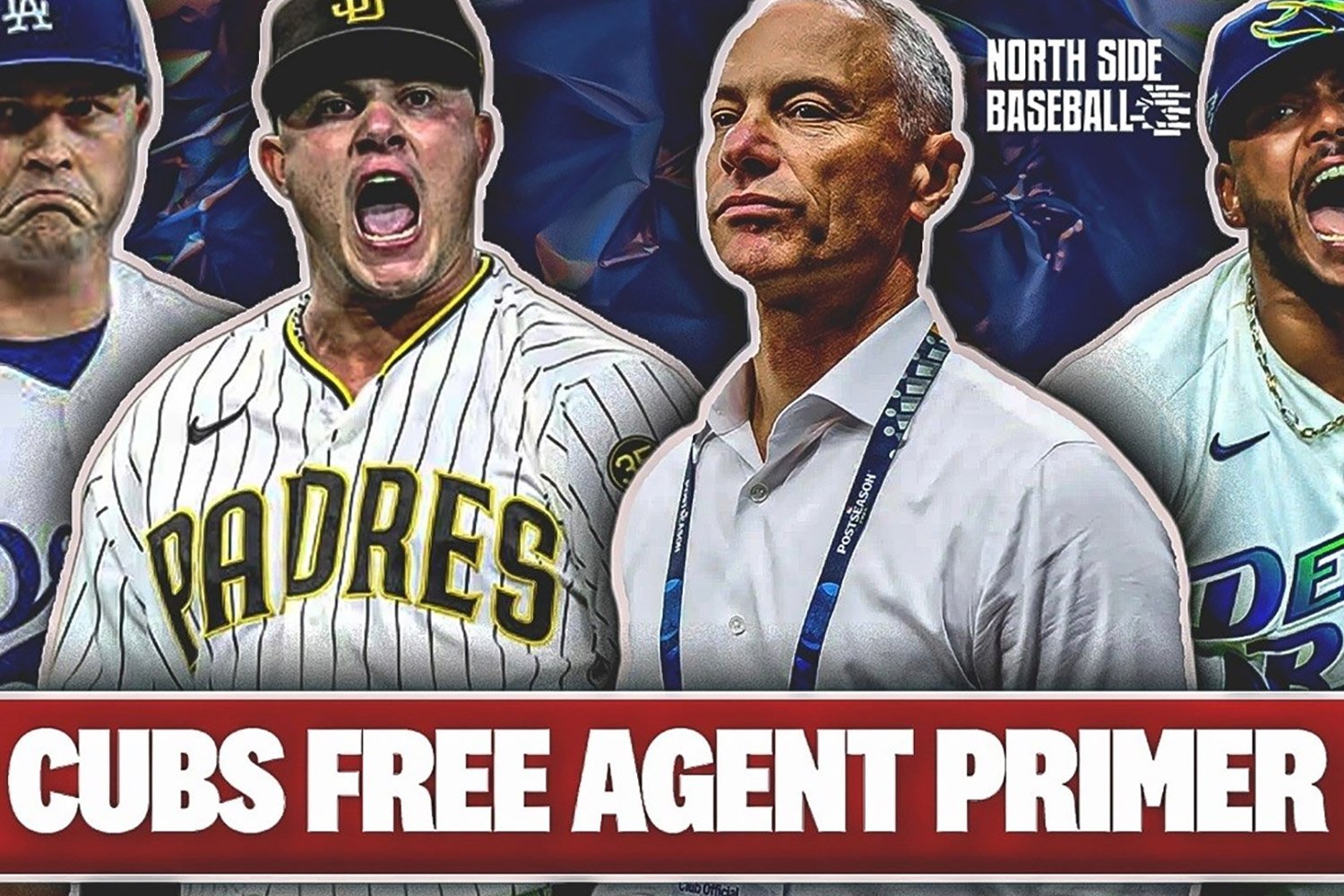 Let's talk Chicago Cubs free agency! What areas should be the primary focus? Will any familiar faces be back in the mix? Listen on Apple Podcasts: https://podcasts.apple.com/us/podcast/the-north-side-baseball-podcast/id1798599313 Listen on Spotify: https://open.spotify.com/show/75wMGhBwlrDDYPt3kaF453 Listen on iHeartRadio: https://www.iheart.com/podcast/263-the-north-side-baseball-po-268998437/ Listen on Pocket Casts: https://pca.st/eey7h6ih Watch on YouTube: https://www.youtube.com/@northsidebaseball
-
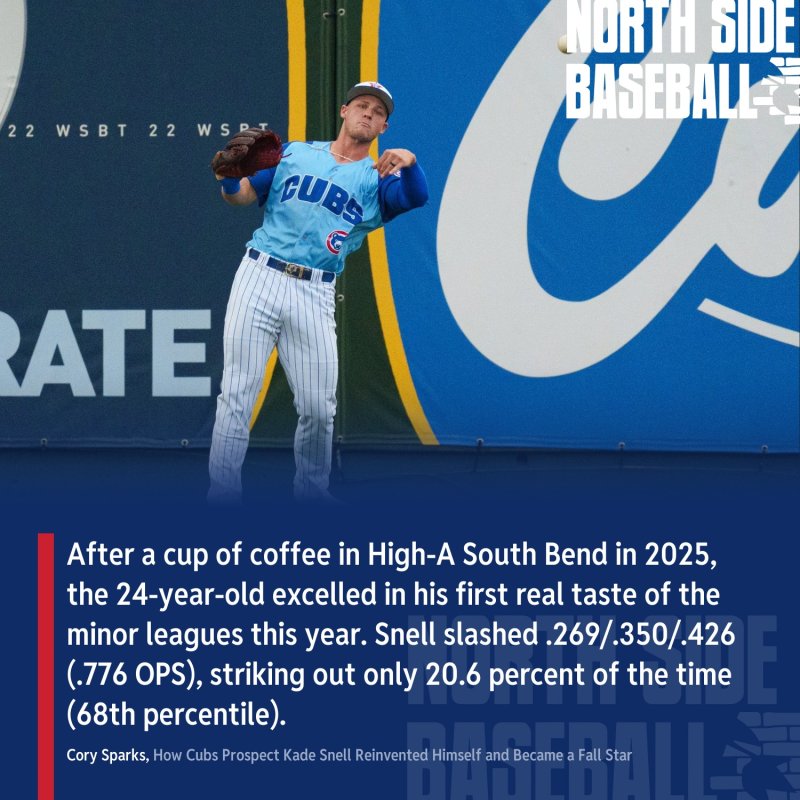 How Cubs Prospect Kade Snell Reinvented Himself and Became a Fall Star
-
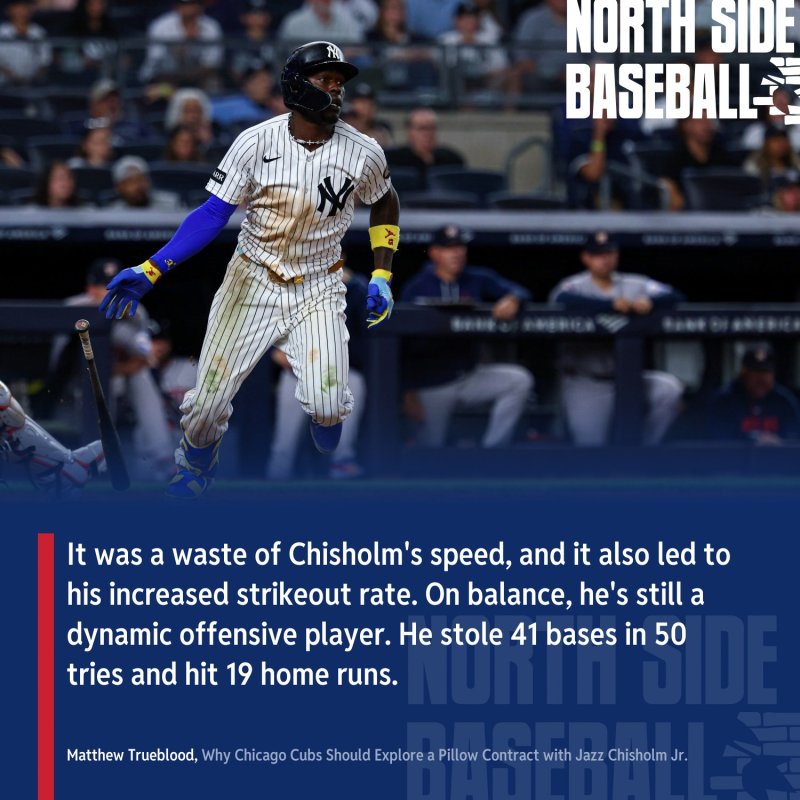 Why Chicago Cubs Should Explore a Pillow Contract with Jazz Chisholm Jr.
-
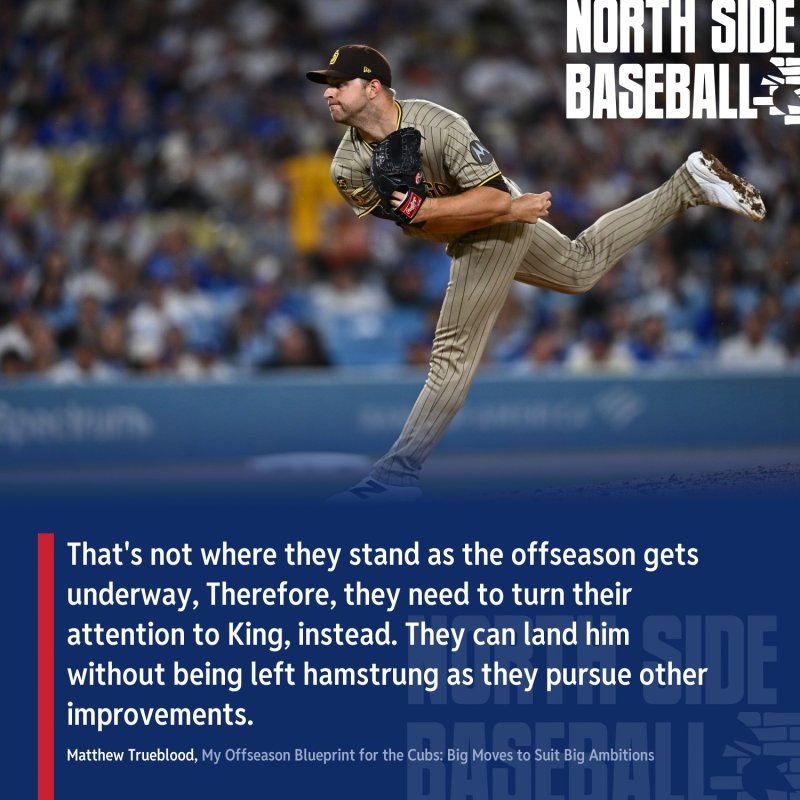 My Offseason Blueprint for the Cubs: Big Moves to Suit Big Ambitions
-
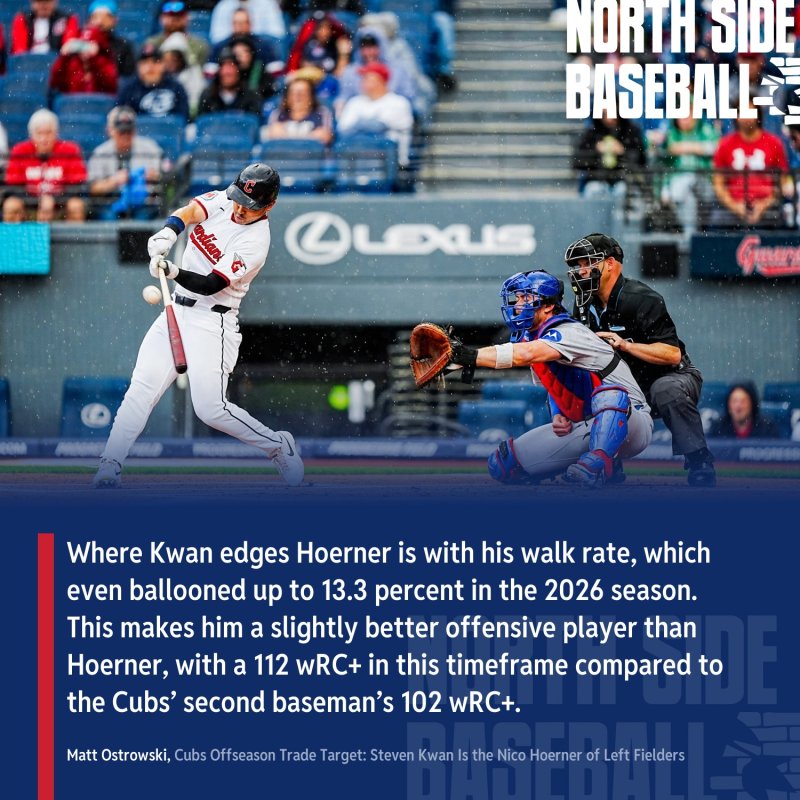 Cubs Offseason Trade Target: Steven Kwan Is the Nico Hoerner of Left Fielders
-
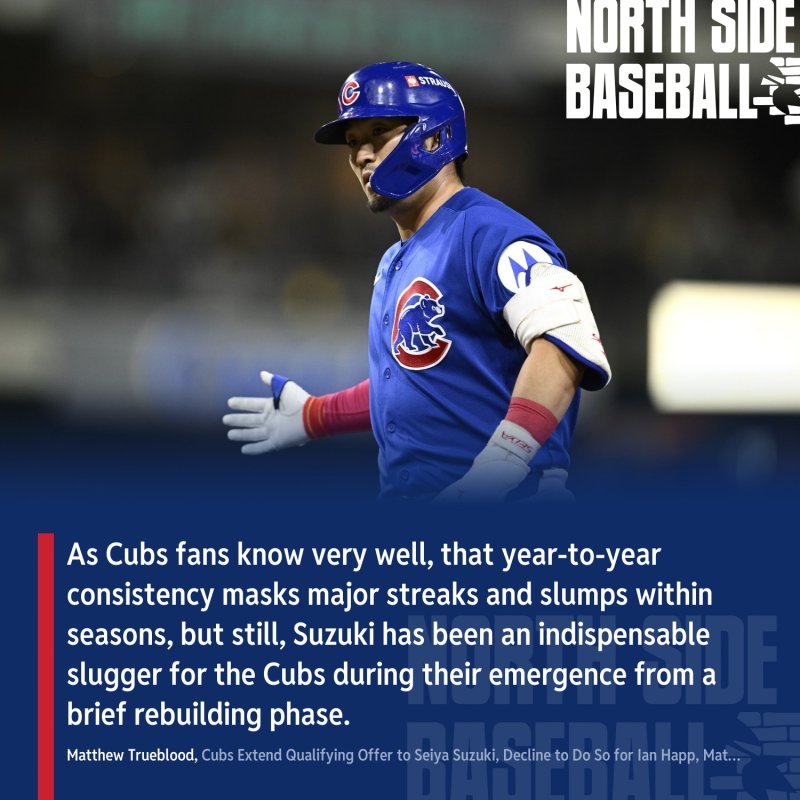 Cubs Extend Qualifying Offer to Seiya Suzuki, Decline to Do So for Ian Happ, Matthew Boyd
-
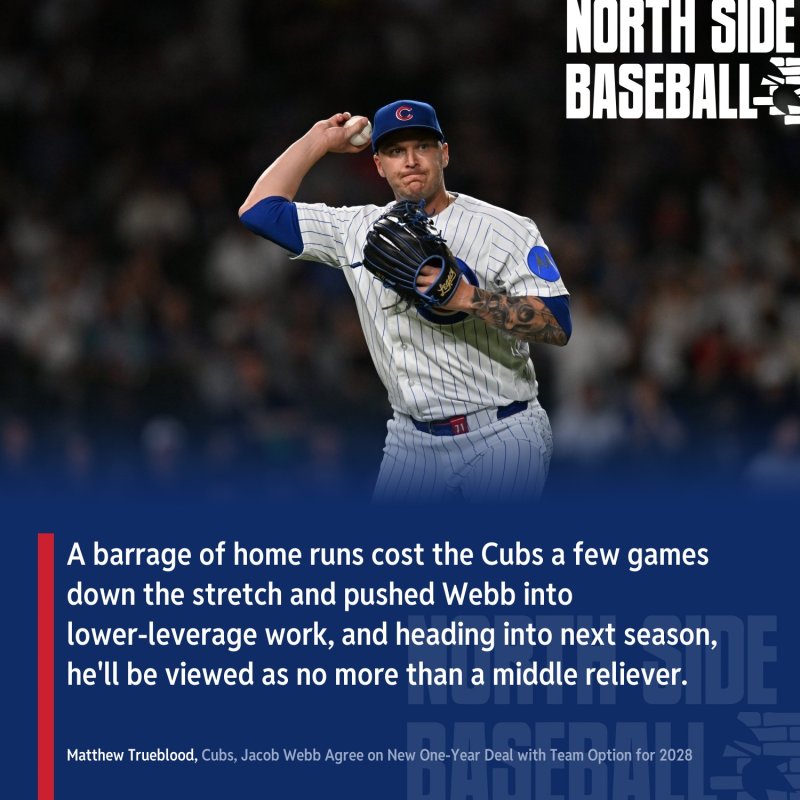 Cubs, Jacob Webb Agree on New One-Year Deal with Team Option for 2028
