


Maddie Landis
-
Posts
6 -
Joined
Content Type
Profiles
Joomla Posts 1
Chicago Cubs Videos
Chicago Cubs Free Agent & Trade Rumors, Notes, & Tidbits
2026 Chicago Cubs Top Prospects Ranking
News
2023 Chicago Cubs Draft Picks
Guides & Resources
2024 Chicago Cubs Draft Picks
The Chicago Cubs Players Project
2025 Chicago Cubs Draft Pick Tracker
2026 Chicago Cubs Draft Tracker: Picks & Bonuses
Blogs
Events
Forums
Store
Gallery
Everything posted by Maddie Landis
-
Canseco, Acuña Jr., and Ohtani won the Most Valuable Player award in their 40-40 seasons. Crow-Armstrong, the NL MVP frontrunner, will likely become the fourth. What’s crazy is that he keeps evolving. He adjusted his stance by standing deeper in the box and bringing his feet closer together, cutting his chase rate. On top of that, his walk-rate more than doubled from 4.5% in 2025 to 11.4% in 2026. This was the largest increase among qualified hitters. Alex Bregman’s sensei-like presence in the clubhouse for the next four seasons further elevates the outfielder's ceiling. It's tough to beat Ohtani's 50-50 epic or Acuña's 70-steal masterpiece. Heck, Bonds broke into the club despite being walked at basically twice the rate of everyone else. But between Crow-Armstrong's elite defense, rapidly improving plate discipline, and knack for clutch moments, there's at least a case to be made that he just put together one of the most impressive seasons in baseball history. View full article
-
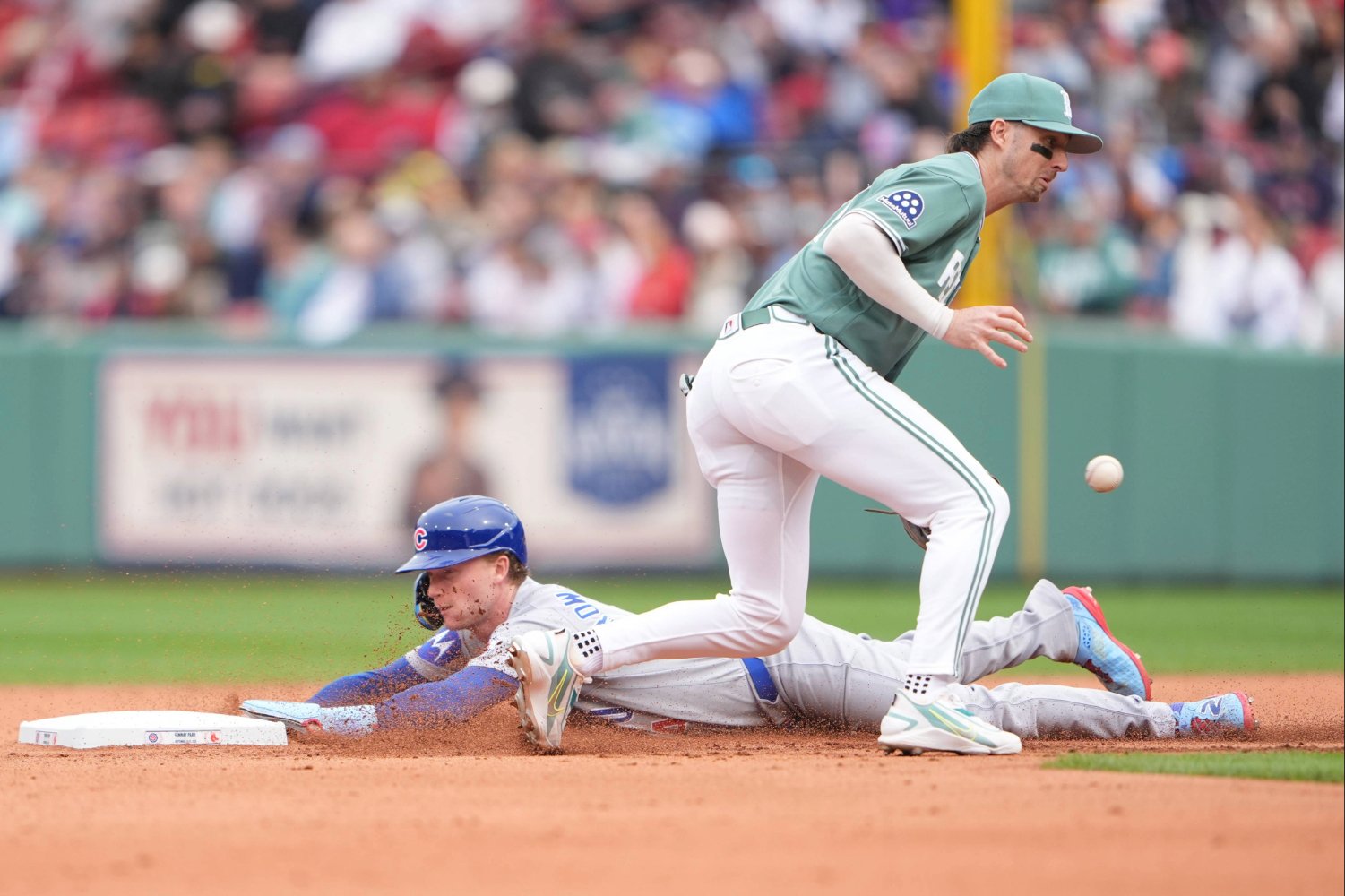 During the final week of the season, Pete Crow-Armstrong swiped his 40th bag of 2026, becoming the seventh player in history to join the 40-40 club. The Harvard-Westlake product’s season has been nothing short of historic, but where does it rank among the other six seasons? The 40-40 club features seven teams: the Oakland Athletics, San Francisco Giants, Seattle Mariners, Washington Nationals, Atlanta Braves, Los Angeles Dodgers, and the Chicago Cubs. There are only two American League teams in the group; the Cubs became the fifth National League team. PCA is also the group’s fifth outfielder—Alex Rodriguez helmed shortstop for the Mariners and Shohei Ohtani was the Dodgers’ designated-hitter. In his age-24 season, Crow-Armstrong is the third youngest member of the club, behind only A-Rod and founding member José Canseco. Ohtani is well ahead of everyone with 54 home runs. (The Japanese-born superstar is also the sole member of the 50-50 club.) Crow-Armstrong clubbed 45 home runs, good enough for third. On the basepaths, Atlanta’s Ronald Acuña Jr. leads the group with 73 bags swiped, but Crow-Armstrong’s 85.4% stolen base percentage ranks second only to Ohtani’s 93.7%. Minus Alfonso Soriano, every member drove in at least 100 runs. Bonds generated a 188 OPS+, a kitten’s whisker ahead of Ohtani’s 187. Crow-Armstrong's 155 OPS+ places him fifth among the seven. By raw batting statistics alone, he lands in the bottom half of the 40-40 club. That doesn’t undercut his season, though. Across more than 150 years of the sport, this has proven to be one of the most exclusive clubs in baseball. Crow-Armstrong, notably, paces the group in fWAR (10.6). None of the other six went 40-40 while providing Platinum Glove defense in center field. Canseco, Acuña Jr., and Ohtani won the Most Valuable Player award in their 40-40 seasons. Crow-Armstrong, the NL MVP frontrunner, will likely become the fourth. What’s crazy is that he keeps evolving. He adjusted his stance by standing deeper in the box and bringing his feet closer together, cutting his chase rate. On top of that, his walk-rate more than doubled from 4.5% in 2025 to 11.4% in 2026. This was the largest increase among qualified hitters. Alex Bregman’s sensei-like presence in the clubhouse for the next four seasons further elevates the outfielder's ceiling. It's tough to beat Ohtani's 50-50 epic or Acuña's 70-steal masterpiece. Heck, Bonds broke into the club despite being walked at basically twice the rate of everyone else. But between Crow-Armstrong's elite defense, rapidly improving plate discipline, and knack for clutch moments, there's at least a case to be made that he just put together one of the most impressive seasons in baseball history.
 -
Image courtesy of © Charles LeClaire-Imagn Images Chicago is home to five Big Four teams, the fourth-most in the country. The city offers everything a professional athlete could ever dream of in a home base. Full disclosure: I am a lifelong Red Sox fan. In most areas of my life, I strive to be progressive and forward-thinking. But when it comes to baseball, I reject modernity and embrace tradition. That’s part of why I hold a soft spot for the Cubs. Like the Red Sox, they echo this sentiment with the second-oldest ballpark in baseball and a passionate, cross-generational fanbase. In light of the Alex Bregman signing, I’ll admit — if given the choice between living in Chicago and Boston, I’d choose the former. Chicago boasts an affordable cost of living compared to other major domestic markets. The Art Institute of Chicago has one of the best art collections in the world. Given its location, there’s an endless array of outdoor activities along Lake Michigan and the Chicago River. Its food scene is as good as it gets. (For me, a city automatically gets bonus points for having a Nobu and a Starbucks Reserve Roastery.) Movies set or filmed in Chicago are stronger than those from Boston, no matter how many times Ben Affleck tries to prove otherwise. While Chicago’s appeal gets athletes to pick up the phone, money ultimately closes the deal. The Cubs’ free-agent history might be modest by MLB’s current standards, but the signing of Alex Bregman signals a shift in Jed Hoyer’s approach to acquiring talent. So, let’s dive into how the Cubs got here. Player Year Signed Contract Length & Value AAV fWAR (Contract) Jason Heyward 2016 8-years, $184 million $23 million 7.2 Dansby Swanson 2023 7-years, $177 million $25.29 million 12.4 Alex Bregman 2026 5-years, $175 million $35 million TBD Jon Lester 2015 6-years, $155 million $25.8 million 16.8 Alfonso Soriano 2007 8-years, $136 million $17 million 18.1 1. Jason Heyward: 8 years, $184 million In his walk season, Jason Heyward put together one of the strongest performances of his career with the St. Louis Cardinals. Unfortunately, his offensive production never matched the Cubs’ largest contract in franchise history, as he posted a .245 AVG, .700 OPS, 88 wRC+, and 7.2 fWAR. His defense, however, was top-notch. After winning his third Gold Glove in 2016, Heyward became the first position player to win the award in three consecutive years with three different teams. Teammates raved about his clubhouse presence, and he was regarded as a strong leader. With one remaining season left on his contract, the Cubs ended up releasing Heyward in November 2022. 2. Dansby Swanson: 7 years, $177 million Three seasons into his Cubs tenure, Dansby Swanson has recorded a .243 AVG, .721 OPS, 101 wRC+, and 12.4 fWAR. While his bat is average ( @RandallPnkFloyd noted he has a ton of swing and miss stuff in his profile), Swanson’s defense is elite. Since 2023, he ranks third among qualified shortstops with 20 Outs Above Average and a Fielding Run Value of 31. Swanson has four remaining years left on his contract, so it’s a little premature to evaluate it fully. As much as I love statistics, I’m also a strong supporter of intangibles and makeup. Much of Swanson’s value is reflected in his clubhouse presence and leadership role. As a long-term fixture in the clubhouse, he serves as a mentor for younger players like Pete Crow-Armstrong and Matt Shaw. 3. Alex Bregman: 5 years, $175 million North Side Baseball has posted several quality articles about the Alex Bregman signing. To avoid repeating what’s already covered, you can read more here: Anatomy of an At-Bat: What Alex Bregman Brings to the Table by Jason Ross Should We Be Worried About Alex Bregman Hitting for Power at Wrigley Field? by Randy Holt Like Dansby Swanson, Alex Bregman Was Always Cubs' Top Target by Matt Ostrowski Alex Bregman's Swing is Exactly What Cubs Lineup Was Missing by Matthew Trueblood How Cubs Lineup Could Look with Alex Bregman in Fold by Matthew Trueblood 4. Jon Lester: 6 years, $155 million Like Alex Bregman, Jon Lester opted to sign with the Cubs over the Red Sox. Lester was a dependable workhorse who embodied a bygone pitcher archetype just as pitch-tracking and velocity/movement started to dominate baseball. Metrics/statistics don’t truly capture his value, and on paper, they’re average. Between 2015 and 2016, his four-seamer only averaged at 92.9 mph. And yet, Lester posted a 3.64 ERA, 3.86 FIP, 15.5% K-BB%, and 16.8 fWAR in 1,002.2 innings in Chicago. On his best days, he’d throw seven to eight solid innings — sometimes a complete game — and provide the bullpen with some rest. Lester left an enduring legacy as a reliable ace, clubhouse leader, and key component in breaking the Cubs’ 108-year World Series title drought. 5. Alfonso Soriano: 8 years, $136 million For a full breakdown of Alfonso Soriano’s career, check out his bio from North Side Baseball’s Players Project. In the preceding season before Soriano signed with the Cubs, he rejected a couple of extension offers from the Nationals. During his Cubs’ tenure, he led the team in fWAR (18.1) and posted a .264 AVG, .812 OPS, and 109 wRC+. He slugged a total of 181 home runs and never hit fewer than 20 in a single season. As Soriano aged, his defense regressed heavily. Between 2007 and 2013, his minus-13 Defensive Runs Saved ranked 47th among outfielders. However, in his first season with the Cubs, he graded out at 17 (3rd). Two years later, it plummeted to minus-11 (56th). Soriano’s teammates regarded him as a veteran role model who carried himself with professionalism. A few days before the 2013 trade deadline, Soriano was sent to the Yankees in exchange for pitching prospect Corey Black. He had a little over one year remaining on his contract. How will Bregman’s contract age? Only time will tell. Long-term free agent deals rarely age well, but the Cubs can afford to take the risk. They consistently generate one of the highest revenues in the league — $585 million in 2024, ranking third — so they can afford to absorb the back end of Bregman’s deal. The Cubs have consistently prioritized clubhouse presence in their long-term contracts. Bregman fits that mold perfectly, along with a proven track record of winning. body { font-family: -apple-system, BlinkMacSystemFont, 'Segoe UI', Roboto, sans-serif; padding: 20px; background-color: #f5f5f5; } table { border-collapse: separate; border-spacing: 0; width: 100%; max-width: 800px; background-color: white; border-radius: 8px; overflow: hidden; } th, td { padding: 12px 16px; text-align: center; } th { background-color: #1a2b4a; color: white; font-weight: 600; font-size: 14px; } td { color: #000000; font-size: 14px; border-bottom: 1px solid #e5e7eb; } tr:nth-child(even) { background-color: #f9fafb; } tr:last-child td { border-bottom: none; } View full article
-
Where Does Alex Bregman Fit Among Cubs' Largest Contracts Ever?
Maddie Landis posted an article in Cubs
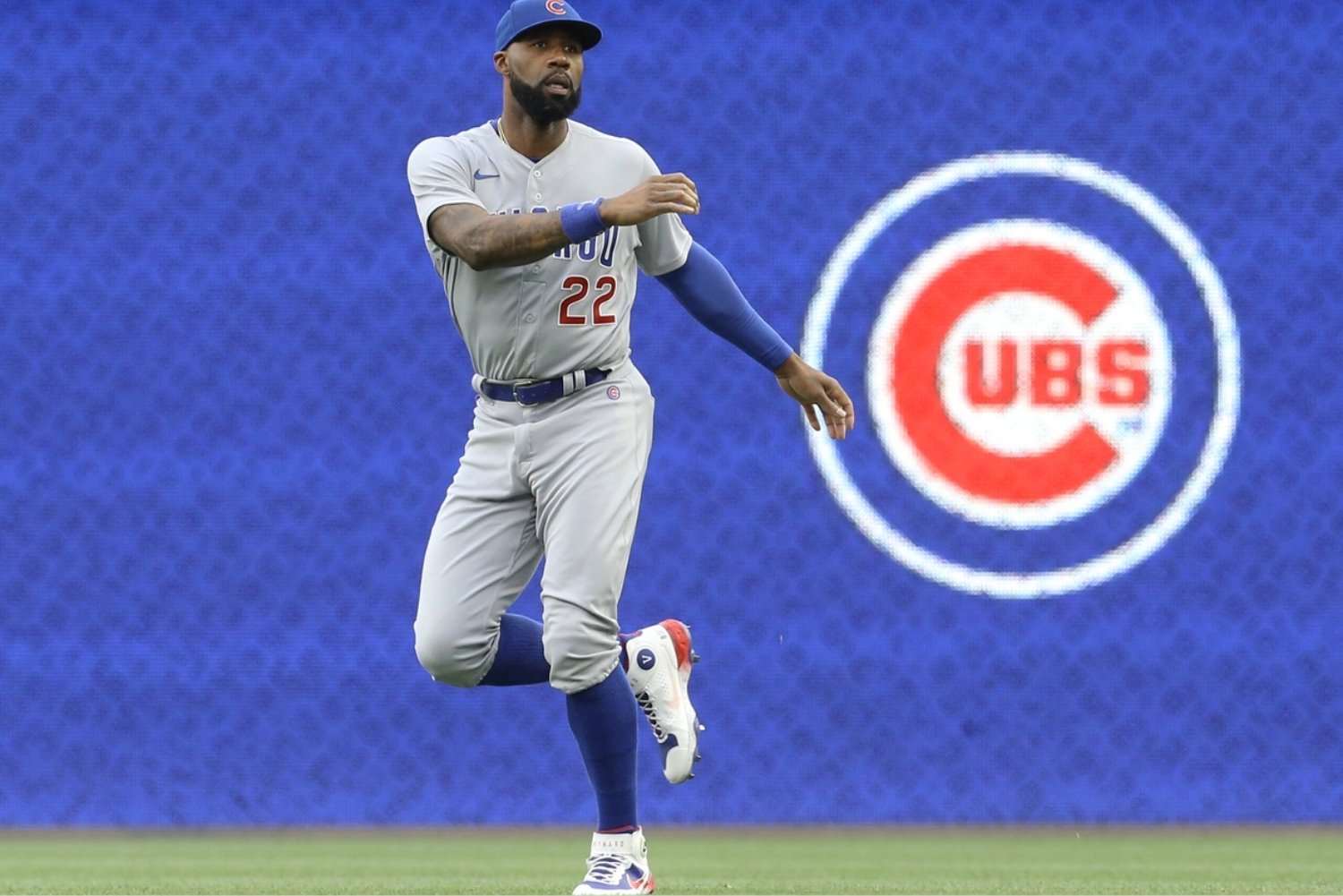 Chicago is home to five Big Four teams, the fourth-most in the country. The city offers everything a professional athlete could ever dream of in a home base. Full disclosure: I am a lifelong Red Sox fan. In most areas of my life, I strive to be progressive and forward-thinking. But when it comes to baseball, I reject modernity and embrace tradition. That’s part of why I hold a soft spot for the Cubs. Like the Red Sox, they echo this sentiment with the second-oldest ballpark in baseball and a passionate, cross-generational fanbase. In light of the Alex Bregman signing, I’ll admit — if given the choice between living in Chicago and Boston, I’d choose the former. Chicago boasts an affordable cost of living compared to other major domestic markets. The Art Institute of Chicago has one of the best art collections in the world. Given its location, there’s an endless array of outdoor activities along Lake Michigan and the Chicago River. Its food scene is as good as it gets. (For me, a city automatically gets bonus points for having a Nobu and a Starbucks Reserve Roastery.) Movies set or filmed in Chicago are stronger than those from Boston, no matter how many times Ben Affleck tries to prove otherwise. While Chicago’s appeal gets athletes to pick up the phone, money ultimately closes the deal. The Cubs’ free-agent history might be modest by MLB’s current standards, but the signing of Alex Bregman signals a shift in Jed Hoyer’s approach to acquiring talent. So, let’s dive into how the Cubs got here. Player Year Signed Contract Length & Value AAV fWAR (Contract) Jason Heyward 2016 8-years, $184 million $23 million 7.2 Dansby Swanson 2023 7-years, $177 million $25.29 million 12.4 Alex Bregman 2026 5-years, $175 million $35 million TBD Jon Lester 2015 6-years, $155 million $25.8 million 16.8 Alfonso Soriano 2007 8-years, $136 million $17 million 18.1 1. Jason Heyward: 8 years, $184 million In his walk season, Jason Heyward put together one of the strongest performances of his career with the St. Louis Cardinals. Unfortunately, his offensive production never matched the Cubs’ largest contract in franchise history, as he posted a .245 AVG, .700 OPS, 88 wRC+, and 7.2 fWAR. His defense, however, was top-notch. After winning his third Gold Glove in 2016, Heyward became the first position player to win the award in three consecutive years with three different teams. Teammates raved about his clubhouse presence, and he was regarded as a strong leader. With one remaining season left on his contract, the Cubs ended up releasing Heyward in November 2022. 2. Dansby Swanson: 7 years, $177 million Three seasons into his Cubs tenure, Dansby Swanson has recorded a .243 AVG, .721 OPS, 101 wRC+, and 12.4 fWAR. While his bat is average ( @RandallPnkFloyd noted he has a ton of swing and miss stuff in his profile), Swanson’s defense is elite. Since 2023, he ranks third among qualified shortstops with 20 Outs Above Average and a Fielding Run Value of 31. Swanson has four remaining years left on his contract, so it’s a little premature to evaluate it fully. As much as I love statistics, I’m also a strong supporter of intangibles and makeup. Much of Swanson’s value is reflected in his clubhouse presence and leadership role. As a long-term fixture in the clubhouse, he serves as a mentor for younger players like Pete Crow-Armstrong and Matt Shaw. 3. Alex Bregman: 5 years, $175 million North Side Baseball has posted several quality articles about the Alex Bregman signing. To avoid repeating what’s already covered, you can read more here: Anatomy of an At-Bat: What Alex Bregman Brings to the Table by Jason Ross Should We Be Worried About Alex Bregman Hitting for Power at Wrigley Field? by Randy Holt Like Dansby Swanson, Alex Bregman Was Always Cubs' Top Target by Matt Ostrowski Alex Bregman's Swing is Exactly What Cubs Lineup Was Missing by Matthew Trueblood How Cubs Lineup Could Look with Alex Bregman in Fold by Matthew Trueblood 4. Jon Lester: 6 years, $155 million Like Alex Bregman, Jon Lester opted to sign with the Cubs over the Red Sox. Lester was a dependable workhorse who embodied a bygone pitcher archetype just as pitch-tracking and velocity/movement started to dominate baseball. Metrics/statistics don’t truly capture his value, and on paper, they’re average. Between 2015 and 2016, his four-seamer only averaged at 92.9 mph. And yet, Lester posted a 3.64 ERA, 3.86 FIP, 15.5% K-BB%, and 16.8 fWAR in 1,002.2 innings in Chicago. On his best days, he’d throw seven to eight solid innings — sometimes a complete game — and provide the bullpen with some rest. Lester left an enduring legacy as a reliable ace, clubhouse leader, and key component in breaking the Cubs’ 108-year World Series title drought. 5. Alfonso Soriano: 8 years, $136 million For a full breakdown of Alfonso Soriano’s career, check out his bio from North Side Baseball’s Players Project. In the preceding season before Soriano signed with the Cubs, he rejected a couple of extension offers from the Nationals. During his Cubs’ tenure, he led the team in fWAR (18.1) and posted a .264 AVG, .812 OPS, and 109 wRC+. He slugged a total of 181 home runs and never hit fewer than 20 in a single season. As Soriano aged, his defense regressed heavily. Between 2007 and 2013, his minus-13 Defensive Runs Saved ranked 47th among outfielders. However, in his first season with the Cubs, he graded out at 17 (3rd). Two years later, it plummeted to minus-11 (56th). Soriano’s teammates regarded him as a veteran role model who carried himself with professionalism. A few days before the 2013 trade deadline, Soriano was sent to the Yankees in exchange for pitching prospect Corey Black. He had a little over one year remaining on his contract. How will Bregman’s contract age? Only time will tell. Long-term free agent deals rarely age well, but the Cubs can afford to take the risk. They consistently generate one of the highest revenues in the league — $585 million in 2024, ranking third — so they can afford to absorb the back end of Bregman’s deal. The Cubs have consistently prioritized clubhouse presence in their long-term contracts. Bregman fits that mold perfectly, along with a proven track record of winning. body { font-family: -apple-system, BlinkMacSystemFont, 'Segoe UI', Roboto, sans-serif; padding: 20px; background-color: #f5f5f5; } table { border-collapse: separate; border-spacing: 0; width: 100%; max-width: 800px; background-color: white; border-radius: 8px; overflow: hidden; } th, td { padding: 12px 16px; text-align: center; } th { background-color: #1a2b4a; color: white; font-weight: 600; font-size: 14px; } td { color: #000000; font-size: 14px; border-bottom: 1px solid #e5e7eb; } tr:nth-child(even) { background-color: #f9fafb; } tr:last-child td { border-bottom: none; }
 -
Image courtesy of © Joe Camporeale-Imagn Images Major League Baseball’s arbitration-deadline day falls on an otherwise sleepy Thursday in early January, but it’s one of the busiest transaction days in the sport. Arbitration-eligible players and their teams had until 8:00 pm ET to agree to a one-year contract. I go into a little more detail about baseball’s arbitration process here, but here’s a quick TL;DR: If players and their organizations didn’t agree to contracts by the deadline, they’re required to file numbers and potentially present their arguments. Per the collective bargaining agreement, this is referred to as the exchange date, which falls the day after the deadline. However, both parties can settle before their hearing. Last year, you might recall the Chicago Cubs and Kyle Tucker filed $15 million and $17.5 million, respectively. Six days after the exchange date, the Cubs and Kyle Tucker agreed to a one-year, $16.5 million deal. This year, the Cubs avoided a kerfuffle, coming to agreements with their three arbitration-eligible players on Thursday. Early in the afternoon, Patrick Mooney of The Athletic reported that Cubs southpaw Justin Steele agreed to a one-year, $6.775 million contract. For a professional baseball player, Steele’s salary is a modest raise. He earned $6.55 million in 2025, although he only pitched in four games due to a “revision repair” of his left ulnar collateral ligament. Steele posted a 4.76 ERA, 17.6% K-BB%, 4.94 FIP, and 0.0 WAR across 22 2/3 innings in 2025. When healthy, Steele is a dominant pitcher. In 2023, he went 16-5 with a 3.06 ERA (6th), 19.6% K-BB%, 3.02 FIP (5th), and 4.8 fWAR (9th), finishing fifth in National League Cy Young Award voting. Entering his age-30 season, Steele's return time and role in the rotation are up in the air. Skipper Craig Counsell anticipates the Cubs will have a better idea of his return date come spring training: “I really don’t want to speculate until we get to spring training… I think we'll know in spring training, kind of a target area or date.” Steele has one remaining year of arbitration before entering free agency in 2028. Thursday evening, Jesse Rogers of ESPN reported that the Cubs and Edward Cabrera agreed to a $4.45 million contract, an increase from his $1.95 million salary in 2025. Preceding his first year of arbitration, Cabrera had a breakout season. He went 8-7, posting a 3.53 ERA, 17.6% K-BB%, 3.83 FIP, and 2.0 fWAR, a career high across 137.2 innings pitched. Though he has an extensive injury history, his underlying metrics indicate he has the potential to be a front-of-the-rotation starter with further development. Cabrera turns 28 in April and has three remaining years of team control. While I was unwinding before bed, Maddie Lee of the Chicago Sun-Times broke that the Cubs and Javier Assad agreed to a $1.8 million contract. Assad was eligible for arbitration for the first time this year. He holds a career 18-12 record with a 3.43 ERA, 9.6% K-BB%, 4.46 FIP, and 2.7 fWAR across 331.0 innings pitched. An oblique injury limited him to just eight games in 2025. Nonetheless, his performance was solid, posting a 3.65 ERA. As @Brandon Glick noted, Assad doesn’t have the flashiest stuff, but still manages to outperform his expected stats. Following these agreements, the Cubs' 2026 40-man CBT payroll sits at $211.55 million, which is $32.44 million under the first CBT threshold. Looking to upgrade their lineup, they remain in the mix for Alex Bregman and Bo Bichette. View full article
-
Cubs Avoid Arbitration with Justin Steele, Edward Cabrera, and Javier Assad
Maddie Landis posted an article in Cubs
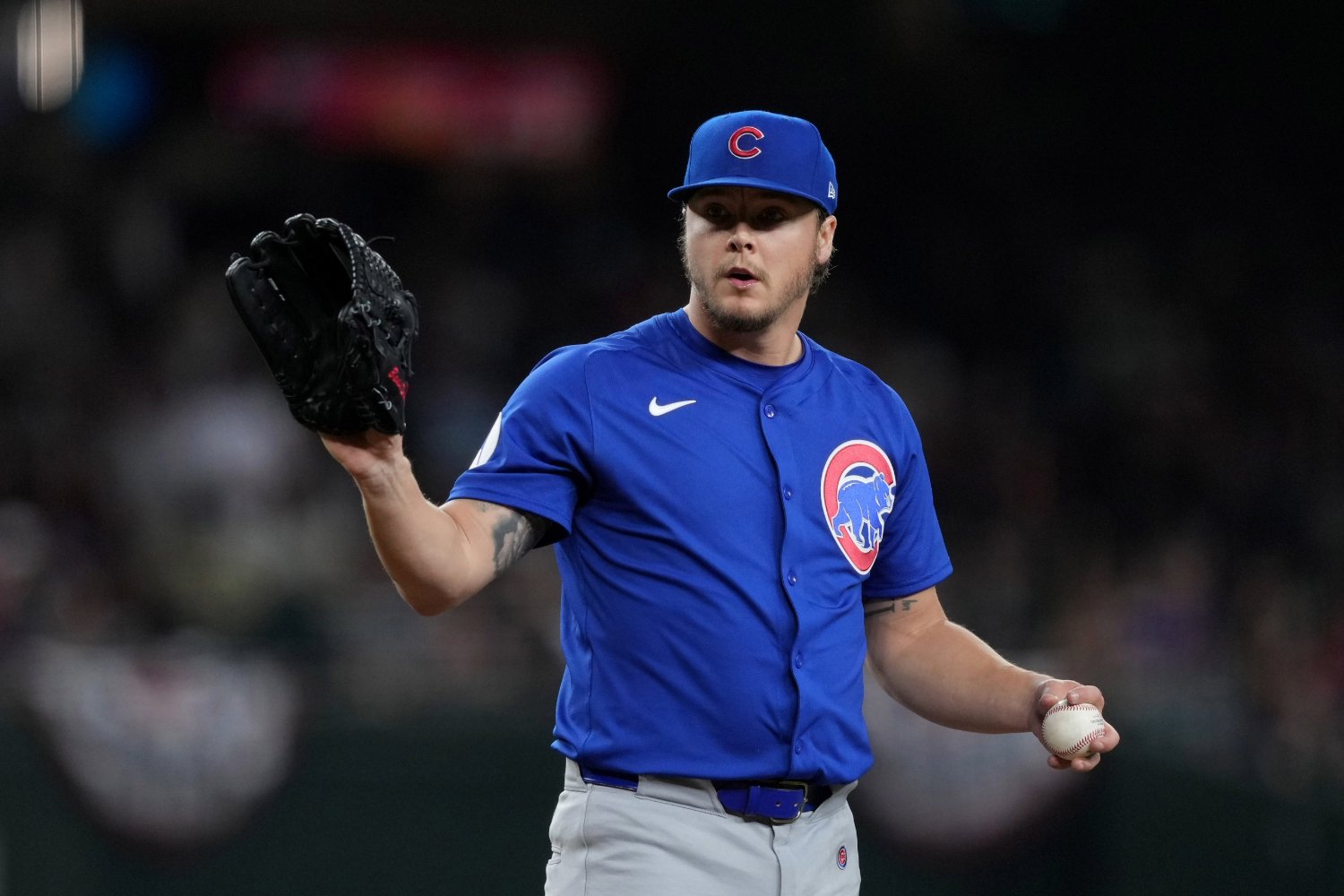 Major League Baseball’s arbitration-deadline day falls on an otherwise sleepy Thursday in early January, but it’s one of the busiest transaction days in the sport. Arbitration-eligible players and their teams had until 8:00 pm ET to agree to a one-year contract. I go into a little more detail about baseball’s arbitration process here, but here’s a quick TL;DR: If players and their organizations didn’t agree to contracts by the deadline, they’re required to file numbers and potentially present their arguments. Per the collective bargaining agreement, this is referred to as the exchange date, which falls the day after the deadline. However, both parties can settle before their hearing. Last year, you might recall the Chicago Cubs and Kyle Tucker filed $15 million and $17.5 million, respectively. Six days after the exchange date, the Cubs and Kyle Tucker agreed to a one-year, $16.5 million deal. This year, the Cubs avoided a kerfuffle, coming to agreements with their three arbitration-eligible players on Thursday. Early in the afternoon, Patrick Mooney of The Athletic reported that Cubs southpaw Justin Steele agreed to a one-year, $6.775 million contract. For a professional baseball player, Steele’s salary is a modest raise. He earned $6.55 million in 2025, although he only pitched in four games due to a “revision repair” of his left ulnar collateral ligament. Steele posted a 4.76 ERA, 17.6% K-BB%, 4.94 FIP, and 0.0 WAR across 22 2/3 innings in 2025. When healthy, Steele is a dominant pitcher. In 2023, he went 16-5 with a 3.06 ERA (6th), 19.6% K-BB%, 3.02 FIP (5th), and 4.8 fWAR (9th), finishing fifth in National League Cy Young Award voting. Entering his age-30 season, Steele's return time and role in the rotation are up in the air. Skipper Craig Counsell anticipates the Cubs will have a better idea of his return date come spring training: “I really don’t want to speculate until we get to spring training… I think we'll know in spring training, kind of a target area or date.” Steele has one remaining year of arbitration before entering free agency in 2028. Thursday evening, Jesse Rogers of ESPN reported that the Cubs and Edward Cabrera agreed to a $4.45 million contract, an increase from his $1.95 million salary in 2025. Preceding his first year of arbitration, Cabrera had a breakout season. He went 8-7, posting a 3.53 ERA, 17.6% K-BB%, 3.83 FIP, and 2.0 fWAR, a career high across 137.2 innings pitched. Though he has an extensive injury history, his underlying metrics indicate he has the potential to be a front-of-the-rotation starter with further development. Cabrera turns 28 in April and has three remaining years of team control. While I was unwinding before bed, Maddie Lee of the Chicago Sun-Times broke that the Cubs and Javier Assad agreed to a $1.8 million contract. Assad was eligible for arbitration for the first time this year. He holds a career 18-12 record with a 3.43 ERA, 9.6% K-BB%, 4.46 FIP, and 2.7 fWAR across 331.0 innings pitched. An oblique injury limited him to just eight games in 2025. Nonetheless, his performance was solid, posting a 3.65 ERA. As @Brandon Glick noted, Assad doesn’t have the flashiest stuff, but still manages to outperform his expected stats. Following these agreements, the Cubs' 2026 40-man CBT payroll sits at $211.55 million, which is $32.44 million under the first CBT threshold. Looking to upgrade their lineup, they remain in the mix for Alex Bregman and Bo Bichette.
