


Bryan Jaeger
-
Posts
22 -
Joined
-
Last visited
Content Type
Profiles
Joomla Posts 1
Chicago Cubs Videos
Chicago Cubs Free Agent & Trade Rumors, Notes, & Tidbits
2026 Chicago Cubs Top Prospects Ranking
News
2023 Chicago Cubs Draft Picks
Guides & Resources
2024 Chicago Cubs Draft Picks
The Chicago Cubs Players Project
2025 Chicago Cubs Draft Pick Tracker
2026 Chicago Cubs Draft Tracker: Picks & Bonuses
Blogs
Events
Forums
Store
Gallery
Everything posted by Bryan Jaeger
-
2026 HR Derby - Discussion and Transactions
Bryan Jaeger replied to Southpaw19's topic in North Side Baseball Events
PCA $100 for Varsho $75 -
2026 HR Derby - Discussion and Transactions
Bryan Jaeger replied to Southpaw19's topic in North Side Baseball Events
Drop Bobby Witt - Add Elly De La Cruz (same price) Drop Brent Rooker ($100) - Add Mike Trout ($75) Bench - Drop Cags - Add Sal Stewart -
2026 HR Derby Entries Thread
Bryan Jaeger replied to Southpaw19's topic in North Side Baseball Events

-
Image courtesy of © Ray Carlin-Imagn Images / © Mike Dinovo-Imagn Images This year, the Winter Meetings will take place in Orlando, Florida, from December 7-10. These meetings are renowned for major signings and trades, with all 30 MLB teams sending representatives to mingle and negotiate with players, agents, and media. High-profile trades—such as Garrett Crochet to the Boston Red Sox, Juan Soto to the New York Yankees, Chris Sale to the Red Sox, and Miguel Cabrera to the Detroit Tigers—dominate the headlines. It's as intense a four-day span as there will be all offseason. The Cubs themselves capitalized on this setting last offseason, acquiring Kyle Tucker from the Houston Astros and agreeing to sign free-agent catcher Carson Kelly during the Meetings. Their impact was evident, but with Tucker now a free agent, the front office shifts its focus to acquiring a depth bat, a front-end starter, and bullpen help. As speculation builds about what moves the Cubs might make this offseason, let's revisit the most impactful Winter Meetings acquisitions in the franchise's history. Jon Lester's signing stands out as perhaps the most impactful. At a time when the franchise sought to move out of a rebuilding phase, Lester's arrival—via a six-year, $155 million contract after the 2014 season—signaled the Cubs' intent to contend. During Lester's tenure, the Cubs made five postseason trips and won the 2016 World Series. During that season, he had a 19-5 record, 2.44 ERA, and a 197:52 strikeout-to-walk ratio. The lefty would finish the season as the runner-up to the Washington Nationals' Max Scherzer in the National League Cy Young voting. He threw more than 140 innings in every season except one (the 2020 Covid-shortened season). After his contract expired, the Cubs declined his $25 million mutual option for the 2021 season, making Lester a free agent. He would sign with the Nationals, get traded to the St. Louis Cardinals at the trade deadline, and then hang his cleats up after the 2021 season. During the 2015 Winter Meetings, the Cubs bolstered their offense by adding Ben Zobrist, fresh off his World Series win with the Kansas City Royals. The utility player signed a four-year, $56 million contract with the Cubs. To make room for Zobrist, the Cubs made a separate trade, sending Starlin Castro to the New York Yankees. During that season, Zobrist hit .272/.386/.446 with 18 home runs, 94 runs, and 76 RBIs over 632 plate appearances, earning his only All-Star appearance as a Cub. In the 2016 World Series, Zobrist went 10-for-28 with five runs and two RBIs, and it was his go-ahead hit at the top of the 10th inning of Game 7 that put the Cubs up 8-7. They'd hold on in the bottom half, breaking their 108-year title drought, with Zobrist earning the MVP honors. His four seasons with the Cubs marked the end of his career. A notable Winter Meetings trade came in 1980, when the Cubs traded their four-time All-Star closer, Bruce Sutter, to the St. Louis Cardinals. Sutter was perfect, saving 133 games during the 1976-1980 seasons as a member of the Cubs, without blowing a save opportunity. In 1979, he earned the NL Cy Young Award, posting a 2.22 ERA, 110:32 strikeout-to-walk ratio, and converted all 37 save opportunities over 101.1 innings. A contract dispute led to the trade, but in return for Sutter, the Cubs received Leon Durham, Ken Reitz, and Ty Waller from the St. Louis Cardinals. This trade benefited both teams, as Sutter continued his dominant pitching in three of his first four years in St. Louis. For the Cubs, Durham played eight seasons, hitting 138 home runs and earning two All-Star appearances. Reitz and Waller weren't major contributors in their short-lived careers in Chicago. This offseason's Winter Meetings may be busy for the Cubs. Shota Imanaga surprisingly accepted his one-year, $22.025 million qualifying offer over becoming a free agent. Still, the Cubs could use another front-line starting pitcher, with Justin Steele likely to miss at least the first half of the season after undergoing Tommy John surgery early into last season. The bullpen needs an overhaul, and the offense could use a depth bat, especially if Matt Shaw continues to struggle at the plate or if Owen Caissie isn't ready for the big leagues. View full article
-
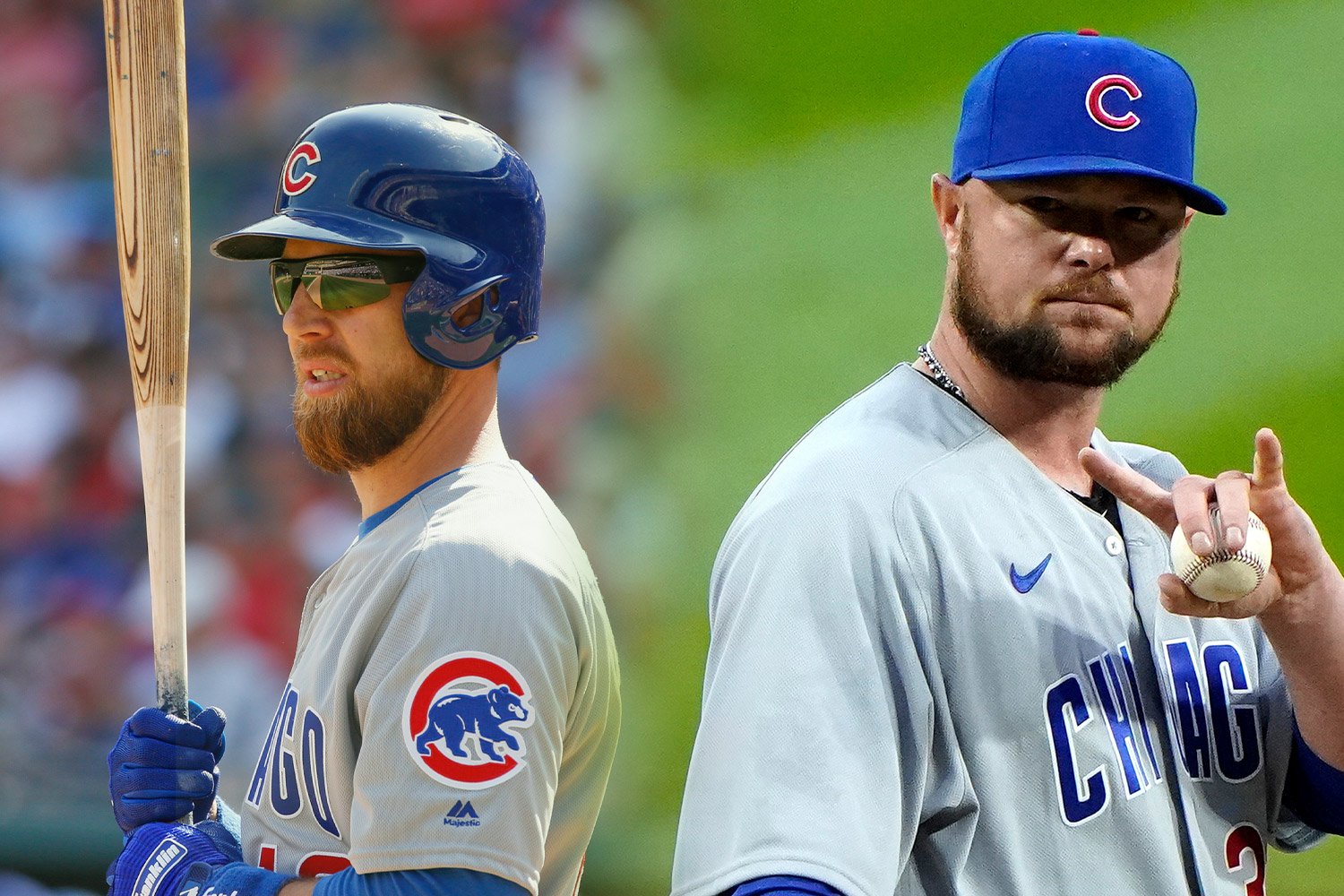 This year, the Winter Meetings will take place in Orlando, Florida, from December 7-10. These meetings are renowned for major signings and trades, with all 30 MLB teams sending representatives to mingle and negotiate with players, agents, and media. High-profile trades—such as Garrett Crochet to the Boston Red Sox, Juan Soto to the New York Yankees, Chris Sale to the Red Sox, and Miguel Cabrera to the Detroit Tigers—dominate the headlines. It's as intense a four-day span as there will be all offseason. The Cubs themselves capitalized on this setting last offseason, acquiring Kyle Tucker from the Houston Astros and agreeing to sign free-agent catcher Carson Kelly during the Meetings. Their impact was evident, but with Tucker now a free agent, the front office shifts its focus to acquiring a depth bat, a front-end starter, and bullpen help. As speculation builds about what moves the Cubs might make this offseason, let's revisit the most impactful Winter Meetings acquisitions in the franchise's history. Jon Lester's signing stands out as perhaps the most impactful. At a time when the franchise sought to move out of a rebuilding phase, Lester's arrival—via a six-year, $155 million contract after the 2014 season—signaled the Cubs' intent to contend. During Lester's tenure, the Cubs made five postseason trips and won the 2016 World Series. During that season, he had a 19-5 record, 2.44 ERA, and a 197:52 strikeout-to-walk ratio. The lefty would finish the season as the runner-up to the Washington Nationals' Max Scherzer in the National League Cy Young voting. He threw more than 140 innings in every season except one (the 2020 Covid-shortened season). After his contract expired, the Cubs declined his $25 million mutual option for the 2021 season, making Lester a free agent. He would sign with the Nationals, get traded to the St. Louis Cardinals at the trade deadline, and then hang his cleats up after the 2021 season. During the 2015 Winter Meetings, the Cubs bolstered their offense by adding Ben Zobrist, fresh off his World Series win with the Kansas City Royals. The utility player signed a four-year, $56 million contract with the Cubs. To make room for Zobrist, the Cubs made a separate trade, sending Starlin Castro to the New York Yankees. During that season, Zobrist hit .272/.386/.446 with 18 home runs, 94 runs, and 76 RBIs over 632 plate appearances, earning his only All-Star appearance as a Cub. In the 2016 World Series, Zobrist went 10-for-28 with five runs and two RBIs, and it was his go-ahead hit at the top of the 10th inning of Game 7 that put the Cubs up 8-7. They'd hold on in the bottom half, breaking their 108-year title drought, with Zobrist earning the MVP honors. His four seasons with the Cubs marked the end of his career. A notable Winter Meetings trade came in 1980, when the Cubs traded their four-time All-Star closer, Bruce Sutter, to the St. Louis Cardinals. Sutter was perfect, saving 133 games during the 1976-1980 seasons as a member of the Cubs, without blowing a save opportunity. In 1979, he earned the NL Cy Young Award, posting a 2.22 ERA, 110:32 strikeout-to-walk ratio, and converted all 37 save opportunities over 101.1 innings. A contract dispute led to the trade, but in return for Sutter, the Cubs received Leon Durham, Ken Reitz, and Ty Waller from the St. Louis Cardinals. This trade benefited both teams, as Sutter continued his dominant pitching in three of his first four years in St. Louis. For the Cubs, Durham played eight seasons, hitting 138 home runs and earning two All-Star appearances. Reitz and Waller weren't major contributors in their short-lived careers in Chicago. This offseason's Winter Meetings may be busy for the Cubs. Shota Imanaga surprisingly accepted his one-year, $22.025 million qualifying offer over becoming a free agent. Still, the Cubs could use another front-line starting pitcher, with Justin Steele likely to miss at least the first half of the season after undergoing Tommy John surgery early into last season. The bullpen needs an overhaul, and the offense could use a depth bat, especially if Matt Shaw continues to struggle at the plate or if Owen Caissie isn't ready for the big leagues.
 -
I worded that poorly. The Brewers play the Phillies and Padres, but yes, I accidentally looked at the wrong line for the Rockies and White Sox games.
-
Image courtesy of © Benny Sieu-Imagn Images The Chicago Cubs have had one of the best offenses all season, leading MLB in run differential for most of the season. Their +115 run differential is heavily swayed by their +44 in April and +46 in May, but although they've still had a positive number in June, July, and August, it's only a combined +17. Manager Craig Counsell was enjoying the early success and had a lead of, at most, 6.5 games in the NL Central; however, over the last three months, including August, the Milwaukee Brewers have been on a hot streak. Counsell is now staring up at his former ball club, taking the lead in the division (four-game lead) and run differential (+127). The lack of run differential can be attributed to both the Cubs' offense and pitching. On offense, the team has been a roller coaster. Matt Shaw, despite a hot streak in recent weeks, is hitting .222/.234/.289 on the season. Ian Happ and Carson Kelly both started March and April on a productive note, but have since cooled off. Happ (.265) and Kelly (.360) started the season hitting well, but have dropped since to .211 and .242, respectively. Dansby Swanson was the reverse compared to Happ and Kelly, hitting just .203 through April, but has since hit .255, a solid but unspectacular average. These four have been nearly every-day starters and part of the reason the offensive production has slowed down over the last two months Pitching has been mediocre all season, ranking 14th in starting pitching (3.94) and 12th in bullpen (3.91) ERAs. Sadly, the team lost the ace Justin Steele in April after he had season-ending surgery to repair the flexor tendon and UCL in his left elbow. Although he had struggled in his four starts with a 4.76 ERA, he's been one of the Cubs' top starters the last three seasons. Matthew Boyd (2.34) is the only starting pitcher with an ERA under 3.00. Shota Imanaga (3.12) and Cade Horton (3.42) are the only other starters under a 4.00 ERA. Colin Rea (4.23), Jameson Taillon (4.44), and Ben Brown (6.04) have been varying levels of disappointing throughout the season. Fans wanted a starting pitcher added at the trade deadline, but President of Baseball Operations Jed Hoyer only added Michael Soroka from the Washington Nationals. However, Soroka left his only start with the Cubs on Monday due to shoulder discomfort and has been shut down for seven-10 days. Hoyer refused to give up the prospects needed to obtain a better option at the position, and now it looks bad as Brown will return to the rotation with no depth behind him until Taillon, Soroka, or Javier Assad, who has been out all season, return from their injury list stints. The bullpen has been slightly better at keeping runs off the board, though it isn't elite in that department. Daniel Palencia (1.55) and Drew Pomeranz (1.99) have been outstanding in the back-end of the bullpen, posting under a 2.00 ERA in 39 and 37 appearances, respectively. Caleb Thielbar (2.34) and Brad Keller (2.76) have been the workhorses in the middle innings, making over 45 appearances. Taylor Rogers and Andrew Kittredge were solid acquisitions at the trade deadline to strengthen the bullpen. He's made three appearances and has yet to give up an earned run. Now, the concerning run differential the Brewers have put up in June (+41), July (+39), and the early part of August (+32) shows how hot they've been and shows no signs of easing up. They've suffered injuries to a couple of star players, but that hasn't hurt the production. Jackson Chourio (.276/.311/.474) injured his hamstring on July 30 and is expected to miss most, if not all, of August and some of September, but even that hasn't impacted the Brew Crew. Rookie Jacob Misiorowski (2.70 ERA) has been phenomenal in his short MLB debut, but he suffered a left tibia contusion on July 31 and looks to return mid-August. However, Logan Henderson was recalled to replace Misiorowski and has been just as good, posting a 1.78 ERA over his first five starts of the entire season (four of which were at the beginning of the season). Rhys Hoskins has been out as well since July 7, due to a Grade 2 left thumb sprain. His return isn't expected until September, though. Andrew Vaughn was a surprise trade acquisition for multiple reasons. Hoskins was healthy at the time of the trade, so Vaughn was sent to Triple-A, and another reason was that Vaughn was struggling this season, hitting .189 while with the Chicago White Sox. However, Hoskins got injured, and Vaughn has turned his season around in Milwaukee. In only 21 games with the Brewers, the first baseman is hitting .370/.435/.462 with six home runs, 13 runs, and 26 knocked in. Pitching-wise, the Brewers' starters have done a fantastic job keeping runs off the scoreboard. They rank second in ERA (3.34), being led by Henderson, Misiorowski, Freddy Peralta (3.03 ERA), and Brandon Woodruff (2.22), who just made his 2025 debut on July 6, after missing the beginning of the season due to shoulder surgery in October 2023, and missed the entire 2024 season. It's a massive boost to a team when you know you can get five or six quality innings out of your starters and give the bullpen a minimal amount of innings to work with. The Brewers' bullpen ranks 16th in ERA (3.97), though that unit is far less taxed than the Cubs' overworked relief crew. The good news for Cubs fans is that the team has the 28th-easiest strength of schedule remaining. In the remaining 48 games, seven of which come against the league's worst record, the Colorado Rockies, and three against the second-worst record, the White Sox. Plus, five will come against the Brewers who have the fifth-hardest schedule remaining. They have three games remaining against the Toronto Blue Jays, Philadelphia Phillies, San Diego Padres, and New York Mets. Despite the slow last three months, it's too early to give up on the Cubs, even as the Brewers have usurped them in both the standings and run differential race. Some healthy returns to the rotation and some returns to form in the lineup could catapult the Cubs back to their comfortable position atop both leaderboards. View full article
-
The Brewers Have Passed the Cubs in More Than Just the Standings
Bryan Jaeger posted an article in Cubs
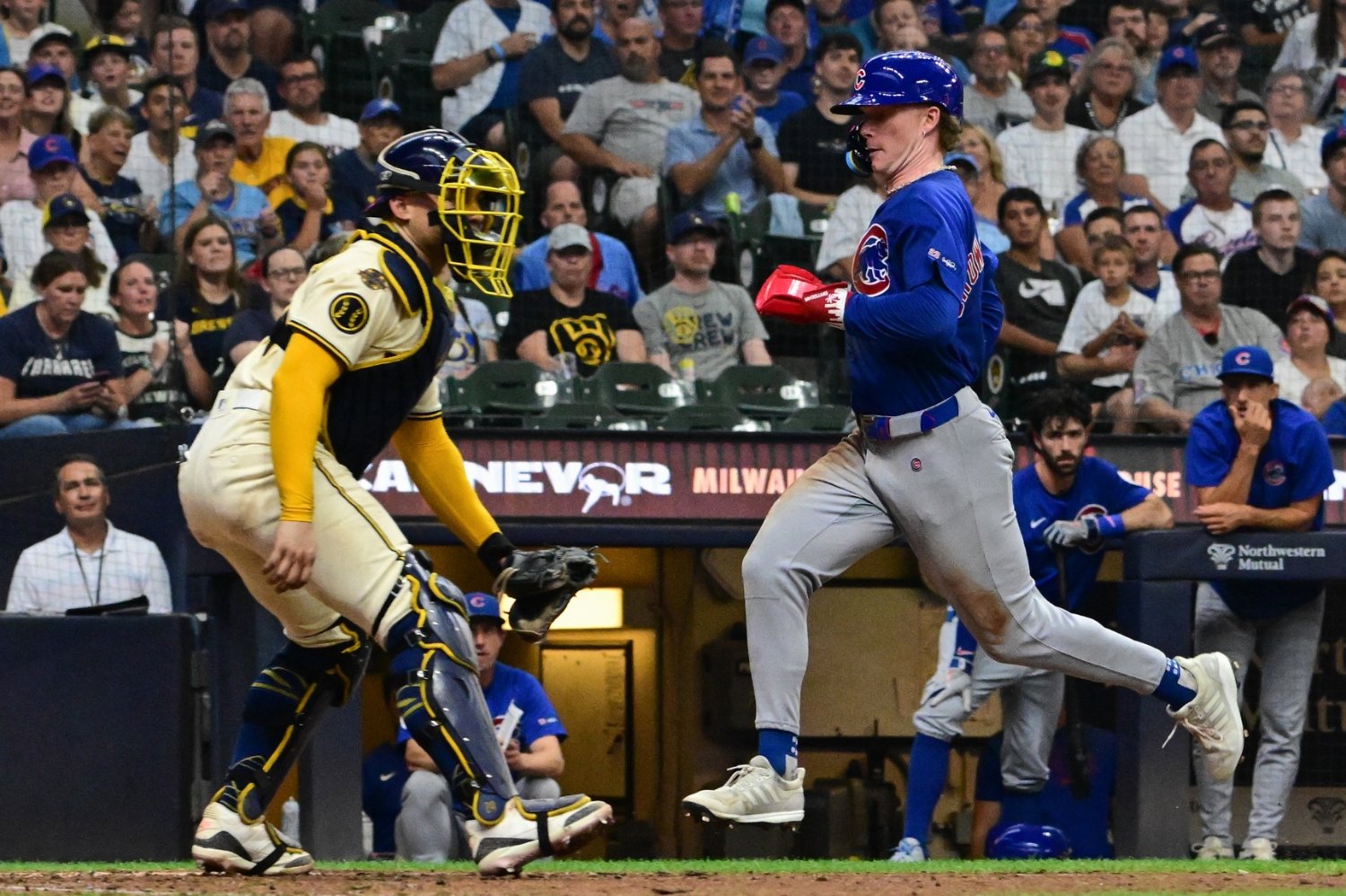 The Chicago Cubs have had one of the best offenses all season, leading MLB in run differential for most of the season. Their +115 run differential is heavily swayed by their +44 in April and +46 in May, but although they've still had a positive number in June, July, and August, it's only a combined +17. Manager Craig Counsell was enjoying the early success and had a lead of, at most, 6.5 games in the NL Central; however, over the last three months, including August, the Milwaukee Brewers have been on a hot streak. Counsell is now staring up at his former ball club, taking the lead in the division (four-game lead) and run differential (+127). The lack of run differential can be attributed to both the Cubs' offense and pitching. On offense, the team has been a roller coaster. Matt Shaw, despite a hot streak in recent weeks, is hitting .222/.234/.289 on the season. Ian Happ and Carson Kelly both started March and April on a productive note, but have since cooled off. Happ (.265) and Kelly (.360) started the season hitting well, but have dropped since to .211 and .242, respectively. Dansby Swanson was the reverse compared to Happ and Kelly, hitting just .203 through April, but has since hit .255, a solid but unspectacular average. These four have been nearly every-day starters and part of the reason the offensive production has slowed down over the last two months Pitching has been mediocre all season, ranking 14th in starting pitching (3.94) and 12th in bullpen (3.91) ERAs. Sadly, the team lost the ace Justin Steele in April after he had season-ending surgery to repair the flexor tendon and UCL in his left elbow. Although he had struggled in his four starts with a 4.76 ERA, he's been one of the Cubs' top starters the last three seasons. Matthew Boyd (2.34) is the only starting pitcher with an ERA under 3.00. Shota Imanaga (3.12) and Cade Horton (3.42) are the only other starters under a 4.00 ERA. Colin Rea (4.23), Jameson Taillon (4.44), and Ben Brown (6.04) have been varying levels of disappointing throughout the season. Fans wanted a starting pitcher added at the trade deadline, but President of Baseball Operations Jed Hoyer only added Michael Soroka from the Washington Nationals. However, Soroka left his only start with the Cubs on Monday due to shoulder discomfort and has been shut down for seven-10 days. Hoyer refused to give up the prospects needed to obtain a better option at the position, and now it looks bad as Brown will return to the rotation with no depth behind him until Taillon, Soroka, or Javier Assad, who has been out all season, return from their injury list stints. The bullpen has been slightly better at keeping runs off the board, though it isn't elite in that department. Daniel Palencia (1.55) and Drew Pomeranz (1.99) have been outstanding in the back-end of the bullpen, posting under a 2.00 ERA in 39 and 37 appearances, respectively. Caleb Thielbar (2.34) and Brad Keller (2.76) have been the workhorses in the middle innings, making over 45 appearances. Taylor Rogers and Andrew Kittredge were solid acquisitions at the trade deadline to strengthen the bullpen. He's made three appearances and has yet to give up an earned run. Now, the concerning run differential the Brewers have put up in June (+41), July (+39), and the early part of August (+32) shows how hot they've been and shows no signs of easing up. They've suffered injuries to a couple of star players, but that hasn't hurt the production. Jackson Chourio (.276/.311/.474) injured his hamstring on July 30 and is expected to miss most, if not all, of August and some of September, but even that hasn't impacted the Brew Crew. Rookie Jacob Misiorowski (2.70 ERA) has been phenomenal in his short MLB debut, but he suffered a left tibia contusion on July 31 and looks to return mid-August. However, Logan Henderson was recalled to replace Misiorowski and has been just as good, posting a 1.78 ERA over his first five starts of the entire season (four of which were at the beginning of the season). Rhys Hoskins has been out as well since July 7, due to a Grade 2 left thumb sprain. His return isn't expected until September, though. Andrew Vaughn was a surprise trade acquisition for multiple reasons. Hoskins was healthy at the time of the trade, so Vaughn was sent to Triple-A, and another reason was that Vaughn was struggling this season, hitting .189 while with the Chicago White Sox. However, Hoskins got injured, and Vaughn has turned his season around in Milwaukee. In only 21 games with the Brewers, the first baseman is hitting .370/.435/.462 with six home runs, 13 runs, and 26 knocked in. Pitching-wise, the Brewers' starters have done a fantastic job keeping runs off the scoreboard. They rank second in ERA (3.34), being led by Henderson, Misiorowski, Freddy Peralta (3.03 ERA), and Brandon Woodruff (2.22), who just made his 2025 debut on July 6, after missing the beginning of the season due to shoulder surgery in October 2023, and missed the entire 2024 season. It's a massive boost to a team when you know you can get five or six quality innings out of your starters and give the bullpen a minimal amount of innings to work with. The Brewers' bullpen ranks 16th in ERA (3.97), though that unit is far less taxed than the Cubs' overworked relief crew. The good news for Cubs fans is that the team has the 28th-easiest strength of schedule remaining. In the remaining 48 games, seven of which come against the league's worst record, the Colorado Rockies, and three against the second-worst record, the White Sox. Plus, five will come against the Brewers who have the fifth-hardest schedule remaining. They have three games remaining against the Toronto Blue Jays, Philadelphia Phillies, San Diego Padres, and New York Mets. Despite the slow last three months, it's too early to give up on the Cubs, even as the Brewers have usurped them in both the standings and run differential race. Some healthy returns to the rotation and some returns to form in the lineup could catapult the Cubs back to their comfortable position atop both leaderboards.
 -
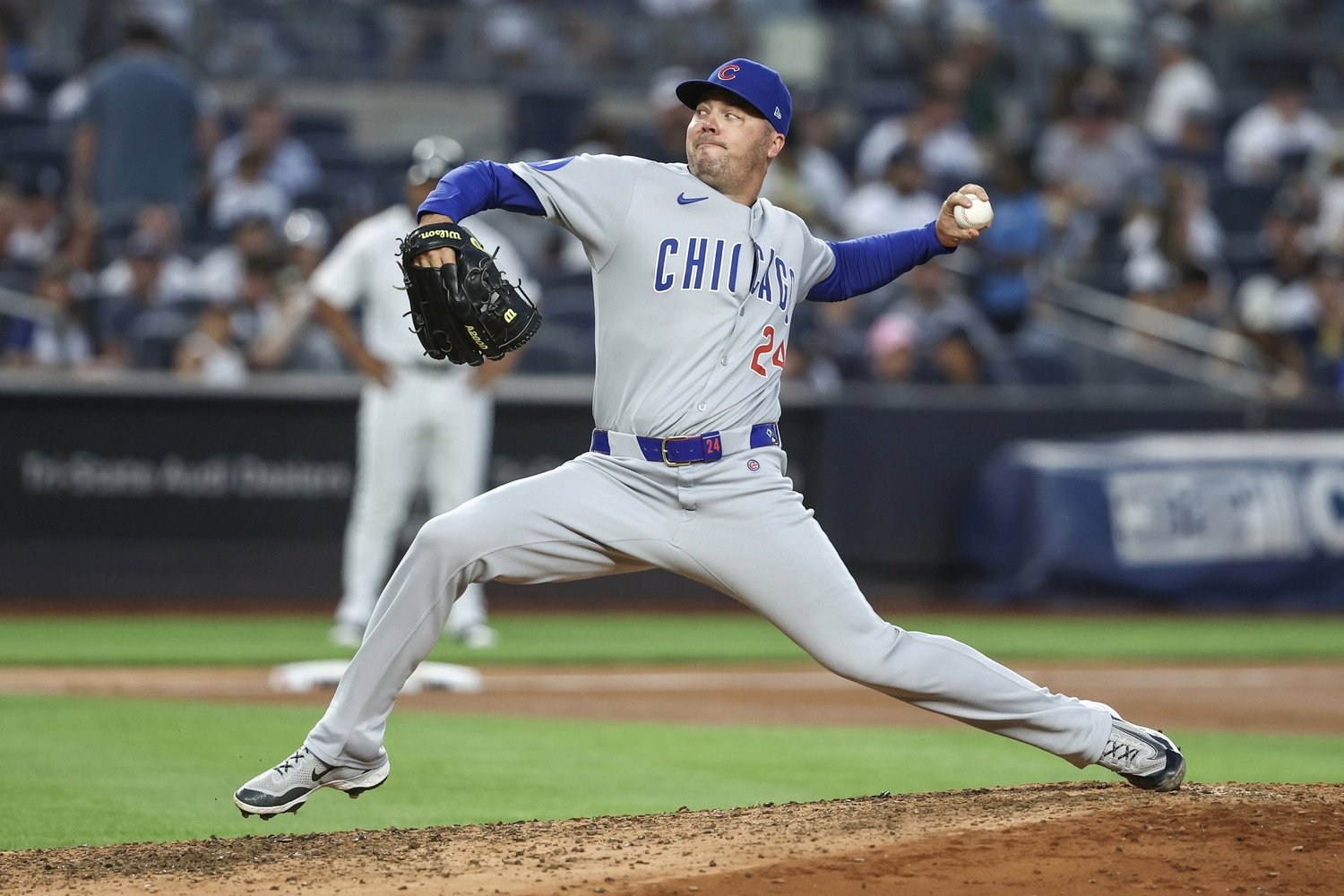 The Chicago Cubs bullpen is ranked 12th in ERA (3.87) this season through August 4, although six relievers have an ERA under 3.00. That success is led by closer Daniel Palencia's 1.55 ERA, but Brad Keller (2.76), Drew Pomeranz (2.05), Ryan Brasier (2.95), and Taylor Rogers (2.38), who was acquired at the trade deadline, are all major contributors to the bullpen's success and are names people outside of the North Side of Chicago would recognize. However, there's one reliever producing at a remarkable rate that is seldom talked about. Caleb Thielbar is having the best season of his nine-year career, save for his abbreviated campaigns in 2013 (rookie year) and 2020 (pandemic-shortened season). The lefty has thrown 42 innings thus far in 2025, which is the second most in the bullpen, and posted a 2.36 ERA, 39:12 strikeout:walk ratio, while holding hitters to a .166 batting average. Part of what makes his season so special is the fact that he is 38 years old. He spent his last eight seasons with the Minnesota Twins; however, Thielbar left the game in 2016 and went on to be the pitching coach at Division II Augustana University in Sioux Falls, South Dakota. He wasn't known for a four-seam fastball that topped out at 90 mph, but rather his off-speed pitches that made people chase. Thielbar returned to baseball in 2018, pitching in the Detroit Tigers' minor league system, and 2019, the lefty earned a spot on the Team USA baseball team. Pitching against college teams provided him with valuable experience in his primary role as a coach. He picked up tips by watching the top college teams in the country. Although Thielbar struggled in the Premier 12 tournament with a 16.20 ERA in 1 2/3 innings, at this time, his fastball was topping out at 93 mph and was catching the eye of MLB scouts. The Twins then signed him again, and his career took off for a second time. In 2020, he made his MLB return and threw his first pitch in 1,923 days. Thielbar finished that season throwing a 2.25 ERA, with a 22:9 strikeout:walk ratio, and a .192 opposing batting average. The next three seasons, he finished with mid-3.00 ERAs, though in 2024, he had a 5.32 ERA, resulting in his not being re-signed by the Twins during the offseason. The Cubs then took a chance on the 38-year-old, signing him to a one-year, $2.75 million contract. That's quite the discount for the production Thielbar has produced this season. Baseball Savant has harshly ranked the lefty in the 24th percentile for fastball velocity at 92.6 mph, but has him in the 98th percentile in expected earned runs (2.39), and in the 95th percentile in expected batting average (.199). The Cubs' bullpen is loaded with elite arms that look to be a force in the second half of the season. Thielbar is an unlikely source for such production, but he has been one of the biggest success stories this season. Considering that we're coming up on the five-year anniversary of his five-year hiatus, he deserves a lot more love for the production he's brought to Chicago this season.
 -
Image courtesy of © Wendell Cruz-Imagn Images The Chicago Cubs bullpen is ranked 12th in ERA (3.87) this season through August 4, although six relievers have an ERA under 3.00. That success is led by closer Daniel Palencia's 1.55 ERA, but Brad Keller (2.76), Drew Pomeranz (2.05), Ryan Brasier (2.95), and Taylor Rogers (2.38), who was acquired at the trade deadline, are all major contributors to the bullpen's success and are names people outside of the North Side of Chicago would recognize. However, there's one reliever producing at a remarkable rate that is seldom talked about. Caleb Thielbar is having the best season of his nine-year career, save for his abbreviated campaigns in 2013 (rookie year) and 2020 (pandemic-shortened season). The lefty has thrown 42 innings thus far in 2025, which is the second most in the bullpen, and posted a 2.36 ERA, 39:12 strikeout:walk ratio, while holding hitters to a .166 batting average. Part of what makes his season so special is the fact that he is 38 years old. He spent his last eight seasons with the Minnesota Twins; however, Thielbar left the game in 2016 and went on to be the pitching coach at Division II Augustana University in Sioux Falls, South Dakota. He wasn't known for a four-seam fastball that topped out at 90 mph, but rather his off-speed pitches that made people chase. Thielbar returned to baseball in 2018, pitching in the Detroit Tigers' minor league system, and 2019, the lefty earned a spot on the Team USA baseball team. Pitching against college teams provided him with valuable experience in his primary role as a coach. He picked up tips by watching the top college teams in the country. Although Thielbar struggled in the Premier 12 tournament with a 16.20 ERA in 1 2/3 innings, at this time, his fastball was topping out at 93 mph and was catching the eye of MLB scouts. The Twins then signed him again, and his career took off for a second time. In 2020, he made his MLB return and threw his first pitch in 1,923 days. Thielbar finished that season throwing a 2.25 ERA, with a 22:9 strikeout:walk ratio, and a .192 opposing batting average. The next three seasons, he finished with mid-3.00 ERAs, though in 2024, he had a 5.32 ERA, resulting in his not being re-signed by the Twins during the offseason. The Cubs then took a chance on the 38-year-old, signing him to a one-year, $2.75 million contract. That's quite the discount for the production Thielbar has produced this season. Baseball Savant has harshly ranked the lefty in the 24th percentile for fastball velocity at 92.6 mph, but has him in the 98th percentile in expected earned runs (2.39), and in the 95th percentile in expected batting average (.199). The Cubs' bullpen is loaded with elite arms that look to be a force in the second half of the season. Thielbar is an unlikely source for such production, but he has been one of the biggest success stories this season. Considering that we're coming up on the five-year anniversary of his five-year hiatus, he deserves a lot more love for the production he's brought to Chicago this season. View full article
-
The Only 7 Trade Targets the Cubs Should Deal Top Prospects to Acquire
Bryan Jaeger posted an article in Cubs
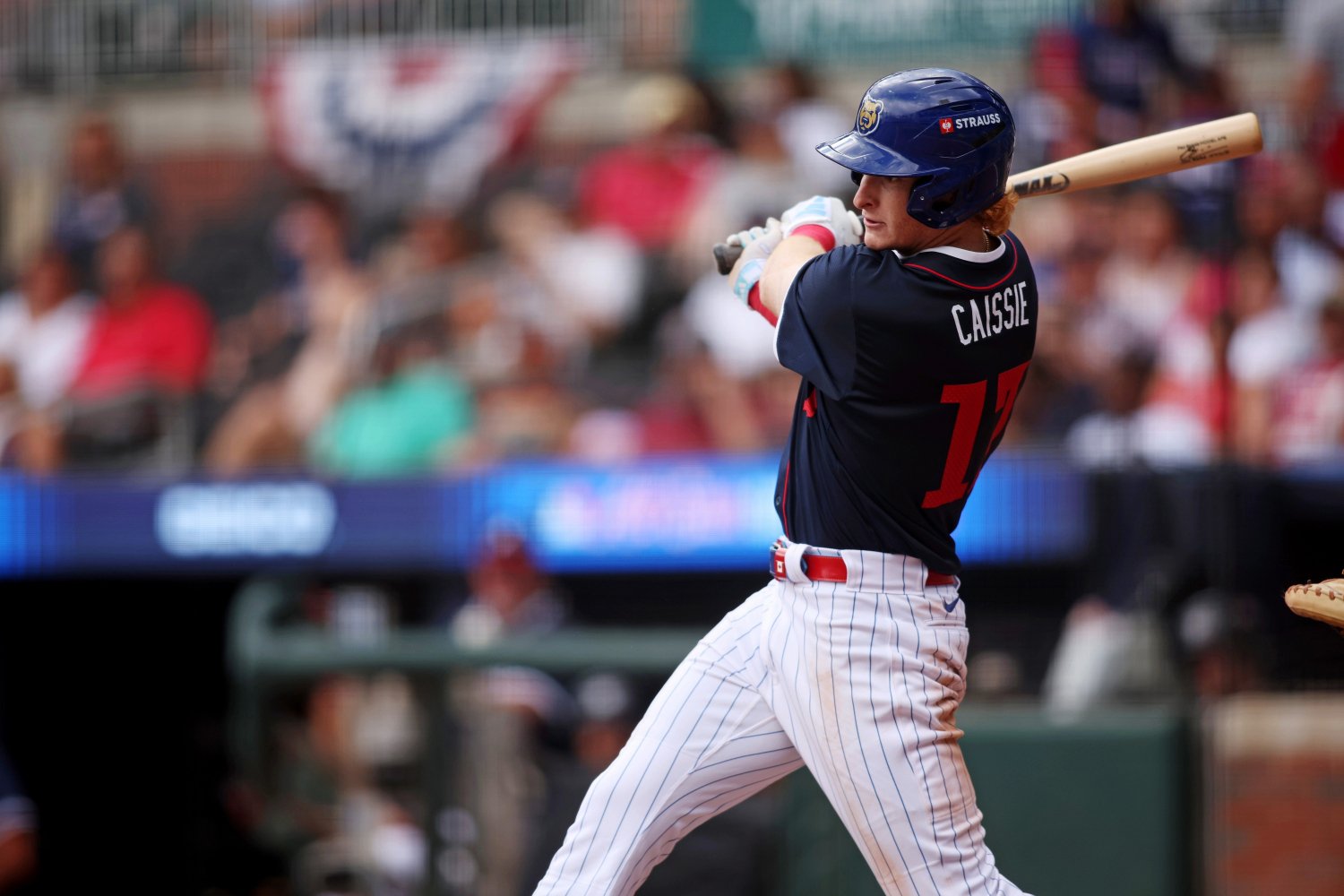 The Chicago Cubs find themselves in a good position standings-wise as the trade deadline draws near. As of July 27, they are tied for first in the NL Central with the Milwaukee Brewers and in striking distance of the best record in the National League at 61-43. This positioning will prompt the team to feel the need to be aggressive during the final days leading up the trade deadline, especially with its top prospects available. The Cubs seem to be attached to nearly every big-name on the market thanks to their abundance of player assets, including Owen Caissie, Moisés Ballesteros, Jaxon Wiggins, Kevin Alcántara, Jonathon Long, and James Triantos. The team desperately needs pitching, both a starter and bullpen relief, and they've been tied to about every option available. Third base was a need, but Matt Shaw has been hot in the second half of the season and may be alleviating some concern at the hot corner. However, that small sample size doesn't make fans comfortable after watching him struggle in the first half, hitting 41-207 (.198). Third base should still be addressed, but it shouldn't be Eugenio Suárez unless the Diamondbacks' asking price reduces. Of course, his power bat would be nice; however, his asking price as a rental for the rest of the season isn't worth hurting the Cubs' future by trading multiple top prospects for him, and he's not needed to sign a long-term deal, as Shaw is still the long-term plan. If the future is going to be hampered by trading these prospects, then it needs to be for either elite pitching talent or young, controllable players who won't set the future back two steps. President of Baseball Operations Jed Hoyer will face significant pressure over the next few days to make the right decisions that set the team up for success without jeopardizing its future. These players are prime targets for the Cubs' front office to go after. 1. Emmanuel Clase, Cleveland Guardians Clase is 27 years old and is under contract through 2026 for $6.4 million, with club options in 2027 and 2028, each valued at $10 million per season. Clase has taken a slight step back this season, following his 2024 win of the AL Reliever of the Year award and third-place finish in AL Cy Young voting. Still, he's still having a successful season with a 2.74 ERA over 46 innings. Control has been an issue, as his walk percentage has increased to 5.1 percent from 3.7 percent last season, but his strikeouts per nine innings have also risen to 9.20 from 7.99. Clase brings postseason success and additional firepower to a bullpen that ranks 10th amongst MLB in ERA (3.80) and third in strikeouts (317). 2. Joe Ryan, Minnesota Twins Ryan may be the top starting pitcher to target if made available. He's 29 years old and is arbitration-eligible in both the 2026 and 2027 seasons. For those same reasons, he may be the priciest option, as he's having his best season to date over his five-year career. He's 10-4 with a 2.63 ERA, and has a 132:33 strikeout:walk ratio over 116 1/3 innings. Batters are only hitting .196 off of the righty, which is his second-career lowest batting average against since his rookie season. When runners get on base, Ryan has been able to settle down, as evidenced by his 82.6% runners left on base percentage. The Twins' ace would vastly improve a starting rotation that ranks 15th among MLB teams in ERA (4.03) and seventh in strikeouts (455). 3. Jhoan Duran, Minnesota Twins If the Twins are selling, then Duran is a reliever the Cubs should consider. The 27-year-old is a hard-throwing, right-handed reliever who has a 1.96 ERA with 52 strikeouts (but 23 walks) over 47 1/3 innings. His strikeout percentage is at a career-low 26.5 percent this season, down from 28.9 percent last season and 33.5 percent his rookie season. However, Baseball Savant ranks him in the 100th percentile for fastball velocity (100.3). He's started throwing a sweeper this season that has a 55.6 percent whiff rate, and his knuckle curve (42.6) and split finger (27.4) have increased in that respect from last season. He's thrown 477 off-speed pitches compared to 244 four-seamers, which could contribute to the higher walk rate, and may be something the Cubs would want to hone in on. Regardless, Duran would be an excellent addition to the bullpen in the long term. 4. MacKenzie Gore, Washington Nationals Gore is having his best season in his four-year career with a 3.52 ERA and a 144:47 strikeout:walk ratio over 117 2/3 innings. Like Ryan, he's arbitration-eligible through the 2027 season, but he's also three years younger (26). Lefties are already the dominant force in the Cubs' starting rotation, although it won't hurt to add Gore. Walks have been an issue lately, as he's walked more than three in five of his last six games and walked six in his last start, though he was able to work around the base runners, only allowing one earned run over five innings. If the Nationals' interim front office makes him available, he's arguably the best player on the market. 5. Mitch Keller, Pittsburgh Pirates Keller isn't the sexiest option for fans, but he's highly durable. You can't say that about the four options that I've listed above, all of whom have had trouble staying healthy in their careers. The 29-year-old is making $15.4 million this season, and $16.9 million, $18.4 million, and $20.4 million over the next three seasons, respectively. Keller has thrown at least 158 innings in the last three seasons and has already thrown 125 this season. He has a 3.53 ERA over those innings with 97 strikeouts. He's gone six or more innings in a game in 16 of 21 starts this season. His durability is a valuable asset when considering trading away prospects, and thanks to the Pirates' usual frugality, he'd likely be one of the cheaper players to acquire on this list. 6. Edward Cabrera, Miami Marlins Cabrera has found his groove this season, posting a 3.48 ERA over 88 innings with 92 strikeouts. This is his second-best season since his 3.01 ERA over 71 2/3 innings in 2021. The 27-year-old is arbitration-eligible through the 2028 season, making him a valuable long-term asset. The righty's walk rate is a little high (8.2 percent) this season, but it's the lowest Cabrera has allowed in his career. This rate is a substantial drop from the 15.2 percent he threw in 2023, and a sign that the best may still be yet to come. 7. Anthony Bender, Miami Marlins Bender is the oldest player (30) on this list, but he has been outstanding this season out of the Marlins' bullpen and is arbitration-eligible through the 2027 season. Through 43 1/3 innings, he's posted a 1.87 ERA. His strikeout:walk ratio (34:21) isn't too impressive, but hitters are only batting .163 off of the righty. Bender has also set a career-high 17 holds, which may not sound like an important stat, but unlike the other high-leverage relievers on this list, it makes him an excellent option late in games who won't butt heads with Daniel Palencia for the closer's gig.
- 1 comment
-
- 2
-

-
- 2025 trade deadline
- joe ryan
- (and 8 more)
-
Image courtesy of © Brett Davis-Imagn Images The Chicago Cubs find themselves in a good position standings-wise as the trade deadline draws near. As of July 27, they are tied for first in the NL Central with the Milwaukee Brewers and in striking distance of the best record in the National League at 61-43. This positioning will prompt the team to feel the need to be aggressive during the final days leading up the trade deadline, especially with its top prospects available. The Cubs seem to be attached to nearly every big-name on the market thanks to their abundance of player assets, including Owen Caissie, Moisés Ballesteros, Jaxon Wiggins, Kevin Alcántara, Jonathon Long, and James Triantos. The team desperately needs pitching, both a starter and bullpen relief, and they've been tied to about every option available. Third base was a need, but Matt Shaw has been hot in the second half of the season and may be alleviating some concern at the hot corner. However, that small sample size doesn't make fans comfortable after watching him struggle in the first half, hitting 41-207 (.198). Third base should still be addressed, but it shouldn't be Eugenio Suárez unless the Diamondbacks' asking price reduces. Of course, his power bat would be nice; however, his asking price as a rental for the rest of the season isn't worth hurting the Cubs' future by trading multiple top prospects for him, and he's not needed to sign a long-term deal, as Shaw is still the long-term plan. If the future is going to be hampered by trading these prospects, then it needs to be for either elite pitching talent or young, controllable players who won't set the future back two steps. President of Baseball Operations Jed Hoyer will face significant pressure over the next few days to make the right decisions that set the team up for success without jeopardizing its future. These players are prime targets for the Cubs' front office to go after. 1. Emmanuel Clase, Cleveland Guardians Clase is 27 years old and is under contract through 2026 for $6.4 million, with club options in 2027 and 2028, each valued at $10 million per season. Clase has taken a slight step back this season, following his 2024 win of the AL Reliever of the Year award and third-place finish in AL Cy Young voting. Still, he's still having a successful season with a 2.74 ERA over 46 innings. Control has been an issue, as his walk percentage has increased to 5.1 percent from 3.7 percent last season, but his strikeouts per nine innings have also risen to 9.20 from 7.99. Clase brings postseason success and additional firepower to a bullpen that ranks 10th amongst MLB in ERA (3.80) and third in strikeouts (317). 2. Joe Ryan, Minnesota Twins Ryan may be the top starting pitcher to target if made available. He's 29 years old and is arbitration-eligible in both the 2026 and 2027 seasons. For those same reasons, he may be the priciest option, as he's having his best season to date over his five-year career. He's 10-4 with a 2.63 ERA, and has a 132:33 strikeout:walk ratio over 116 1/3 innings. Batters are only hitting .196 off of the righty, which is his second-career lowest batting average against since his rookie season. When runners get on base, Ryan has been able to settle down, as evidenced by his 82.6% runners left on base percentage. The Twins' ace would vastly improve a starting rotation that ranks 15th among MLB teams in ERA (4.03) and seventh in strikeouts (455). 3. Jhoan Duran, Minnesota Twins If the Twins are selling, then Duran is a reliever the Cubs should consider. The 27-year-old is a hard-throwing, right-handed reliever who has a 1.96 ERA with 52 strikeouts (but 23 walks) over 47 1/3 innings. His strikeout percentage is at a career-low 26.5 percent this season, down from 28.9 percent last season and 33.5 percent his rookie season. However, Baseball Savant ranks him in the 100th percentile for fastball velocity (100.3). He's started throwing a sweeper this season that has a 55.6 percent whiff rate, and his knuckle curve (42.6) and split finger (27.4) have increased in that respect from last season. He's thrown 477 off-speed pitches compared to 244 four-seamers, which could contribute to the higher walk rate, and may be something the Cubs would want to hone in on. Regardless, Duran would be an excellent addition to the bullpen in the long term. 4. MacKenzie Gore, Washington Nationals Gore is having his best season in his four-year career with a 3.52 ERA and a 144:47 strikeout:walk ratio over 117 2/3 innings. Like Ryan, he's arbitration-eligible through the 2027 season, but he's also three years younger (26). Lefties are already the dominant force in the Cubs' starting rotation, although it won't hurt to add Gore. Walks have been an issue lately, as he's walked more than three in five of his last six games and walked six in his last start, though he was able to work around the base runners, only allowing one earned run over five innings. If the Nationals' interim front office makes him available, he's arguably the best player on the market. 5. Mitch Keller, Pittsburgh Pirates Keller isn't the sexiest option for fans, but he's highly durable. You can't say that about the four options that I've listed above, all of whom have had trouble staying healthy in their careers. The 29-year-old is making $15.4 million this season, and $16.9 million, $18.4 million, and $20.4 million over the next three seasons, respectively. Keller has thrown at least 158 innings in the last three seasons and has already thrown 125 this season. He has a 3.53 ERA over those innings with 97 strikeouts. He's gone six or more innings in a game in 16 of 21 starts this season. His durability is a valuable asset when considering trading away prospects, and thanks to the Pirates' usual frugality, he'd likely be one of the cheaper players to acquire on this list. 6. Edward Cabrera, Miami Marlins Cabrera has found his groove this season, posting a 3.48 ERA over 88 innings with 92 strikeouts. This is his second-best season since his 3.01 ERA over 71 2/3 innings in 2021. The 27-year-old is arbitration-eligible through the 2028 season, making him a valuable long-term asset. The righty's walk rate is a little high (8.2 percent) this season, but it's the lowest Cabrera has allowed in his career. This rate is a substantial drop from the 15.2 percent he threw in 2023, and a sign that the best may still be yet to come. 7. Anthony Bender, Miami Marlins Bender is the oldest player (30) on this list, but he has been outstanding this season out of the Marlins' bullpen and is arbitration-eligible through the 2027 season. Through 43 1/3 innings, he's posted a 1.87 ERA. His strikeout:walk ratio (34:21) isn't too impressive, but hitters are only batting .163 off of the righty. Bender has also set a career-high 17 holds, which may not sound like an important stat, but unlike the other high-leverage relievers on this list, it makes him an excellent option late in games who won't butt heads with Daniel Palencia for the closer's gig. View full article
-
 The Chicago Cubs have made all of their picks for the 2025 draft, and suffice to say, it's a pitcher-heavy class for Jed Hoyer and company. We'll have a recap of all their Day Two picks below, and you can use the following links to see our prior analysis and in-depth reviews of their previous picks. Round 1 Recap Round 2 Recap Round 3 Recap Day One Recap Rounds 6-10 Recap Without further ado, the full list of Day Two selections for the Chicago Cubs during the 2025 MLB Draft: Round 4: Kaleb Wing, RHP (HS, Senior) Wing was a two-way player at Scotts Valley High School in California. This past spring, he found success on the mound, appearing in 10 games while posting a 1.23 ERA. He's still raw on the mound, but has shown capable stuff in his senior year. At the plate last season, he hit .307 with four home runs, 22 runs, and 24 knocked in. He's committed to Loyola Marymount, so it'll be interesting to see his decision. Round 5: Kade Snell, OF (Alabama, Senior) Snell was a two-way player at Alabama in 2024, before focusing entirely on left field in 2025. This past spring, he hit .363/.464/.575 with 10 home runs, 49 runs, and 52 knocked in. He has great discipline with an 18:38 strikeout:walk ratio. The left fielder won't contribute much in the power game, but possesses excellent bat-to-ball skills to get on base. Round 6: Josiah Hartshorn, OF (HS, Senior) Hartshorn is a switch-hitting outfielder for Orange Lutheran High School in California. He possesses good contact ability, hitting .364, but has a lot more raw power than in-game power right now (five home runs last year), which means he may stick with his commitment to Texas A&M. Round 7: Pierce Coppola, LHP (Florida, Redshirt Junior) Coppola struggled in his freshman and redshirt sophomore seasons after missing all of 2023 due to an injury, posting ERAs of 4.15 and 8.75, respectively. He figured out his mechanics this past spring, throwing a 2.53 ERA with a 43:13 strikeout:walk ratio over 21 1/3 innings. He's been injury-prone over his career, so he still needs some time to develop, but when healthy, he's a name to watch. Round 8: Jake Knapp, RHP (North Carolina, Senior) Knapp missed all of the 2024 season due to needing Tommy John surgery, but he returned strong, winning the National Pitcher of the Year Award. He posted a 2.02 ERA with an 88:27 strikeout:walk ratio while going 14-0 in 15 starts. His 6'5'' height could be a massive asset in his pitching game if he can stay healthy. Round 9: Colton Book, LHP (Saint Joseph's, Redshirt Junior) Book is a 6'4" lefty that posted a 3.53 ERA and had a 122:28 strikeout:walk ratio over 86 2/3 innings this year. This was his first full season as a starting pitcher, but a team can't pass up a lefty with that size. He can further develop as a starter in the farm system. Round 10: Justin Stransky, C (Fresno State, Senior) Stransky is the first player drafted by the Cubs who isn't a pitcher or outfielder. His bat won't blow you away, but he's a good contact hitter and has a great eye at the plate. Last season with Fresno State, he hit .316 with 12 home runs, 49 runs, and 45 knocked in, but he only had three home runs in 2023. The catcher was drafted for his defensive skills. In the summer West Coast league, he threw out 40 percent of would-be base stealers. Round 11: Eli Jerzembeck, RHP (South Carolina, Senior) The Cubs went back to drafting pitchers, but selected one who hasn't pitched since 2023 due to injuries. In his lone collegiate year, he posted a 2.84 ERA and a 36:7 strikeout:walk ratio over 31 2/3 innings. If this production returns, then it'll be worth an 11th-round pick on a pitcher who has massive talent but has missed a ton of time due to injuries. Round 12: Connor Spencer, RHP (Ole Miss, Senior) Spencer struggled at Southeastern Louisiana in 2023 (5.65 ERA) and Ole Miss in 2024 (6.16 ERA), but something clicked this past spring. He's always been a relief pitcher, however, he was impressive coming out of the bullpen this season, posting a 1.82 ERA over 24 2/3 innings. Round 13: Nate Williams, RHP (Mississippi State, Senior) The Cubs chose another reliever from a Mississippi College, but this one has very little D1 experience. Williams' first two collegiate seasons were at Florence-Darlington Tech, and then he had two seasons dealing with injuries before heading to Mississippi State. He struggled for the Bulldogs, posting a 4.23 ERA over 27 2/3 innings, but what he did succeed at was missing bats. He struck out 51 batters in those innings, which is the type of production that is worth a 13th-round flyer. Round 14: Kaemyn Franklin, RHP (HS, Senior) It's clear what the Cubs wanted from this draft: pitching. This time, they picked a high schooler from Victory Christian in Oklahoma. He's a two-way player who has already committed to his home state school, Oklahoma. Along with pitching, Franklin also plays third base. Perfect Game has him ranked as the 68th-ranked prospect nationwide, but it may be ideal for him to go to Oklahoma and bulk up to get stronger before pursuing a professional career. Round 15: Noah Edders, RHP (Troy, Senior) Edders spent two seasons at Bradley before joining Troy for one season. Over those three seasons, he posted a 5.50 ERA and struck out 185 batters. Control is an issue Edders has that'll need to be addressed. The righty has thrown 128 walks with 29 wild pitches in his career, but you can bet the Cubs are betting on their ability to help limit those free passes while keeping the strikeouts high. Round 16: Riely Hunsaker, RHP (Lamar, Senior) In 2024, Hunsaker attended Texas A&M-Corpus Christi but posted a 6.82 ERA. He struggled with control, as evidenced by his 51:30 strikeout:walk ratio over 64 2/3 innings. He then joined Lamar, where he got his control tamed and showed success. The righty posted a 2.47 ERA with a 70:22 strikeout:walk ratio over 76 2/3 innings. The Cubs are hoping to be catching onto his late-rising stock at just the right time. Round 17: Logan Poteet, C (UNC Charlotte, Redshirt Junior) The Cubs ventured off the pitcher path to draft another catcher. Poteet redshirted in 2023 while at Vanderbilt and played sparingly in 2024. This past spring, he hit .283 with 10 home runs, 38 runs, and 40 runs batted in at UNC Charlotte. His flaw was striking out 50 times, which was only ten more than his walk total. Poteet will need to develop a way to be more aggressive at the plate while utilizing his advanced plate approach that yielded .393 on-base percentage this year. Round 18: Connor Knox, RHP (George Mason, Redshirt Junior) Knox spent three seasons at George Mason, and he steadily improved each year. His career collegiate ERA is 6.11, but last season, he posted a 3.29 mark. There's a lot of development needed here, as he's only thrown 53 innings over this span. He has control issues (39 walks) and doesn't miss a ton of bats (56 strikeouts), but this is another late-riser that the Cubs clearly wanted a chance to develop in-house. Round 19: Caleb Barnett, 3B (HS, Senior) Barnett is another two-way player the Cubs have selected. He's a big kid at 6'6" and 220 lbs. who has plenty of power. He throws a fastball in the low-90s, so his future could be either at the plate or on the mound, and with that size, it's worth a 19th-round pick. The main issue will be breaking his commitment to Alabama, as he currently ranks as the second-best third baseman in his high school class according to Perfect Game. Round 20: Freddy Rodriguez, RHP (Hawaii, Redshirt Junior) Rodriguez has spent three seasons in the Big West Conference, but they haven't been pretty. His first two seasons were spent with Cal Poly, and last season he attended Hawaii. He posted a 5.08 ERA in this span, but this stat was heavily inflated by the 7.25 and 81.00 ERAs posted before transferring to Hawaii. Rodriguez has mainly been a reliever and will need to get more consistent on the mound. A big performance in the West Coast League in 2024 (1.02 ERA in 44 innings) is clearly what drew the Cubs' attention. What do you think of the Cubs' Day Two haul? Let us know in the comments!
 -
Image courtesy of © SCOTT CLAUSE / USATODAY Network / USA TODAY NETWORK via Imagn Images The Chicago Cubs have made all of their picks for the 2025 draft, and suffice to say, it's a pitcher-heavy class for Jed Hoyer and company. We'll have a recap of all their Day Two picks below, and you can use the following links to see our prior analysis and in-depth reviews of their previous picks. Round 1 Recap Round 2 Recap Round 3 Recap Day One Recap Rounds 6-10 Recap Without further ado, the full list of Day Two selections for the Chicago Cubs during the 2025 MLB Draft: Round 4: Kaleb Wing, RHP (HS, Senior) Wing was a two-way player at Scotts Valley High School in California. This past spring, he found success on the mound, appearing in 10 games while posting a 1.23 ERA. He's still raw on the mound, but has shown capable stuff in his senior year. At the plate last season, he hit .307 with four home runs, 22 runs, and 24 knocked in. He's committed to Loyola Marymount, so it'll be interesting to see his decision. Round 5: Kade Snell, OF (Alabama, Senior) Snell was a two-way player at Alabama in 2024, before focusing entirely on left field in 2025. This past spring, he hit .363/.464/.575 with 10 home runs, 49 runs, and 52 knocked in. He has great discipline with an 18:38 strikeout:walk ratio. The left fielder won't contribute much in the power game, but possesses excellent bat-to-ball skills to get on base. Round 6: Josiah Hartshorn, OF (HS, Senior) Hartshorn is a switch-hitting outfielder for Orange Lutheran High School in California. He possesses good contact ability, hitting .364, but has a lot more raw power than in-game power right now (five home runs last year), which means he may stick with his commitment to Texas A&M. Round 7: Pierce Coppola, LHP (Florida, Redshirt Junior) Coppola struggled in his freshman and redshirt sophomore seasons after missing all of 2023 due to an injury, posting ERAs of 4.15 and 8.75, respectively. He figured out his mechanics this past spring, throwing a 2.53 ERA with a 43:13 strikeout:walk ratio over 21 1/3 innings. He's been injury-prone over his career, so he still needs some time to develop, but when healthy, he's a name to watch. Round 8: Jake Knapp, RHP (North Carolina, Senior) Knapp missed all of the 2024 season due to needing Tommy John surgery, but he returned strong, winning the National Pitcher of the Year Award. He posted a 2.02 ERA with an 88:27 strikeout:walk ratio while going 14-0 in 15 starts. His 6'5'' height could be a massive asset in his pitching game if he can stay healthy. Round 9: Colton Book, LHP (Saint Joseph's, Redshirt Junior) Book is a 6'4" lefty that posted a 3.53 ERA and had a 122:28 strikeout:walk ratio over 86 2/3 innings this year. This was his first full season as a starting pitcher, but a team can't pass up a lefty with that size. He can further develop as a starter in the farm system. Round 10: Justin Stransky, C (Fresno State, Senior) Stransky is the first player drafted by the Cubs who isn't a pitcher or outfielder. His bat won't blow you away, but he's a good contact hitter and has a great eye at the plate. Last season with Fresno State, he hit .316 with 12 home runs, 49 runs, and 45 knocked in, but he only had three home runs in 2023. The catcher was drafted for his defensive skills. In the summer West Coast league, he threw out 40 percent of would-be base stealers. Round 11: Eli Jerzembeck, RHP (South Carolina, Senior) The Cubs went back to drafting pitchers, but selected one who hasn't pitched since 2023 due to injuries. In his lone collegiate year, he posted a 2.84 ERA and a 36:7 strikeout:walk ratio over 31 2/3 innings. If this production returns, then it'll be worth an 11th-round pick on a pitcher who has massive talent but has missed a ton of time due to injuries. Round 12: Connor Spencer, RHP (Ole Miss, Senior) Spencer struggled at Southeastern Louisiana in 2023 (5.65 ERA) and Ole Miss in 2024 (6.16 ERA), but something clicked this past spring. He's always been a relief pitcher, however, he was impressive coming out of the bullpen this season, posting a 1.82 ERA over 24 2/3 innings. Round 13: Nate Williams, RHP (Mississippi State, Senior) The Cubs chose another reliever from a Mississippi College, but this one has very little D1 experience. Williams' first two collegiate seasons were at Florence-Darlington Tech, and then he had two seasons dealing with injuries before heading to Mississippi State. He struggled for the Bulldogs, posting a 4.23 ERA over 27 2/3 innings, but what he did succeed at was missing bats. He struck out 51 batters in those innings, which is the type of production that is worth a 13th-round flyer. Round 14: Kaemyn Franklin, RHP (HS, Senior) It's clear what the Cubs wanted from this draft: pitching. This time, they picked a high schooler from Victory Christian in Oklahoma. He's a two-way player who has already committed to his home state school, Oklahoma. Along with pitching, Franklin also plays third base. Perfect Game has him ranked as the 68th-ranked prospect nationwide, but it may be ideal for him to go to Oklahoma and bulk up to get stronger before pursuing a professional career. Round 15: Noah Edders, RHP (Troy, Senior) Edders spent two seasons at Bradley before joining Troy for one season. Over those three seasons, he posted a 5.50 ERA and struck out 185 batters. Control is an issue Edders has that'll need to be addressed. The righty has thrown 128 walks with 29 wild pitches in his career, but you can bet the Cubs are betting on their ability to help limit those free passes while keeping the strikeouts high. Round 16: Riely Hunsaker, RHP (Lamar, Senior) In 2024, Hunsaker attended Texas A&M-Corpus Christi but posted a 6.82 ERA. He struggled with control, as evidenced by his 51:30 strikeout:walk ratio over 64 2/3 innings. He then joined Lamar, where he got his control tamed and showed success. The righty posted a 2.47 ERA with a 70:22 strikeout:walk ratio over 76 2/3 innings. The Cubs are hoping to be catching onto his late-rising stock at just the right time. Round 17: Logan Poteet, C (UNC Charlotte, Redshirt Junior) The Cubs ventured off the pitcher path to draft another catcher. Poteet redshirted in 2023 while at Vanderbilt and played sparingly in 2024. This past spring, he hit .283 with 10 home runs, 38 runs, and 40 runs batted in at UNC Charlotte. His flaw was striking out 50 times, which was only ten more than his walk total. Poteet will need to develop a way to be more aggressive at the plate while utilizing his advanced plate approach that yielded .393 on-base percentage this year. Round 18: Connor Knox, RHP (George Mason, Redshirt Junior) Knox spent three seasons at George Mason, and he steadily improved each year. His career collegiate ERA is 6.11, but last season, he posted a 3.29 mark. There's a lot of development needed here, as he's only thrown 53 innings over this span. He has control issues (39 walks) and doesn't miss a ton of bats (56 strikeouts), but this is another late-riser that the Cubs clearly wanted a chance to develop in-house. Round 19: Caleb Barnett, 3B (HS, Senior) Barnett is another two-way player the Cubs have selected. He's a big kid at 6'6" and 220 lbs. who has plenty of power. He throws a fastball in the low-90s, so his future could be either at the plate or on the mound, and with that size, it's worth a 19th-round pick. The main issue will be breaking his commitment to Alabama, as he currently ranks as the second-best third baseman in his high school class according to Perfect Game. Round 20: Freddy Rodriguez, RHP (Hawaii, Redshirt Junior) Rodriguez has spent three seasons in the Big West Conference, but they haven't been pretty. His first two seasons were spent with Cal Poly, and last season he attended Hawaii. He posted a 5.08 ERA in this span, but this stat was heavily inflated by the 7.25 and 81.00 ERAs posted before transferring to Hawaii. Rodriguez has mainly been a reliever and will need to get more consistent on the mound. A big performance in the West Coast League in 2024 (1.02 ERA in 44 innings) is clearly what drew the Cubs' attention. What do you think of the Cubs' Day Two haul? Let us know in the comments! View full article
-
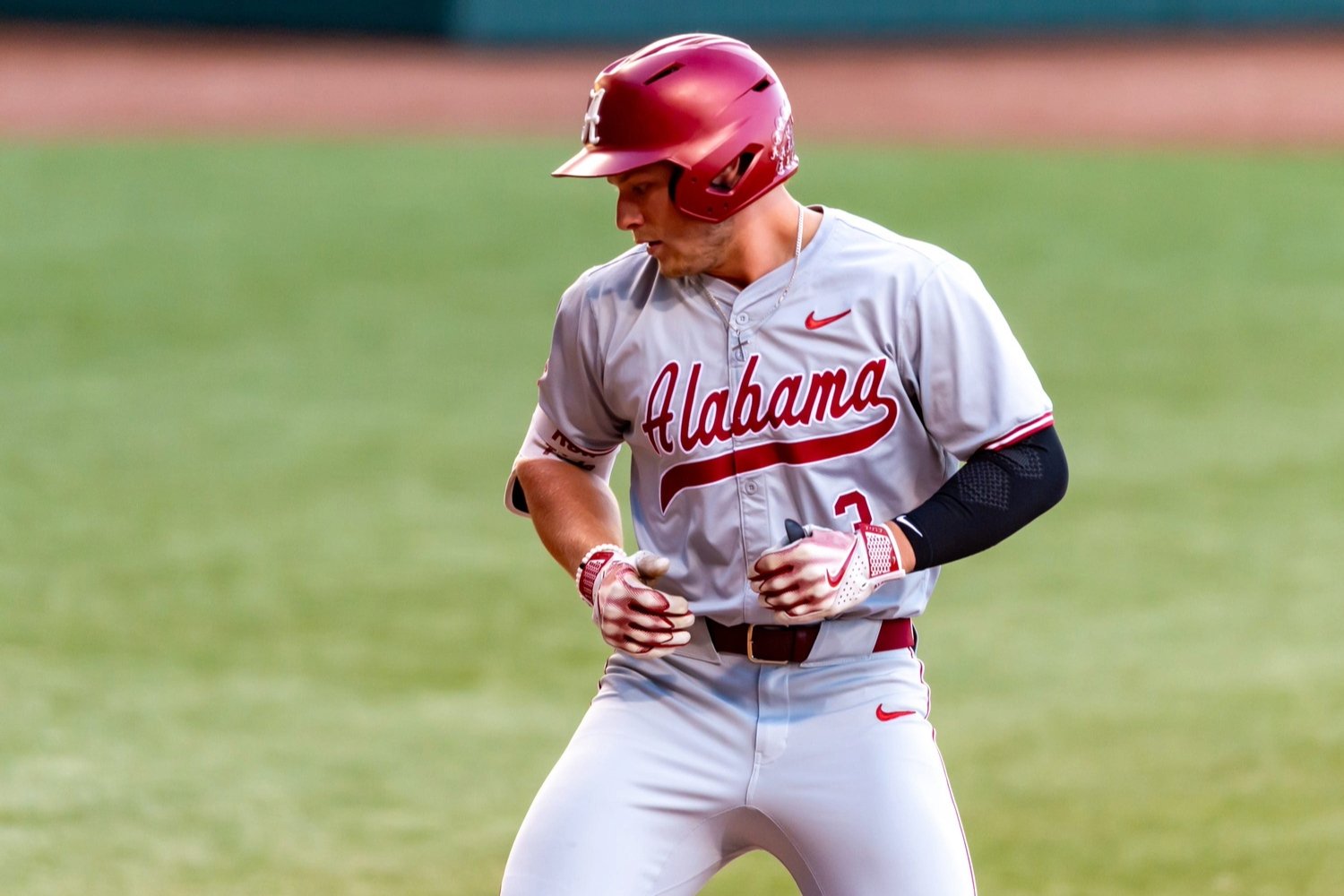
The Cubs selected Kade Snell at #151 in the 2025 MLB Draft. Snell is a left fielder at the University of Alabama. The slot value for this pick is $465,400. Here's what MiLB.com says about Snell: "Recruited by Auburn as a left-handed pitcher, Snell redshirted while dealing with injuries in 2021 before transferring to Wallace-Dothan (Ala.) CC and starring as a two-way player. The national junior college player of the year in 2023, he played both ways at Alabama in 2024 before becoming a full-time left fielder this spring. He's one of the more attractive discount hitters available as a Southeastern Conference performer with intriguing data and also no college eligibility remaining. Snell offers one of the better combinations of swing decisions, contact, and exit velocities in the college ranks. He has a quality left-handed stroke, rarely misses a fastball while handling all types of pitches, and drives the ball to all fields. While he's a hit-over-power guy, he has enough strength to provide 15 homers per year and perhaps more if he learns to lift balls in the air more regularly. While Snell will flash close to average speed at his best, he's more of a below-average runner with limited range in left field. He has an average arm and topped out at 93 mph with his fastball as a redshirt junior. Scouts love his competitiveness and leadership, and his all-star summer with wood bats in the Cape Cod League in 2023 is another point in his favor." Last season, Snell hit .363/.464/.575 with 10 home runs, 49 runs, and 52 knocked in. He has good plate vision, drawing 38 walks while only 18 strikeouts over 261 plate appearances. The lefty is a contact hitter primarily, but has the lift and exit velocity to produce runs. What do you think of the pick? Add your thoughts in the comments. View full rumor
-
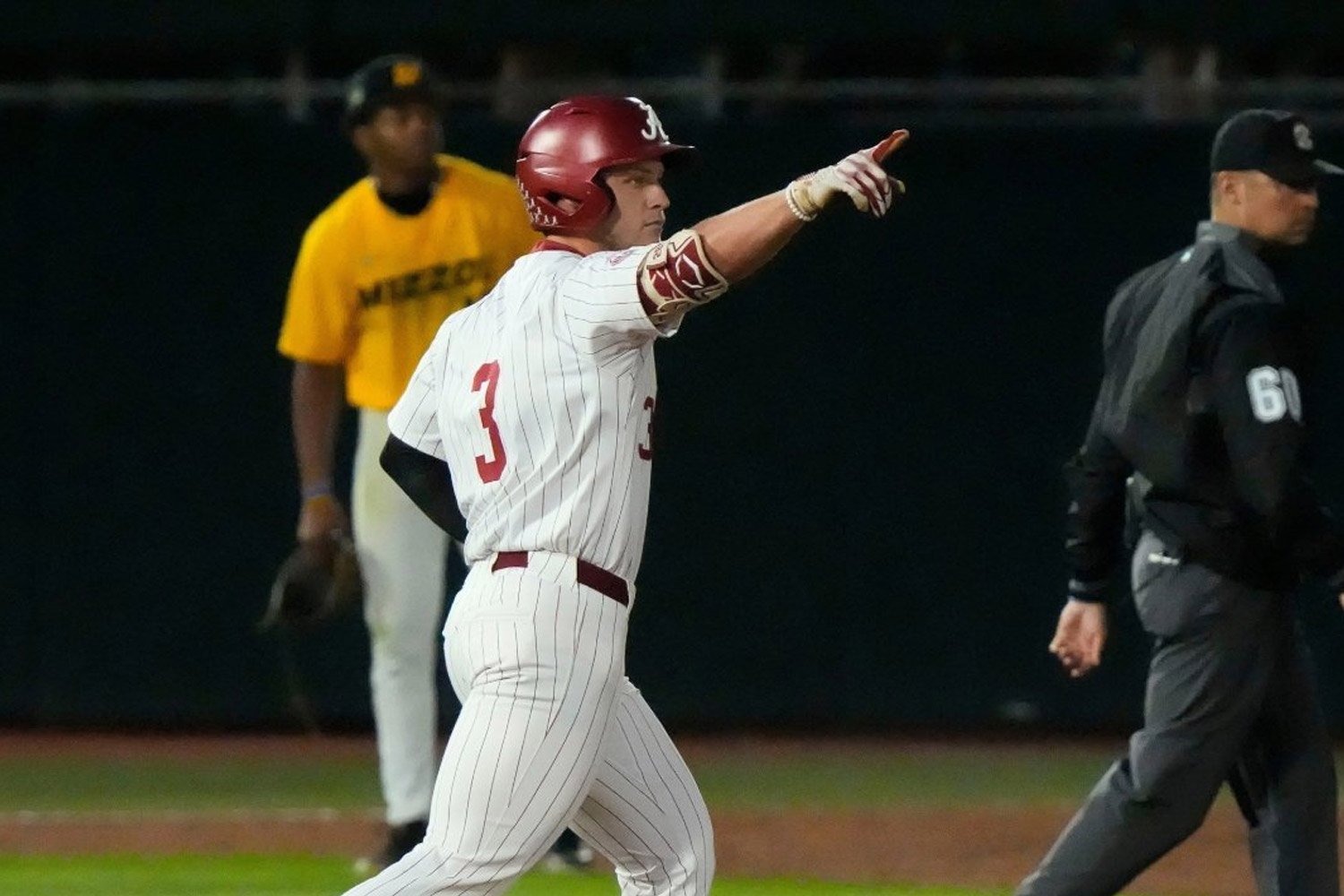 The Cubs selected Kade Snell at #151 in the 2025 MLB Draft. Snell is a left fielder at the University of Alabama. The slot value for this pick is $465,400. Here's what MiLB.com says about Snell: "Recruited by Auburn as a left-handed pitcher, Snell redshirted while dealing with injuries in 2021 before transferring to Wallace-Dothan (Ala.) CC and starring as a two-way player. The national junior college player of the year in 2023, he played both ways at Alabama in 2024 before becoming a full-time left fielder this spring. He's one of the more attractive discount hitters available as a Southeastern Conference performer with intriguing data and also no college eligibility remaining. Snell offers one of the better combinations of swing decisions, contact, and exit velocities in the college ranks. He has a quality left-handed stroke, rarely misses a fastball while handling all types of pitches, and drives the ball to all fields. While he's a hit-over-power guy, he has enough strength to provide 15 homers per year and perhaps more if he learns to lift balls in the air more regularly. While Snell will flash close to average speed at his best, he's more of a below-average runner with limited range in left field. He has an average arm and topped out at 93 mph with his fastball as a redshirt junior. Scouts love his competitiveness and leadership, and his all-star summer with wood bats in the Cape Cod League in 2023 is another point in his favor." Last season, Snell hit .363/.464/.575 with 10 home runs, 49 runs, and 52 knocked in. He has good plate vision, drawing 38 walks while only 18 strikeouts over 261 plate appearances. The lefty is a contact hitter primarily, but has the lift and exit velocity to produce runs. What do you think of the pick? Add your thoughts in the comments.
 -
The Cubs selected Kaleb Wing at #121 in the 2025 MLB Draft. Wing is an RHP at Scotts Valley High School (CA). The slot value for this pick is $623.300. The high schooler was ranked 127th on Northside Baseball's MLB Mock Draft Board. Here's our write-up of Wing by our draft expert, Jamie Cameron: "Wing is a prep-righty out of Northern California currently committed to Loyola-Marymount. He's been a two-way player for most of his amateur career and therefore hasn't focused solely on pitching for long, a fact that could play in his corner with a drafting org. It's a 6'2", 180-pound frame that a team will hope they can hang some more good weight on, but he's a slender-framed player. Nonetheless, his stuff took a major step forward this spring. His fastball, which previously sat in the upper 80s to low 90s, suddenly popped 95 mph. Additionally, there's a big curveball with good spin and depth, and a changeup that's more developmental. The delivery is solid, too. There's a lot to like here, with work to be done on the arsenal and developing a consistently usable third pitch. Even so, Wing has shot up boards this spring into day one consideration." As a senior at Scotts Valley High School, he only pitched in 10 games, but had a 1.23 ERA. At the plate, he had 108 plate appearances, hitting .307 with four home runs, 22 runs, and 24 knocked in. His dad, Ryan, was a two-way player as well, but he never went higher than Triple-A in the A's organization. Being a two-way player, Kaleb could provide a lot of production if he elects to skip college and begin his professional career. What do you think of the pick? Add your thoughts in the comments. View full rumor
-
 The Cubs selected Kaleb Wing at #121 in the 2025 MLB Draft. Wing is an RHP at Scotts Valley High School (CA). The slot value for this pick is $623.300. The high schooler was ranked 127th on Northside Baseball's MLB Mock Draft Board. Here's our write-up of Wing by our draft expert, Jamie Cameron: "Wing is a prep-righty out of Northern California currently committed to Loyola-Marymount. He's been a two-way player for most of his amateur career and therefore hasn't focused solely on pitching for long, a fact that could play in his corner with a drafting org. It's a 6'2", 180-pound frame that a team will hope they can hang some more good weight on, but he's a slender-framed player. Nonetheless, his stuff took a major step forward this spring. His fastball, which previously sat in the upper 80s to low 90s, suddenly popped 95 mph. Additionally, there's a big curveball with good spin and depth, and a changeup that's more developmental. The delivery is solid, too. There's a lot to like here, with work to be done on the arsenal and developing a consistently usable third pitch. Even so, Wing has shot up boards this spring into day one consideration." As a senior at Scotts Valley High School, he only pitched in 10 games, but had a 1.23 ERA. At the plate, he had 108 plate appearances, hitting .307 with four home runs, 22 runs, and 24 knocked in. His dad, Ryan, was a two-way player as well, but he never went higher than Triple-A in the A's organization. Being a two-way player, Kaleb could provide a lot of production if he elects to skip college and begin his professional career. What do you think of the pick? Add your thoughts in the comments.
 -
Image courtesy of © Kamil Krzaczynski-Imagn Images The Cubs' offense has been as deep as it has been explosive this year, with contributions coming from both superstars and role players alike. wOBA (weighted On-Base Average) is an alternative version of on-base percentage that accounts for how a player gets on base rather than just getting on base. This stat metric gives fans a better idea of which players are contributing most to scoring runs. For such an essential offensive stat, fans would assume superstars Kyle Tucker, Seiya Suzuki, and Pete Crow-Armstrong, who are supplanted in the everyday lineup and are having standout seasons, would be the three players leading the team. However, only one of these players are in the top three after the team's July 10 game (though all of them are in the top five). Tucker is second on the list with a .383 wOBA and 150 wRC+, but the players in first and third on the wOBA list probably weren't the betting favorites prior to the season. Among players to have taken at least 100 plate appearances with the Cubs, Michael Busch and Carson Kelly round out the top three, finishing first and third, respectively. Busch has a .401 wOBA and 162 wRC+, and Kelly has a .380 wOBA and 148 wRC+. Kelly has played in at least 30 less games than Tucker, Suzuki, and PCA, and holds a narrow lead over the latter two (.368 and .367). Busch is in his second full MLB season but is on pace for a lot of offseason award recognition. The first baseman is hitting .296/.381/.553 with 18 home runs, 44 runs, and 58 knocked in. He's also dropped his strikeout percentage this season, from 28.6 percent last year down to 22.1 percent. A significant portion of his success stems from putting off-speed and breaking pitches in play. According to Baseball Savant, the 27-year-old's wOBA on breaking pitches in 2024 was .311, which in 2025 has increased to .373; against off-speed pitches, the improvement is even more pronounced (.302 to .508). Plus, he's barreling the ball more often, increasing his 2024 barrel rate from 11.2 percent to 15.1 percent this season. So, Busch isn't just putting the ball in play more frequently; he's also getting more solid contact. Kelly is platooning at catcher with Reese McGuire while Miguel Amaya is on the injured list. Kelly is in his seventh MLB season. The 30-year-old wasn't expected to be a huge offensive contribution this year. He hasn't been great in recent years at the plate, with 2019 marking his career-best season, which featured 18 home runs, 46 runs, and 47 knocked in. Since then, he's only had one season in which he hit more than 10 home runs. This season, Kelly has 11 home runs, 34 runs, and 31 RBIs, easily putting him on pace for career numbers in nearly every regard. The veteran is seeing the same improvements as Busch, but against fastballs and breaking balls. Kelly improved his output a lot against breaking stuff, increasing his wOBA on such offerings from .248 last season to .364 this season. He also improved his wOBA facing fastballs from .338 to .417. These adjustments at the plate are significant reasons why Busch and Kelly are having career seasons and are contributors in the middle of a potent lineup. As players like Crow-Armstrong, Tucker, and Suzuki garner much of the national spotlight, don't forget how the unsung contributors are making this offense whole. View full article
-
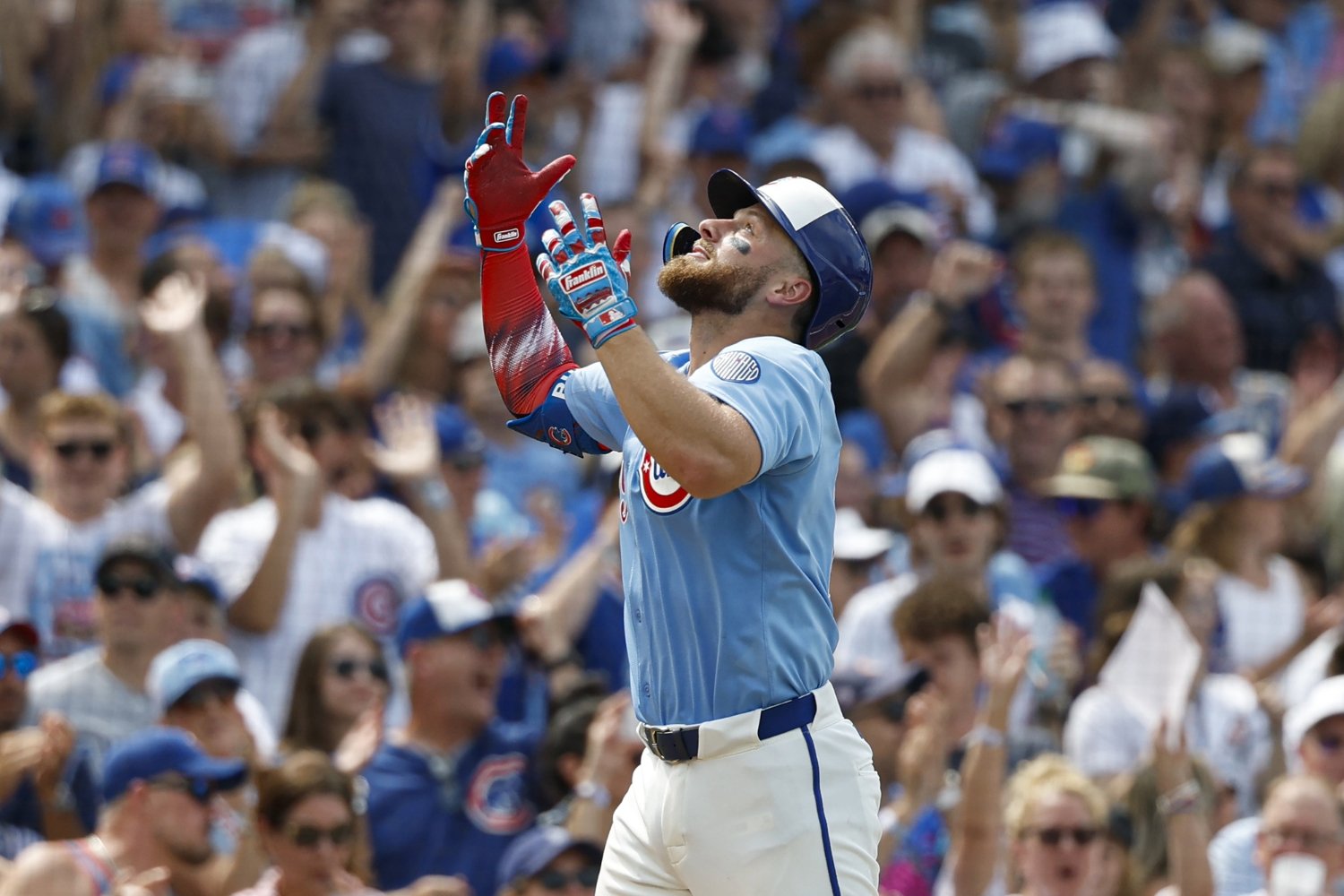 The Cubs' offense has been as deep as it has been explosive this year, with contributions coming from both superstars and role players alike. wOBA (weighted On-Base Average) is an alternative version of on-base percentage that accounts for how a player gets on base rather than just getting on base. This stat metric gives fans a better idea of which players are contributing most to scoring runs. For such an essential offensive stat, fans would assume superstars Kyle Tucker, Seiya Suzuki, and Pete Crow-Armstrong, who are supplanted in the everyday lineup and are having standout seasons, would be the three players leading the team. However, only one of these players are in the top three after the team's July 10 game (though all of them are in the top five). Tucker is second on the list with a .383 wOBA and 150 wRC+, but the players in first and third on the wOBA list probably weren't the betting favorites prior to the season. Among players to have taken at least 100 plate appearances with the Cubs, Michael Busch and Carson Kelly round out the top three, finishing first and third, respectively. Busch has a .401 wOBA and 162 wRC+, and Kelly has a .380 wOBA and 148 wRC+. Kelly has played in at least 30 less games than Tucker, Suzuki, and PCA, and holds a narrow lead over the latter two (.368 and .367). Busch is in his second full MLB season but is on pace for a lot of offseason award recognition. The first baseman is hitting .296/.381/.553 with 18 home runs, 44 runs, and 58 knocked in. He's also dropped his strikeout percentage this season, from 28.6 percent last year down to 22.1 percent. A significant portion of his success stems from putting off-speed and breaking pitches in play. According to Baseball Savant, the 27-year-old's wOBA on breaking pitches in 2024 was .311, which in 2025 has increased to .373; against off-speed pitches, the improvement is even more pronounced (.302 to .508). Plus, he's barreling the ball more often, increasing his 2024 barrel rate from 11.2 percent to 15.1 percent this season. So, Busch isn't just putting the ball in play more frequently; he's also getting more solid contact. Kelly is platooning at catcher with Reese McGuire while Miguel Amaya is on the injured list. Kelly is in his seventh MLB season. The 30-year-old wasn't expected to be a huge offensive contribution this year. He hasn't been great in recent years at the plate, with 2019 marking his career-best season, which featured 18 home runs, 46 runs, and 47 knocked in. Since then, he's only had one season in which he hit more than 10 home runs. This season, Kelly has 11 home runs, 34 runs, and 31 RBIs, easily putting him on pace for career numbers in nearly every regard. The veteran is seeing the same improvements as Busch, but against fastballs and breaking balls. Kelly improved his output a lot against breaking stuff, increasing his wOBA on such offerings from .248 last season to .364 this season. He also improved his wOBA facing fastballs from .338 to .417. These adjustments at the plate are significant reasons why Busch and Kelly are having career seasons and are contributors in the middle of a potent lineup. As players like Crow-Armstrong, Tucker, and Suzuki garner much of the national spotlight, don't forget how the unsung contributors are making this offense whole.
 -
Seiya Suzuki All-Star Snub Doesn't Make His First Half Less Meaningful
Bryan Jaeger posted an article in Cubs
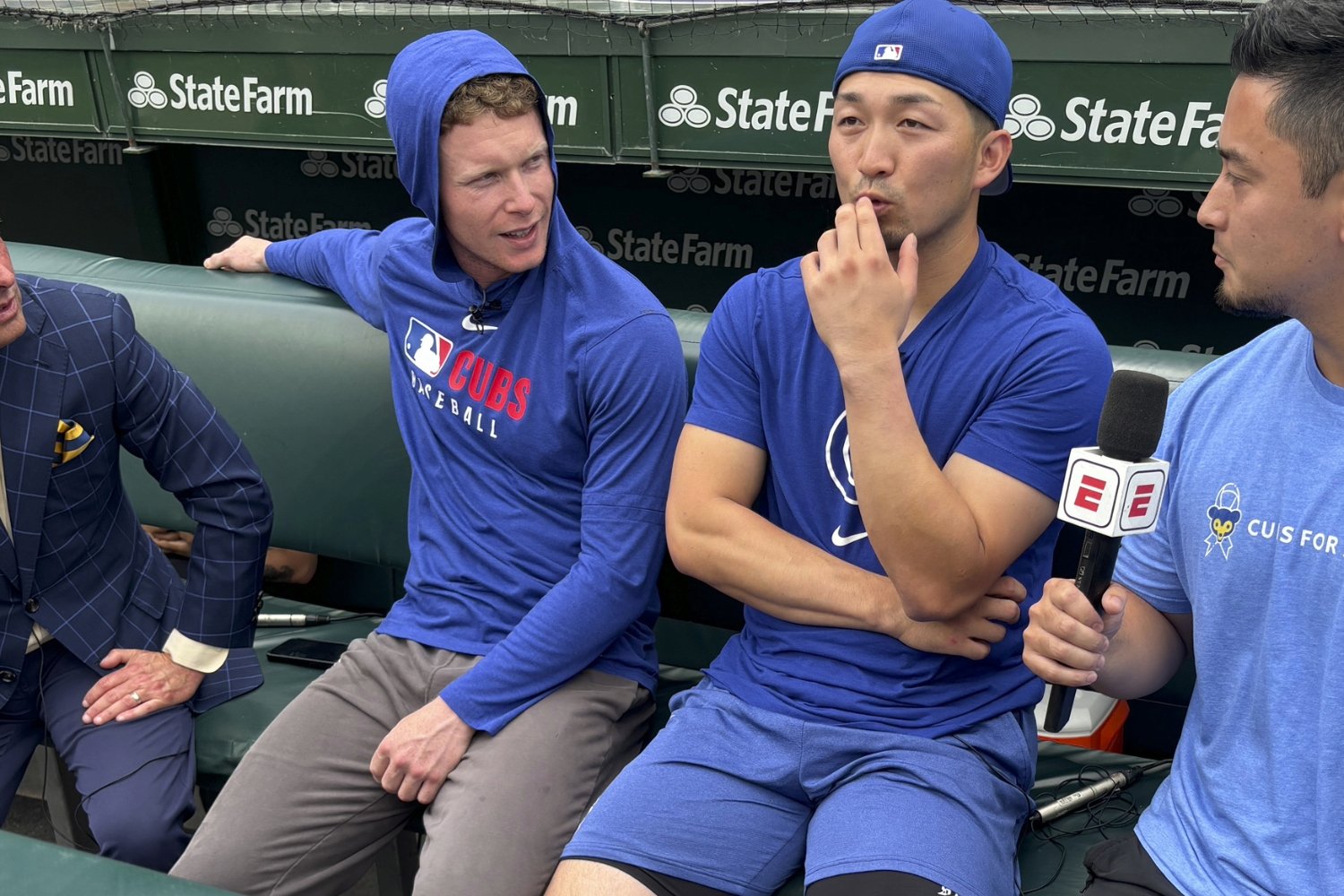 Seiya Suzuki is already posting career numbers in his fourth MLB season and is leading all of baseball in runs batted in. Still, for some reason, he was snubbed from making his first-ever All-Star appearance. The righty is hitting .263/.319/.561 to go along with 25 home runs, 48 runs, 77 runs knocked in, and an .880 OPS. The season is still a week away from the Midsummer Classic, but Suzuki's home runs, RBIs, slugging percentage, and OPS are already career highs. His hits (91) and doubles (22) are over halfway to setting additional career highs. One slight to the 30-year-old's season is the 102 strikeouts he has suffered, which is also more than halfway to another career high, though his strikeout rate (26.7%) is an improvement on the figure he posted in 2024 (27.4%). In All-Star voting, Suzuki was deemed a designated hitter despite his 25 starts between left and right field this season. Seeing as the fans (rightly) voted in Shohei Ohtani as the starting DH in the National League, the snub in question comes in the form of a former Cub, as the players voted Kyle Schwarber as the reserve DH. Yes, the 11-year veteran is having a good season, but Suzuki has his number in a multitude of important categories. Below is a breakdown of the two superstars: Suzuki and Schwarber are closely producing, although Schwarber has 15 more plate appearances and four more games played. This is Schwarber's third All-Star appearance, but his first since 2022. He absolutely deserves the honor, but so does Suzuki — such is the reality of playing designated hitter in the same league as Shohei Ohtani. There will, obviously, be further opportunities for Suzuki to make his maiden All-Star game. There's still a chance that a player could drop out, allowing Suzuki to make his Midsummer Classic debut this year. He's also just 30 years old and has one season remaining on his current deal with the Cubs. This snub is a disservice to his production, but it doesn't make it any less meaningful. As a fun reminder, Jake Arrieta won the NL Cy Young award a decade ago after being an All-Star snub. Still, it's clear that Suzuki deserved his flowers for the ridiculous first half he's put together. Hopefully, he'll get his just due when awards season rolls around.
 -
Image courtesy of © Matt Marton-Imagn Images Seiya Suzuki is already posting career numbers in his fourth MLB season and is leading all of baseball in runs batted in. Still, for some reason, he was snubbed from making his first-ever All-Star appearance. The righty is hitting .263/.319/.561 to go along with 25 home runs, 48 runs, 77 runs knocked in, and an .880 OPS. The season is still a week away from the Midsummer Classic, but Suzuki's home runs, RBIs, slugging percentage, and OPS are already career highs. His hits (91) and doubles (22) are over halfway to setting additional career highs. One slight to the 30-year-old's season is the 102 strikeouts he has suffered, which is also more than halfway to another career high, though his strikeout rate (26.7%) is an improvement on the figure he posted in 2024 (27.4%). In All-Star voting, Suzuki was deemed a designated hitter despite his 25 starts between left and right field this season. Seeing as the fans (rightly) voted in Shohei Ohtani as the starting DH in the National League, the snub in question comes in the form of a former Cub, as the players voted Kyle Schwarber as the reserve DH. Yes, the 11-year veteran is having a good season, but Suzuki has his number in a multitude of important categories. Below is a breakdown of the two superstars: Suzuki and Schwarber are closely producing, although Schwarber has 15 more plate appearances and four more games played. This is Schwarber's third All-Star appearance, but his first since 2022. He absolutely deserves the honor, but so does Suzuki — such is the reality of playing designated hitter in the same league as Shohei Ohtani. There will, obviously, be further opportunities for Suzuki to make his maiden All-Star game. There's still a chance that a player could drop out, allowing Suzuki to make his Midsummer Classic debut this year. He's also just 30 years old and has one season remaining on his current deal with the Cubs. This snub is a disservice to his production, but it doesn't make it any less meaningful. As a fun reminder, Jake Arrieta won the NL Cy Young award a decade ago after being an All-Star snub. Still, it's clear that Suzuki deserved his flowers for the ridiculous first half he's put together. Hopefully, he'll get his just due when awards season rolls around. View full article

