Jake Russell
-
Posts
22 -
Joined
-
Last visited
1 Follower

Jake Russell's Achievements



-
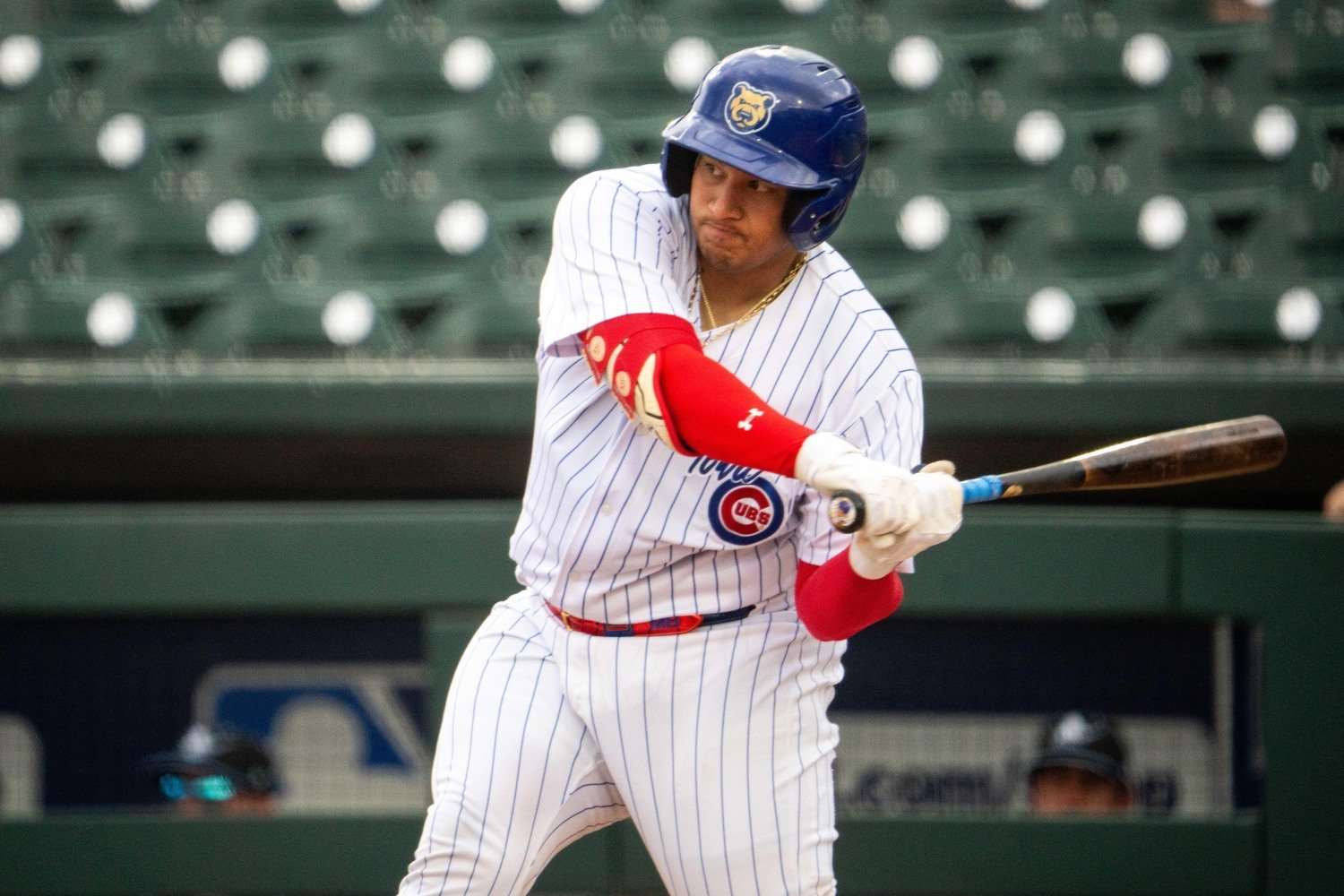 From behind the plate have emanated some of the Cubs' worst problems this season. Yan Gomes produced -1.2 fWAR in under 100 plate appearances, and was released in late June. Miguel Amaya has come on of late, but overall, his season is marked by regression from last season, rather than the leap the team hoped he would take. Tomás Nido has been just about the only good defensive catcher the Cubs have rostered all year, but he coupled that with a disqualifying -2 wRC+ and is currently on the IL. Christian Bethancourt has produced strong offense in a minuscule sample, but has almost zero track record of success, and is a poor defensive catcher overall. Despite Amaya’s hot streak recently, his overall production has still been lackluster. Unless there is a drastic change in his profile, he likely is not going to be a sustainably good hitter–although I also doubt he is as bad as the 58 wRC+ he had before the All-Star Break. All this to say: Cubs catchers have not been productive. Just one unit as a whole has been less productive than the North Siders' this season–the corps on the other side of town, on the team already eliminated from playoff contention and threatening the modern record for losses. Cubs catchers' 56 wRC+ is third-to-last in the big leagues. According to FanGraphs, they have been the fourth-worst framing unit in baseball; Statcast ranks them as the sixth-worst. They are seventh-worst in overall Statcast Fielding Run Value, which is why I think what I am about to suggest is a little bit less radical than people may think. Moisés Ballesteros has truly made a name for himself this season. In Double-A, the 20-year-old had a 152 wRC+, walked nearly 10% of the time, struck out less than 15% of the time, and had 9 home runs in a dead-ball league, before earning a call-up to Triple-A Iowa. Ballesteros has had his share of ups and downs, but through 41 games, he carries a slash line of .272/.331/.481, good for a 107 wRC+, including a 103-MPH exit velocity home run last night. Though a 107 wRC+ doesn’t sound crazy, his underlying data supports it, and given his youth and the speed of his promotion, his adjustment curve has been impressively short. Plus, he already has a 109.9 maximum and 105.3 90th-percentile exit velocity–at just 20 years old. The offensive tools are legit. Of course, there is real cause for concern with Ballesteros. His defense has graded out as subpar. MLB Pipeline gives him a 45 defensive grade, which may be generous. Baseball Prospectus tracks defensive metrics for Minor League Baseball, which is especially useful for catcher defense. In just over 200 innings caught, Ballesteros has been worth about -0.6 runs according to Prospectus. At Double-A, where he caught closer to 230 innings, the figure was -1.6. In total, this is roughly a pace of -6 runs per 150 games. If you're shopping for optimism, TruMedia is much more encouraging, as their model pegs Ballesteros as 3.5 runs better than average in Iowa, albeit in a tiny sample. He's done especially well on high pitches. Of course, none of these metrics are likely to be as accurate as those available at the MLB level, but it’s a good point of reference. So is the fact that his managers have used him at DH almost as many times (34) as behind the plate (53) this season. Ballesteros, while just 20 years old, has struggled behind the plate in his professional baseball career. But, he just might already be their best offensive option at catcher. As of this weekend, prospects yet to be promoted to their major-league ballclub this year can be called up, without losing their rookie eligibility for 2025. Thus, such players can still make their teams eligible for Prospect Promotion Incentive draft picks based on their performance next year. I think, at this point, it makes a lot of sense for the Cubs to call up Ballesteros and make him the primary catcher for the rest of the season. Yes, there are the aforementioned defensive issues, but again, Cubs catchers have been arguably a bottom-five unit in baseball this year, anyway. The team has little to lose by getting Ballesteros the experience at this point. Whatever successes or failures he finds in MLB will be more telling than the same performances in Des Moines. Of course, he is just 20 years old–but the bat is already advanced beyond his years. Just two other players are even in their 20-year-old seasons in Triple-A this year, and they’re arguably the top two prospects in baseball: Jackson Holliday and Junior Caminero, who are both currently in the majors. Ballesteros is younger than Caminero. The Cubs should give Ballesteros a shot to prove himself early. Even if he struggles out of the gate in MLB, which is possible, the insight gained could be more valuable than anything they get from Bethancourt. Ballesteros is almost certainly a better hitter than Bethancourt, and Bethancourt is already a poor defender. Plus, he may just be the Cubs best catching option right now, and the Cubs are not completely out of the playoff race yet. This is a move that could help the Cubs as an organization not only in the long term, but right now, as well. It's the kind of boom-or-bust move a team that is already nearly busted ought to consider, and many of the drawbacks to it have faded out of the picture.
 -
It's a good time to roll some dice and to maximize the potential challenge for a top prospect--even if the likelihood of a Yahtzee is fairly remote. Image courtesy of © Cody Scanlan/The Register / USA TODAY NETWORK From behind the plate have emanated some of the Cubs' worst problems this season. Yan Gomes produced -1.2 fWAR in under 100 plate appearances, and was released in late June. Miguel Amaya has come on of late, but overall, his season is marked by regression from last season, rather than the leap the team hoped he would take. Tomás Nido has been just about the only good defensive catcher the Cubs have rostered all year, but he coupled that with a disqualifying -2 wRC+ and is currently on the IL. Christian Bethancourt has produced strong offense in a minuscule sample, but has almost zero track record of success, and is a poor defensive catcher overall. Despite Amaya’s hot streak recently, his overall production has still been lackluster. Unless there is a drastic change in his profile, he likely is not going to be a sustainably good hitter–although I also doubt he is as bad as the 58 wRC+ he had before the All-Star Break. All this to say: Cubs catchers have not been productive. Just one unit as a whole has been less productive than the North Siders' this season–the corps on the other side of town, on the team already eliminated from playoff contention and threatening the modern record for losses. Cubs catchers' 56 wRC+ is third-to-last in the big leagues. According to FanGraphs, they have been the fourth-worst framing unit in baseball; Statcast ranks them as the sixth-worst. They are seventh-worst in overall Statcast Fielding Run Value, which is why I think what I am about to suggest is a little bit less radical than people may think. Moisés Ballesteros has truly made a name for himself this season. In Double-A, the 20-year-old had a 152 wRC+, walked nearly 10% of the time, struck out less than 15% of the time, and had 9 home runs in a dead-ball league, before earning a call-up to Triple-A Iowa. Ballesteros has had his share of ups and downs, but through 41 games, he carries a slash line of .272/.331/.481, good for a 107 wRC+, including a 103-MPH exit velocity home run last night. Though a 107 wRC+ doesn’t sound crazy, his underlying data supports it, and given his youth and the speed of his promotion, his adjustment curve has been impressively short. Plus, he already has a 109.9 maximum and 105.3 90th-percentile exit velocity–at just 20 years old. The offensive tools are legit. Of course, there is real cause for concern with Ballesteros. His defense has graded out as subpar. MLB Pipeline gives him a 45 defensive grade, which may be generous. Baseball Prospectus tracks defensive metrics for Minor League Baseball, which is especially useful for catcher defense. In just over 200 innings caught, Ballesteros has been worth about -0.6 runs according to Prospectus. At Double-A, where he caught closer to 230 innings, the figure was -1.6. In total, this is roughly a pace of -6 runs per 150 games. If you're shopping for optimism, TruMedia is much more encouraging, as their model pegs Ballesteros as 3.5 runs better than average in Iowa, albeit in a tiny sample. He's done especially well on high pitches. Of course, none of these metrics are likely to be as accurate as those available at the MLB level, but it’s a good point of reference. So is the fact that his managers have used him at DH almost as many times (34) as behind the plate (53) this season. Ballesteros, while just 20 years old, has struggled behind the plate in his professional baseball career. But, he just might already be their best offensive option at catcher. As of this weekend, prospects yet to be promoted to their major-league ballclub this year can be called up, without losing their rookie eligibility for 2025. Thus, such players can still make their teams eligible for Prospect Promotion Incentive draft picks based on their performance next year. I think, at this point, it makes a lot of sense for the Cubs to call up Ballesteros and make him the primary catcher for the rest of the season. Yes, there are the aforementioned defensive issues, but again, Cubs catchers have been arguably a bottom-five unit in baseball this year, anyway. The team has little to lose by getting Ballesteros the experience at this point. Whatever successes or failures he finds in MLB will be more telling than the same performances in Des Moines. Of course, he is just 20 years old–but the bat is already advanced beyond his years. Just two other players are even in their 20-year-old seasons in Triple-A this year, and they’re arguably the top two prospects in baseball: Jackson Holliday and Junior Caminero, who are both currently in the majors. Ballesteros is younger than Caminero. The Cubs should give Ballesteros a shot to prove himself early. Even if he struggles out of the gate in MLB, which is possible, the insight gained could be more valuable than anything they get from Bethancourt. Ballesteros is almost certainly a better hitter than Bethancourt, and Bethancourt is already a poor defender. Plus, he may just be the Cubs best catching option right now, and the Cubs are not completely out of the playoff race yet. This is a move that could help the Cubs as an organization not only in the long term, but right now, as well. It's the kind of boom-or-bust move a team that is already nearly busted ought to consider, and many of the drawbacks to it have faded out of the picture. View full article
-
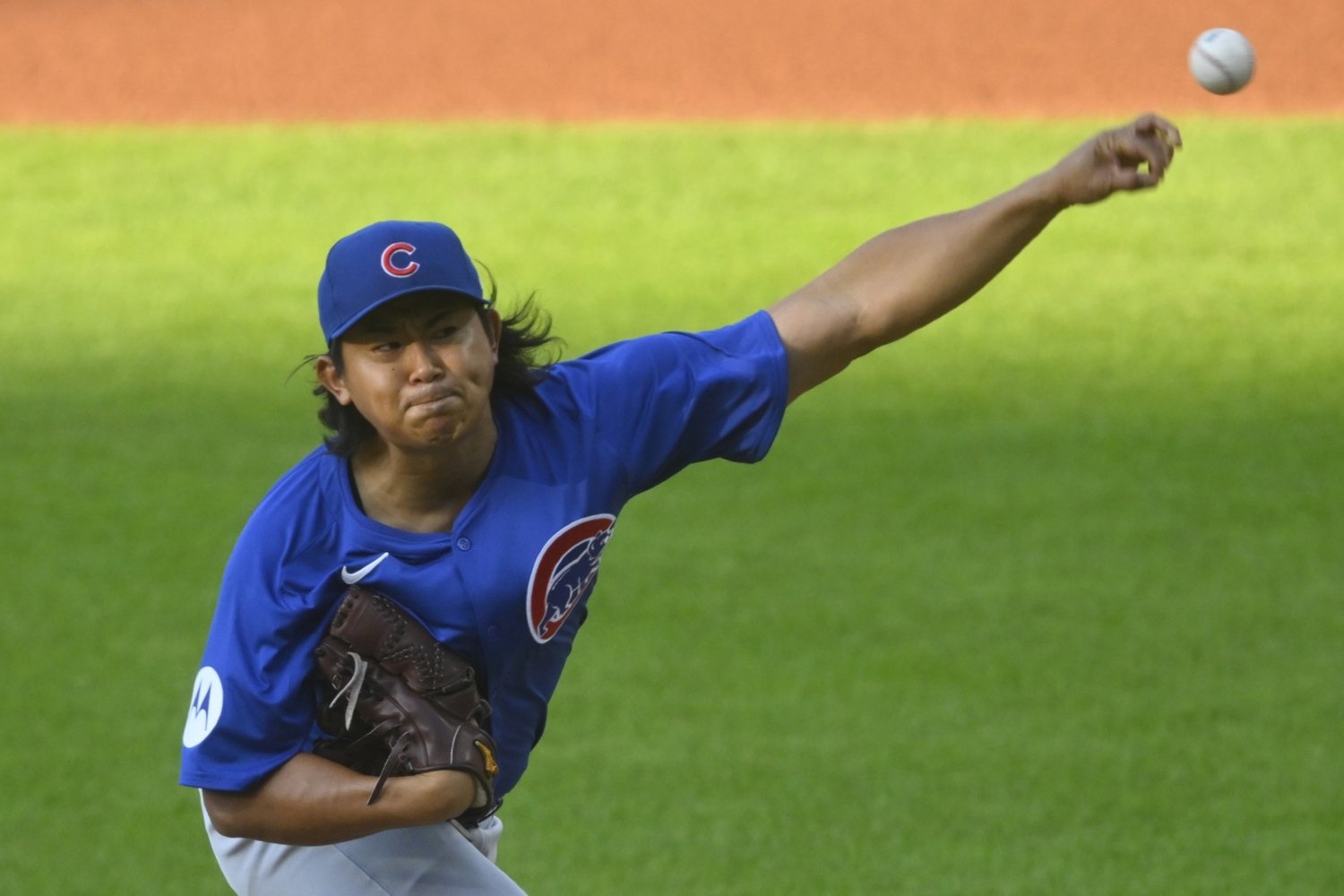 When the Chicago Cubs signed Shota Imanaga to a four-year, $53-million dollar contract in January, they certainly had high expectations. In fact, this contract may have been an underpay at the time–many thought Imanaga would get a much richer deal. In 2023, with the Yokohoma DeNA BayStars, he pitched to very good results–a 2.66 ERA in 159 IP, with 188 strikeouts, and, perhaps even more impressively, just 24 walks. He was an All-Star, and the Central League strikeout champion. On the whole, Imanaga’s transition to Major League Baseball has gone very smoothly. Prior to a rocky outing in Cleveland Monday, in 123 1/3 innings, the lefty had a 3.06 ERA, a 22.0% K-BB% (the eighth-best mark among MLB starters), and 2.8 fWAR–which roughly translates to being worth $22.3 million. Imanaga is making just under $10 million this year; the contract has been a bargain thus far. But, as is the case with many pitchers, Imanaga has had to constantly make adjustments to his game. As the league adjusts to you, and gets more information on you, you have to adjust back–and Imanaga has done exactly that to sustain his success to this point in the season. On Apr. 1, Imanaga made his first MLB start against the Rockies, striking out nine, walking none, and giving up just two hits. He threw an astonishing 60% fastballs, a trend that continued the rest of the month. He threw 59.3% fastballs in April–61.1% to righties, and 55% to lefties. Granted, he had a 0.98 ERA during the month, but, again, as the league adjusts to you, you need to adjust back. Since then, his fastball usage has steadily creeped downward, and his first two starts in August marked the first month that fastball usage has been under 50%. With that greater unpredictability has come a lot of whiffs, too. Against righties, Imanaga has actually thrown more splitters than fastballs this month–splitter usage is up 20% from July against righties, and the pitch has drawn a whiff against opposite-handed batters on over half of swings thus far. On the contrary, his sweeper is not being used more than ever against lefties–although the pitch has had rousing success all season against same-handed batters, to the tune of a 42.4 whiff%. Yet, since the pitch peaked in prominence against lefties in June, it has steadily decreased. The pitch is pretty rarely used, after all–its usage% is just 7%, despite it being his second-most-used pitch versus lefties. Maybe he is still trying to figure out the pitch's role. In August, he has already used it 7 times in two-strike counts vs lefties, a mark over 40%. And, since May, the usage is up over 35% in two-strike counts. The pitch certainly can help him be a whiff-getter versus lefties. Imanaga has basically been a three-pitch pitcher, but all of this overshadows that he’s thrown five other types of pitches in games. It seems as if Imanaga has been experimenting with different pitch types and pitch shapes all season. He typically sprinkles in a few curveballs here and there–about three or four start, all to righties, Out of the 78 he has thrown this year, 63 have been in 0-0 counts–it serves as a “get-me-over”, change of pace pitch, that he’s able to land in zone at a 44% clip. That might need to change, eventually. In May, he introduced a changeup, and by July, it was his third most-used pitch against righties. It’s very subtly different from his splitter–velocity is nearly the same, it just generates about 1.5 inches more of arm-side movement and about 2 inches more of vertical movement on average–a slightly different look, that can maybe help keep hitters off-balance. He's also utilized an altered grip with the splitter, at times. Imanaga has even mixed in a few sinkers in August (it’s tied with his curveball for the 4th-most used pitch this month). And, of course, he threw that one very slow curveball to Paul Goldschmidt, that was supposed to be a change-of-pace type pitch. The point in all of this is, it’s interesting to see how Imanaga’s arsenal has evolved throughout the year. Nobody expected him to throw 12 cutters this year, but it has happened. It fits his nickname, the pitching philosopher, that he has all these pitches that he mixes in here and there. Really, he throws about 3-4 pitches a game that aren’t one of his main four offerings. You never know what you’re gonna get from him. I’ll say it again–in a league where everyone is always making adjustments, you have to adjust back. Imanaga may not exactly be a “kitchen-sink” type of pitcher, but as he begins to throw fewer and fewer four-seam fastballs and mixes in more and more secondaries, he might as well be getting there.
 -
Monday night was the latest tough lesson in a long learning process, but The Philosopher has been making important changes all season. Image courtesy of © David Richard-USA TODAY Sports When the Chicago Cubs signed Shota Imanaga to a four-year, $53-million dollar contract in January, they certainly had high expectations. In fact, this contract may have been an underpay at the time–many thought Imanaga would get a much richer deal. In 2023, with the Yokohoma DeNA BayStars, he pitched to very good results–a 2.66 ERA in 159 IP, with 188 strikeouts, and, perhaps even more impressively, just 24 walks. He was an All-Star, and the Central League strikeout champion. On the whole, Imanaga’s transition to Major League Baseball has gone very smoothly. Prior to a rocky outing in Cleveland Monday, in 123 1/3 innings, the lefty had a 3.06 ERA, a 22.0% K-BB% (the eighth-best mark among MLB starters), and 2.8 fWAR–which roughly translates to being worth $22.3 million. Imanaga is making just under $10 million this year; the contract has been a bargain thus far. But, as is the case with many pitchers, Imanaga has had to constantly make adjustments to his game. As the league adjusts to you, and gets more information on you, you have to adjust back–and Imanaga has done exactly that to sustain his success to this point in the season. On Apr. 1, Imanaga made his first MLB start against the Rockies, striking out nine, walking none, and giving up just two hits. He threw an astonishing 60% fastballs, a trend that continued the rest of the month. He threw 59.3% fastballs in April–61.1% to righties, and 55% to lefties. Granted, he had a 0.98 ERA during the month, but, again, as the league adjusts to you, you need to adjust back. Since then, his fastball usage has steadily creeped downward, and his first two starts in August marked the first month that fastball usage has been under 50%. With that greater unpredictability has come a lot of whiffs, too. Against righties, Imanaga has actually thrown more splitters than fastballs this month–splitter usage is up 20% from July against righties, and the pitch has drawn a whiff against opposite-handed batters on over half of swings thus far. On the contrary, his sweeper is not being used more than ever against lefties–although the pitch has had rousing success all season against same-handed batters, to the tune of a 42.4 whiff%. Yet, since the pitch peaked in prominence against lefties in June, it has steadily decreased. The pitch is pretty rarely used, after all–its usage% is just 7%, despite it being his second-most-used pitch versus lefties. Maybe he is still trying to figure out the pitch's role. In August, he has already used it 7 times in two-strike counts vs lefties, a mark over 40%. And, since May, the usage is up over 35% in two-strike counts. The pitch certainly can help him be a whiff-getter versus lefties. Imanaga has basically been a three-pitch pitcher, but all of this overshadows that he’s thrown five other types of pitches in games. It seems as if Imanaga has been experimenting with different pitch types and pitch shapes all season. He typically sprinkles in a few curveballs here and there–about three or four start, all to righties, Out of the 78 he has thrown this year, 63 have been in 0-0 counts–it serves as a “get-me-over”, change of pace pitch, that he’s able to land in zone at a 44% clip. That might need to change, eventually. In May, he introduced a changeup, and by July, it was his third most-used pitch against righties. It’s very subtly different from his splitter–velocity is nearly the same, it just generates about 1.5 inches more of arm-side movement and about 2 inches more of vertical movement on average–a slightly different look, that can maybe help keep hitters off-balance. He's also utilized an altered grip with the splitter, at times. Imanaga has even mixed in a few sinkers in August (it’s tied with his curveball for the 4th-most used pitch this month). And, of course, he threw that one very slow curveball to Paul Goldschmidt, that was supposed to be a change-of-pace type pitch. The point in all of this is, it’s interesting to see how Imanaga’s arsenal has evolved throughout the year. Nobody expected him to throw 12 cutters this year, but it has happened. It fits his nickname, the pitching philosopher, that he has all these pitches that he mixes in here and there. Really, he throws about 3-4 pitches a game that aren’t one of his main four offerings. You never know what you’re gonna get from him. I’ll say it again–in a league where everyone is always making adjustments, you have to adjust back. Imanaga may not exactly be a “kitchen-sink” type of pitcher, but as he begins to throw fewer and fewer four-seam fastballs and mixes in more and more secondaries, he might as well be getting there. View full article
-
The Chicago Cubs have a plethora of young, good prospects throughout their farm system. Even with the graduations of guys like Jordan Wicks, Ben Brown, and Pete Crow-Armstrong, the Cubs still have seven players appearing on top 100 prospects lists (which includes newly drafted third baseman Cam Smith, who appeared at number 59 on Just Baseball’s Top 100 Prospects List). However, with this level of high-end prospects, some will fly under the radar. And the Cubs farm has seen no bigger under-the-radar riser this season than Starting Pitcher Brandon Birdsell, who was drafted in the fifth round 2022 out of Texas Tech University. He didn’t debut until 2023 when he succeeded at High-A South Bend and earned a promotion to Double-A Tennessee, where he made six starts. On the season, he had pitched to a 2.77 ERA, but a 21.9 K% to just a 7.2 BB% (without elite ground ball rates) left more to be desired. Image courtesy of © Mattie Neretin / USA TODAY NETWORK At his repeat of Double-A this year, Brandon Birdsell had a 21.1 K%, 4.2 BB%, and a very solid 3.63 ERA. His season at Tennessee was capped off with seven nearly no-hit innings and a 35-inning walkless streak. This earned him a well-deserved promotion to Triple-A Iowa, where he has just completed his fifth start. The raw numbers are underwhelming–his 4.97 ERA is pretty high, and the BB% is up nearly 3% from his stint in Double-A Tennessee. On the flip side, he is allowing a .449 BABIP against thus far, which is incredibly and unsustainably high. The K% is up to nearly 24%, as well, and his most recent start, on August 8th, matched a season-high in strikeouts with nine, as he drew 15 swings and misses. The nice thing about Birdsell being promoted to Triple-A Iowa is that we now have access to pitch data for him, which allows us to draw better conclusions about Birdsell as a pitcher, as opposed to purely scouting grades and stat line scouting - and, even more importantly in Birdsell’s case, we can detect changes in pitch arsenals that may change our opinions of a prospect. In his first four starts, Birdsell pitched 19.1 innings and gave up an astounding 13 earned runs. (To be fair, he allowed a .455 BABIP in that span, but the strikeouts hadn’t been there, and the walks were up, too). However, on the 8th against the Omaha Storm Chasers, Birdsell made some significant changes, and it (at least partially) led to his huge outing. Before his August 8th start, Birdsell was relying on three pitches: a 4-seam fastball with cut-ride action that sits mid-90s (and has even touched 97.8 MPH!), a curveball with deathball type shape (that is, little horizontal movement with downward movement), and a pretty standard, scarcely used changeup. It led to just a 22.2% whiff% and the aforementioned poor results (though they were certainly not helped by an incredibly unlucky BABIP stretch). Then, in his fifth start, something crazy happened: the right-hander, out of nowhere, began throwing a hard slider with a completely different shape and speed from his curveball. And when I say it came out of nowhere, I mean that it literally came out of nowhere. Birdsell hadn’t thrown a breaking ball over 86 MPH in Triple-A and did not throw this pitch in Double-A. However, it racked up eight whiffs on Thursday (the first time he’s ever thrown the pitch), with four more coming via the old curveball and three via the fastball. The pitch specs from his start on Thursday (Data from Statcast): The new slider seems to be a much harder pitch with more lift (and a third of the pitches were thrown with five inches of vertical movement or more). There was some heavy variance in the pitch shape of his slider–vertical movement ranged from roughly -3 IVB to roughly 8 IVB. This makes me wonder if part of the issue was simply inconsistency due to having never thrown the pitch before, especially given the stark difference between his hardest curveball (82.5 MPH) and his slowest slider (85.3). This theory makes a lot of sense because it takes time to develop a feel for pitches. Perhaps we will see more of a consistent slider shape next time out. The top end of those slider shapes, though, is magnificent. It almost has a cutter/slider-type feel instead of just a straight-up slider. There is a chance he could average around five inches of vertical movement, sitting in the upper 80s with the ability to touch 90-91, with seven inches of horizontal movement. That is a fantastic slider shape and might play very well off that cut-ride fastball. I think introducing this new slider can help Birdsell elevate his production to a new level. It certainly worked once, and maybe it is confirmation bias, but if last Thursday’s results are any indication of things to come (he generated a 30 whiff% with an incredible 38 chase%), we could see big things in store for him this year. What’s crazy to think right now is that Birdsell could realistically be the next man up for the Cubs right now. Today, the Cubs released devastating news that top starting pitching prospect Cade Horton would miss the rest of the season. In contrast, former top prospects Jordan Wicks, Ben Brown, and Hayden Wesneski have all been sidelined for a while now, with seemingly no timetables for return. If a rotation arm goes down, or Javier Assad continues to struggle like he has, there is a legitimate chance that Birdsell could debut this year. The introduction of this new slider, which seems like it could be the whiff-generating pitch Birdsell has been searching for, seems like it could be both a ceiling raiser, floor raiser, and, most importantly for me, the fan, a confidence raiser in how Birdsell can produce. I was a fan of the deathball shape, but even then, it gave him just two pitches given the rarity of his changeup being used, and while cut-ride fastballs have their strengths, it isn’t an elite pitch. Adding a slider that seems to be his best pitch already and can play well off his pre-existing curveball and fastball, coupled with very good command, seems like a recipe for success. Cubs fans should definitely be keeping tabs on Birdsell for the rest of the year, especially regarding how this slider performs and helps him perform. He was already an intriguing arm, but this only makes him more interesting and an even bigger riser in the Cubs system. View full article
-
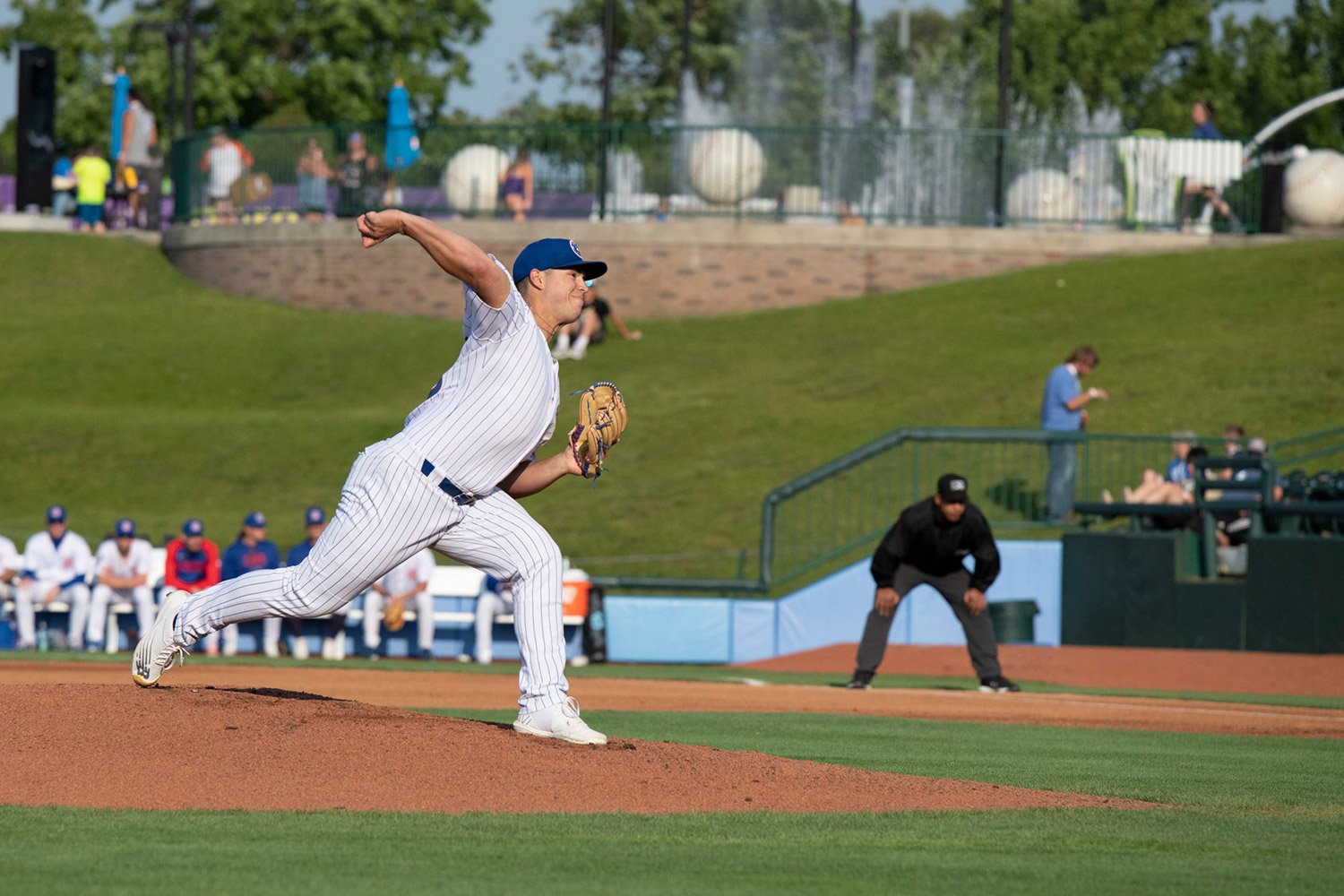 At his repeat of Double-A this year, Brandon Birdsell had a 21.1 K%, 4.2 BB%, and a very solid 3.63 ERA. His season at Tennessee was capped off with seven nearly no-hit innings and a 35-inning walkless streak. This earned him a well-deserved promotion to Triple-A Iowa, where he has just completed his fifth start. The raw numbers are underwhelming–his 4.97 ERA is pretty high, and the BB% is up nearly 3% from his stint in Double-A Tennessee. On the flip side, he is allowing a .449 BABIP against thus far, which is incredibly and unsustainably high. The K% is up to nearly 24%, as well, and his most recent start, on August 8th, matched a season-high in strikeouts with nine, as he drew 15 swings and misses. The nice thing about Birdsell being promoted to Triple-A Iowa is that we now have access to pitch data for him, which allows us to draw better conclusions about Birdsell as a pitcher, as opposed to purely scouting grades and stat line scouting - and, even more importantly in Birdsell’s case, we can detect changes in pitch arsenals that may change our opinions of a prospect. In his first four starts, Birdsell pitched 19.1 innings and gave up an astounding 13 earned runs. (To be fair, he allowed a .455 BABIP in that span, but the strikeouts hadn’t been there, and the walks were up, too). However, on the 8th against the Omaha Storm Chasers, Birdsell made some significant changes, and it (at least partially) led to his huge outing. Before his August 8th start, Birdsell was relying on three pitches: a 4-seam fastball with cut-ride action that sits mid-90s (and has even touched 97.8 MPH!), a curveball with deathball type shape (that is, little horizontal movement with downward movement), and a pretty standard, scarcely used changeup. It led to just a 22.2% whiff% and the aforementioned poor results (though they were certainly not helped by an incredibly unlucky BABIP stretch). Then, in his fifth start, something crazy happened: the right-hander, out of nowhere, began throwing a hard slider with a completely different shape and speed from his curveball. And when I say it came out of nowhere, I mean that it literally came out of nowhere. Birdsell hadn’t thrown a breaking ball over 86 MPH in Triple-A and did not throw this pitch in Double-A. However, it racked up eight whiffs on Thursday (the first time he’s ever thrown the pitch), with four more coming via the old curveball and three via the fastball. The pitch specs from his start on Thursday (Data from Statcast): The new slider seems to be a much harder pitch with more lift (and a third of the pitches were thrown with five inches of vertical movement or more). There was some heavy variance in the pitch shape of his slider–vertical movement ranged from roughly -3 IVB to roughly 8 IVB. This makes me wonder if part of the issue was simply inconsistency due to having never thrown the pitch before, especially given the stark difference between his hardest curveball (82.5 MPH) and his slowest slider (85.3). This theory makes a lot of sense because it takes time to develop a feel for pitches. Perhaps we will see more of a consistent slider shape next time out. The top end of those slider shapes, though, is magnificent. It almost has a cutter/slider-type feel instead of just a straight-up slider. There is a chance he could average around five inches of vertical movement, sitting in the upper 80s with the ability to touch 90-91, with seven inches of horizontal movement. That is a fantastic slider shape and might play very well off that cut-ride fastball. I think introducing this new slider can help Birdsell elevate his production to a new level. It certainly worked once, and maybe it is confirmation bias, but if last Thursday’s results are any indication of things to come (he generated a 30 whiff% with an incredible 38 chase%), we could see big things in store for him this year. What’s crazy to think right now is that Birdsell could realistically be the next man up for the Cubs right now. Today, the Cubs released devastating news that top starting pitching prospect Cade Horton would miss the rest of the season. In contrast, former top prospects Jordan Wicks, Ben Brown, and Hayden Wesneski have all been sidelined for a while now, with seemingly no timetables for return. If a rotation arm goes down, or Javier Assad continues to struggle like he has, there is a legitimate chance that Birdsell could debut this year. The introduction of this new slider, which seems like it could be the whiff-generating pitch Birdsell has been searching for, seems like it could be both a ceiling raiser, floor raiser, and, most importantly for me, the fan, a confidence raiser in how Birdsell can produce. I was a fan of the deathball shape, but even then, it gave him just two pitches given the rarity of his changeup being used, and while cut-ride fastballs have their strengths, it isn’t an elite pitch. Adding a slider that seems to be his best pitch already and can play well off his pre-existing curveball and fastball, coupled with very good command, seems like a recipe for success. Cubs fans should definitely be keeping tabs on Birdsell for the rest of the year, especially regarding how this slider performs and helps him perform. He was already an intriguing arm, but this only makes him more interesting and an even bigger riser in the Cubs system.
 -
The Cubs Trade Deadline Needs: Anyone Who Can Hold A Bat (aka. "Offense")
Jake Russell posted an article in Cubs
 Before discussing who the Cubs can target, though, we need to discuss who is a candidate for replacement and whose jobs are most likely safe–specifically, for now, in the lineup and on the bench. There are a couple of players who most certainly have their jobs secure–Nico Hoerner has a 110 wRC+ thus far, walked more than he has struck out, and, despite him having a bit of a rough start defensively (he sits at a neutral 0 Outs Above Average), it’s easy to believe he’ll have a bounce back. Dansby Swanson likely has his spot secure–the two-time Gold Glove winner has struggled this year, but the Cubs paid him $177 million dollars. He isn’t going anywhere. Of course, the Cubs' other highly-paid hitter, Cody Bellinger, isn’t going anywhere either. And Ian Happ and Seiya Suzuki have no-trade clauses that guarantee them roster spots. However, this leaves at least some uncertainty for other players on the roster. Both catchers are candidates to be replaced at this point–and this is likely the Cubs' biggest point of need right now. Through June 3rd, just one team has gotten worse offensive performance from their catchers than the Cubs–the Marlins. Miguel Amaya and Yan Gomes have combined for a 37 wRC+. They have accrued -1.2 fWAR, and, according to FanGraphs FRM metric, they have been the third-worst framing unit among all catchers. Baseball Savant, too, has a framing metric–the Cubs rank fourth-worst here while arguably the worst duo in the league at holding the running game. They have the worst CS% among any team in baseball, and, while certainly some of that may be an issue on the pitching holding the running game, Savant’s Caught Stealing metric attempts to control for factors like this, along with runner speed and the Cubs still rank fourth-worst. The Cubs need improvement here, and with each passing day, it feels less and less likely that either one of Amaya or Gomes will be the one to provide it. Another position that concerns me is third base, though more on the defensive than the offensive side. Christopher Morel has taken the majority of reps at third base thus far, and the results have been quite underwhelming. Forget third base; Morel has been the worst defensive player in all of baseball. His -9 OAA this year is tied for dead last in the league, while he also sports -7 DRS (which comes in at sixth worst in baseball). No doubt, his offense has also been underwhelming, though, in Morel’s defense, no-hitter in baseball has been more unlucky when you look at wOBA-xwOBA. However, something has to give, and he’s been a huge reason the defense has been so poor this year. There’s not anyone else who I feel has been a huge liability and is a huge candidate to be replaced this year. Nick Madrigal, of course, was a candidate, but he has since been sent back down to Triple-A and replaced with David Bote (who has one more option left). Perhaps Pete Crow-Armstrong could be optioned, though once again, that is unlikely. He has been good this year and earned playing time at the Major League level. There are, of course, some internal options, though many of them don’t have proximity to the majors. Moises Ballesteros has been one of the best hitters in the Double-A Southern League. At just 20 years old, Ballesteros has coupled a 10.9 BB% with just a 13.9 K%. He is the third-youngest player in the league and has a 139 wRC+ despite this. The issue, again, is proximity to the majors. It is unlikely the Cubs (who seem to have been cautious with prospect promotions) will promote him directly to MLB at 20 years old or even give him a short stint at Triple-A. Pablo Aliendo is also at Double-A Tennessee and has a 153 wRC+, but he has big whiff issues–he is currently striking out at a 35% clip. I still think he is more likely to see time at the Major League level this year due to his age–he is three years older than Ballesteros and maybe next in line for a call-up, given the Cubs catching tandem currently in Iowa isn’t exactly setting the world on fire either. As for how the Cubs can address third base from within, my mind immediately goes to another Tennessee Smokies player–Cubs 2023 first-round pick Matt Shaw. Shaw has spent all the offseason learning third base and is pretty athletic. Plus, he’s shown much-improved patience at the plate this year, walking over 15% of the time so far (up from 5.3% last year). The raw numbers don’t look great–he’s hitting just .234 and has an OPS under .750, but the Southern League has been a poor offensive environment all year. MLB tested different baseballs at Double-A last season, so I’m not sure it would be shocking if they used deadened baseballs in this league, which could help explain some of the league environment. One third base option at Triple-A is Chase Strumpf. Though he’s been on a rehab assignment this year, Strumpf is about as close to the majors as you can get and displays a good power discipline combo despite a lot of swing and miss. Strumpf has spent over 1300 innings at third during his time in the minors and is given a 60 fielding grade on FanGraphs, while MLB Pipeline gave him a 55. Certainly, the swing and miss can be a concern, but there is potential, and he’s been sitting on the cusp of a call-up since last season. Of course, the other third base option from Iowa is Luis Vazquez, who we’ve already seen get (minimal) playing time in the bigs this year. Vazquez is a defensive specialist and has struggled with the bat lately, but he has still made big strides at the plate and could be a candidate for a call-up if the Cubs need it. Given the Cubs don't need outfield help too badly right now, I still need to bring up Owen Caissie or Brennen Davis. Brennen was my Cubs MiLB Hitter of the Month for April, while Caissie has a 133 wRC+ at Triple-A and has hit multiple baseballs over 115 MPH this year as a 21-year old (that goes along with 8 110+ MPH batted balls in total). These are both exciting prospects, but I have a hard time seeing either make a real impact this year, given the Cubs' lack of need for outfielder at the MLB level.
 -
With the calendar turning to June just a few days ago, the trade deadline became less than two months away, so it may be time to begin asking the ever-important questions of what the Cubs can do at the trade deadline. At the time I am writing this, the Cubs sit in the NL WC3 spot, even though it may seem like that is impossible. Luckily, the NL seems to be very weak this year, and if the Cubs are anywhere near a playoff spot (which they most likely will be), Jed Hoyer will almost certainly decide to buy. Image courtesy of © Michael McLoone-USA TODAY Sports Before discussing who the Cubs can target, though, we need to discuss who is a candidate for replacement and whose jobs are most likely safe–specifically, for now, in the lineup and on the bench. There are a couple of players who most certainly have their jobs secure–Nico Hoerner has a 110 wRC+ thus far, walked more than he has struck out, and, despite him having a bit of a rough start defensively (he sits at a neutral 0 Outs Above Average), it’s easy to believe he’ll have a bounce back. Dansby Swanson likely has his spot secure–the two-time Gold Glove winner has struggled this year, but the Cubs paid him $177 million dollars. He isn’t going anywhere. Of course, the Cubs' other highly-paid hitter, Cody Bellinger, isn’t going anywhere either. And Ian Happ and Seiya Suzuki have no-trade clauses that guarantee them roster spots. However, this leaves at least some uncertainty for other players on the roster. Both catchers are candidates to be replaced at this point–and this is likely the Cubs' biggest point of need right now. Through June 3rd, just one team has gotten worse offensive performance from their catchers than the Cubs–the Marlins. Miguel Amaya and Yan Gomes have combined for a 37 wRC+. They have accrued -1.2 fWAR, and, according to FanGraphs FRM metric, they have been the third-worst framing unit among all catchers. Baseball Savant, too, has a framing metric–the Cubs rank fourth-worst here while arguably the worst duo in the league at holding the running game. They have the worst CS% among any team in baseball, and, while certainly some of that may be an issue on the pitching holding the running game, Savant’s Caught Stealing metric attempts to control for factors like this, along with runner speed and the Cubs still rank fourth-worst. The Cubs need improvement here, and with each passing day, it feels less and less likely that either one of Amaya or Gomes will be the one to provide it. Another position that concerns me is third base, though more on the defensive than the offensive side. Christopher Morel has taken the majority of reps at third base thus far, and the results have been quite underwhelming. Forget third base; Morel has been the worst defensive player in all of baseball. His -9 OAA this year is tied for dead last in the league, while he also sports -7 DRS (which comes in at sixth worst in baseball). No doubt, his offense has also been underwhelming, though, in Morel’s defense, no-hitter in baseball has been more unlucky when you look at wOBA-xwOBA. However, something has to give, and he’s been a huge reason the defense has been so poor this year. There’s not anyone else who I feel has been a huge liability and is a huge candidate to be replaced this year. Nick Madrigal, of course, was a candidate, but he has since been sent back down to Triple-A and replaced with David Bote (who has one more option left). Perhaps Pete Crow-Armstrong could be optioned, though once again, that is unlikely. He has been good this year and earned playing time at the Major League level. There are, of course, some internal options, though many of them don’t have proximity to the majors. Moises Ballesteros has been one of the best hitters in the Double-A Southern League. At just 20 years old, Ballesteros has coupled a 10.9 BB% with just a 13.9 K%. He is the third-youngest player in the league and has a 139 wRC+ despite this. The issue, again, is proximity to the majors. It is unlikely the Cubs (who seem to have been cautious with prospect promotions) will promote him directly to MLB at 20 years old or even give him a short stint at Triple-A. Pablo Aliendo is also at Double-A Tennessee and has a 153 wRC+, but he has big whiff issues–he is currently striking out at a 35% clip. I still think he is more likely to see time at the Major League level this year due to his age–he is three years older than Ballesteros and maybe next in line for a call-up, given the Cubs catching tandem currently in Iowa isn’t exactly setting the world on fire either. As for how the Cubs can address third base from within, my mind immediately goes to another Tennessee Smokies player–Cubs 2023 first-round pick Matt Shaw. Shaw has spent all the offseason learning third base and is pretty athletic. Plus, he’s shown much-improved patience at the plate this year, walking over 15% of the time so far (up from 5.3% last year). The raw numbers don’t look great–he’s hitting just .234 and has an OPS under .750, but the Southern League has been a poor offensive environment all year. MLB tested different baseballs at Double-A last season, so I’m not sure it would be shocking if they used deadened baseballs in this league, which could help explain some of the league environment. One third base option at Triple-A is Chase Strumpf. Though he’s been on a rehab assignment this year, Strumpf is about as close to the majors as you can get and displays a good power discipline combo despite a lot of swing and miss. Strumpf has spent over 1300 innings at third during his time in the minors and is given a 60 fielding grade on FanGraphs, while MLB Pipeline gave him a 55. Certainly, the swing and miss can be a concern, but there is potential, and he’s been sitting on the cusp of a call-up since last season. Of course, the other third base option from Iowa is Luis Vazquez, who we’ve already seen get (minimal) playing time in the bigs this year. Vazquez is a defensive specialist and has struggled with the bat lately, but he has still made big strides at the plate and could be a candidate for a call-up if the Cubs need it. Given the Cubs don't need outfield help too badly right now, I still need to bring up Owen Caissie or Brennen Davis. Brennen was my Cubs MiLB Hitter of the Month for April, while Caissie has a 133 wRC+ at Triple-A and has hit multiple baseballs over 115 MPH this year as a 21-year old (that goes along with 8 110+ MPH batted balls in total). These are both exciting prospects, but I have a hard time seeing either make a real impact this year, given the Cubs' lack of need for outfielder at the MLB level. View full article
-
The Chicago Cubs farm system is full of fantastic hitting prospects, and May was no exception. There were so many great performances from Cubs farm hands this month, and they deserve to be spotlighted. Image courtesy of Ginnie Coleman/Iowa Cubs Honorable Mentions C Moises Ballesteros: 124 wRC+, 9.2 BB%, 12.8 K%, 5 2B, 2 HR Ballesteros followed up his Player of the Month-worthy April with a very strong May, continuing to show his incredibly advanced plate discipline for such a young age, especially at Double-A Tennessee. OF Leonel Espinoza: 171 wRC+, 8.3 BB%, 15.0 K%, 4 2B, 2 3B, 2 HR Espinoza played just 13 games in May, but the results were astounding. The 21-year-old has an astounding 27.8 line drive percentage. Unfortunately, he landed on the 7-day injured list, but hopefully, he can get healthy soon and continue this torrid stretch. OF Yohendrick Pinango: 130 wRC+, 7.7 BB%, 18.3 K%, 7 2B, 1 3B, 2 HR Pinango earned himself a mid-month call-up to Double-A, and though he struggled a bit, his performance at High-A earned him a spot in the honorable mentions. He had a 1.092 OPS in High-A, though that number dropped under .600 in Double-A. That said, Pinango will be Rule 5 eligible this off-season and is making a strong case to be protected. Alexander Canario, OF: 147 wRC+, 9.8 BB%, 25.6 K%, 6 2B, 7 HR To begin the month, Canario was in the majors before being optioned back to Triple-A due to several hitters returning from IL stints. Since returning, Canario has continued to showcase his plus power in an every day role. May’s Top 3 Cubs MiLB Hitters of the Month #3 - Pedro Ramirez, 2B/3B: 124 wRC+, 7.3 BB%, 13.8 K%, 4 2B, 3 3B, 2 HR Ramirez is one of the most underrated bats in the Cubs farm system. He’s just 20 years old and one of the younger players in the Midwest League. He is fourth in wRC+ among players aged 20 or younger in the Midwest League and has showcased a fantastic ability to avoid strikeouts. Pedro Ramirez could be a riser in Cubs farm system rankings later in the year. #2 - Felix Stevens, OF/1B: 178 wRC+, 17.8 BB%, 27.7 K%, 2 2B, 7 HR Do you believe in the Steve? I know I do. Stevens’ month of May was incredible, and the only reason he isn’t number one is the fact that he is 24 in High-A. Of course, that doesn’t take away from his performance, but context matters. Stevens displays top-end power but also a lot of swing and miss. It will be interesting to see how he develops–if he can keep the K% below 30%, we could see a call to Double-A soon. May Cubs Minor League Hitter of the Month Brennen Davis, OF: 164 wRC+, 14.0 BB%, 16.3 K%, 2 2B, 7 HR Was there any other option? The Cubs' former #1 prospect has begun to experience a resurgence after suffering a string of injuries dating back to 2022, and the month included a four-game home run streak and a stretch where he hit seven across eight games. Still just 24 years old, Brennen is likely the next man up in the outfield should injuries betray the Cubs again this season. View full article
-
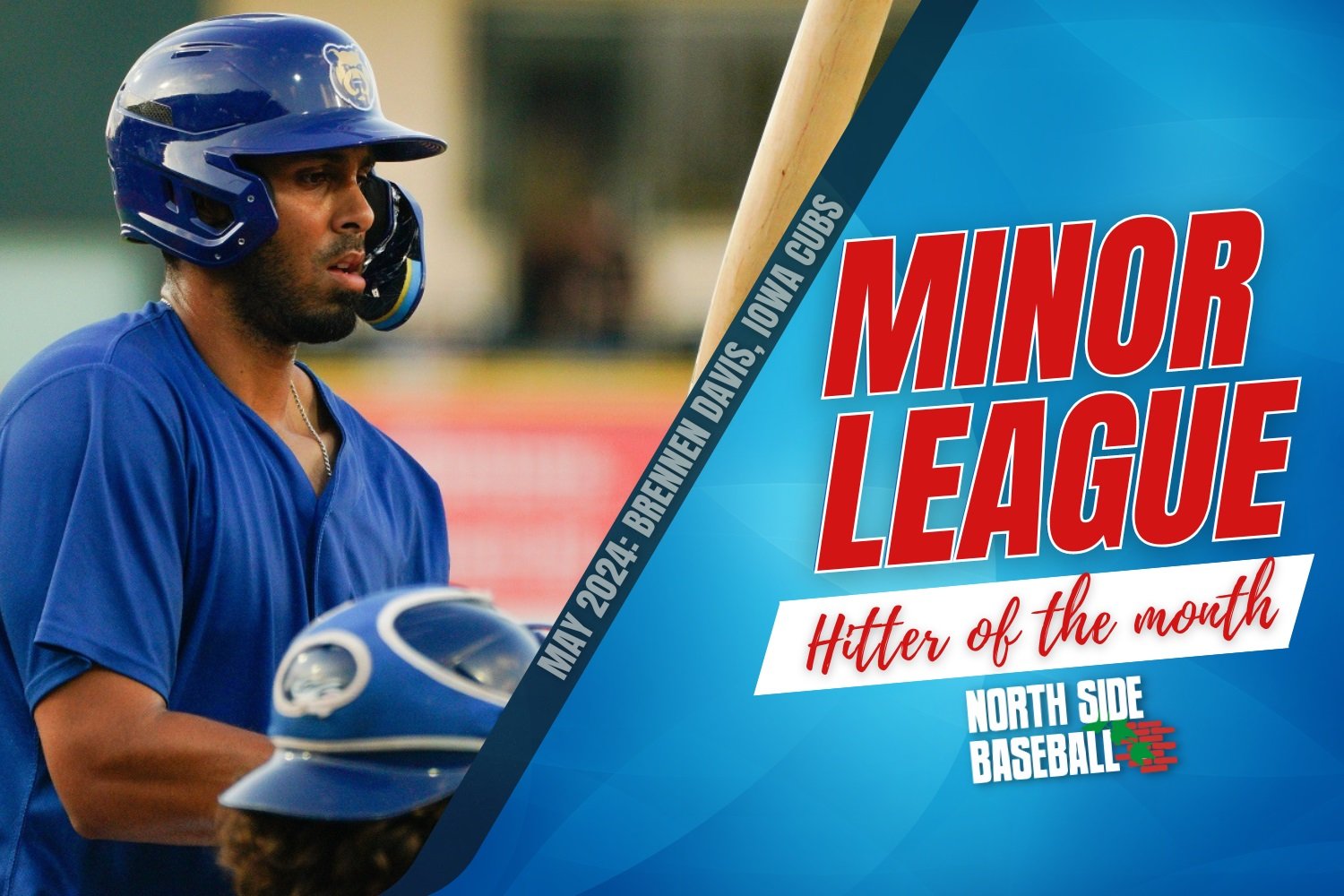 Honorable Mentions C Moises Ballesteros: 124 wRC+, 9.2 BB%, 12.8 K%, 5 2B, 2 HR Ballesteros followed up his Player of the Month-worthy April with a very strong May, continuing to show his incredibly advanced plate discipline for such a young age, especially at Double-A Tennessee. OF Leonel Espinoza: 171 wRC+, 8.3 BB%, 15.0 K%, 4 2B, 2 3B, 2 HR Espinoza played just 13 games in May, but the results were astounding. The 21-year-old has an astounding 27.8 line drive percentage. Unfortunately, he landed on the 7-day injured list, but hopefully, he can get healthy soon and continue this torrid stretch. OF Yohendrick Pinango: 130 wRC+, 7.7 BB%, 18.3 K%, 7 2B, 1 3B, 2 HR Pinango earned himself a mid-month call-up to Double-A, and though he struggled a bit, his performance at High-A earned him a spot in the honorable mentions. He had a 1.092 OPS in High-A, though that number dropped under .600 in Double-A. That said, Pinango will be Rule 5 eligible this off-season and is making a strong case to be protected. Alexander Canario, OF: 147 wRC+, 9.8 BB%, 25.6 K%, 6 2B, 7 HR To begin the month, Canario was in the majors before being optioned back to Triple-A due to several hitters returning from IL stints. Since returning, Canario has continued to showcase his plus power in an every day role. May’s Top 3 Cubs MiLB Hitters of the Month #3 - Pedro Ramirez, 2B/3B: 124 wRC+, 7.3 BB%, 13.8 K%, 4 2B, 3 3B, 2 HR Ramirez is one of the most underrated bats in the Cubs farm system. He’s just 20 years old and one of the younger players in the Midwest League. He is fourth in wRC+ among players aged 20 or younger in the Midwest League and has showcased a fantastic ability to avoid strikeouts. Pedro Ramirez could be a riser in Cubs farm system rankings later in the year. #2 - Felix Stevens, OF/1B: 178 wRC+, 17.8 BB%, 27.7 K%, 2 2B, 7 HR Do you believe in the Steve? I know I do. Stevens’ month of May was incredible, and the only reason he isn’t number one is the fact that he is 24 in High-A. Of course, that doesn’t take away from his performance, but context matters. Stevens displays top-end power but also a lot of swing and miss. It will be interesting to see how he develops–if he can keep the K% below 30%, we could see a call to Double-A soon. May Cubs Minor League Hitter of the Month Brennen Davis, OF: 164 wRC+, 14.0 BB%, 16.3 K%, 2 2B, 7 HR Was there any other option? The Cubs' former #1 prospect has begun to experience a resurgence after suffering a string of injuries dating back to 2022, and the month included a four-game home run streak and a stretch where he hit seven across eight games. Still just 24 years old, Brennen is likely the next man up in the outfield should injuries betray the Cubs again this season.
 -
 Justin Steele finished his second full season of MLB service time with some great numbers. In 30 starts, he threw 173 1/3 innings with a 3.06 ERA, and finished fifth in NL Cy Young Award voting. The underlying numbers were awesome, too. He was 7th in fWAR among pitchers, 14th in K-BB%, and got a ground ball in nearly 50% of all batted balls. What’s more, he was 85th-percentile in Barrel% allowed, and had a very impressive 3.50 xERA, according to Baseball Savant. Steele did all of this while almost exclusively throwing two pitches: a four-seam fastball and a slider. Those two pitches accounted for 96.6% of his total pitches. He sprinkled in a few sinkers, curveballs, and changeups here and there, but they were few and far between. Despite that, he pitched to those aforementioned, incredibly successful results–a truly difficult feat, especially when you consider his stuff isn’t exactly overpowering. He averaged just 91.8 MPH on his fastball, a pitch that acts much more like a cutter than a fastball. His slider was actually the hardest left-handed slider with at least 14 inches of horizontal movement. Basically, his slider slides a lot in a shorter amount of time than most sliders, and these two pitches led him to success. Steele surely could have sat back, felt good, and not tweaked anything. However, in a league that is always adjusting, you have to try and beat the curve–and that is exactly what Steele has done this year. First, let’s look at what may have spurred a change in pitch mix for Steele. For starters, Steele was a reverse-splits guy last year. He struggled to limit damage on contact against left-handed hitters, allowing a Barrel% at 9%, a hard-hit% of 47.2%, and an average exit velocity allowed over 92 MPH. Left-handed hitters had a .337 wOBA against him, while righties hit for just a .280 wOBA. Why, you may ask? Steele’s cut-ride fastball naturally makes it a bit easier for left-handed hitters to find the barrel, and may neutralize righties a bit more. The nature of a cutter allows opposite-handed batters to more easily get jammed, while it may run into a same-handed batter’s barrel. His fastball averaged 1.3 inches of cut last season–it’s not hard to see why that happened. Even that being said, Steele (or the Cubs) could have let it be, and let Steele continue to be a two-pitch pitcher. However, in his last few starts (specifically, since May 16th, his fourth start of the season and second against the Pirates), the sinker is his most used pitch against lefties. Actually, he has only thrown three sinkers to right-handed batters all season–and it should, and more than likely will, stay that way. The pitch offers a lot more armside run than his four-seam fastball. Typically speaking, these types of pitches are able to neutralize same-handed batters more effectively than opposite-handed batters. Because they are more horizontally-oriented pitches, they can much more easily cause same-handed batters to mishit baseballs, whereas a sinker to an opposite-handed hitter might run into the barrel--not unlike the way Steele's cutter plows into lefties' barrels sometimes. The early returns on Steele’s sinker have been very promising. Of course, small sample size caveats apply here, but Steele’s sinker has produced a 2.4 RV/100 pitches–a mark in the upper 20th percentile among all sinkers. He has also dropped his Barrel% against lefties to 4.8%. Obviously, his fastball is a good pitch, but it just doesn’t quite play as well against lefties as a sinker may. This type of change to his arsenal could help the lefty to leap to yet another level of pitching. I know the results have been disappointing so far, but Steele is still running strong peripheral numbers, with similar walk and strikeout rates as last season. We saw Steele have great success Monday in Milwaukee, and part of it was increased confidence working inside--even against lefties, whom he struggled to crowd last season the way he did righties. It also seems as if Steele is throwing his changeup ever so slightly more to right-handed batters. It’s worth noticing that, while Steele was throwing changeups almost exclusively late in games last year, this year he seems to be throwing it more often, earlier in the game. He’s already thrown three changeups the first time through the order; last year, he threw just four all year. It’s not huge, but maybe there are signs that Steele is just beginning to develop feel for this pitch–and that could be a game-changer as well. Of course, I’m not saying that these changes are going to elevate Steele to “best pitcher in baseball” status, but the ability to adapt to the league around him is very important. If he can elevate his sinker and changeup from change-of-pace pitches to legit parts of his repertoire, he can be even better than he already was. It’s an ever-changing game, and if you don’t adjust, the league will.
 -
The work of becoming and then being an ace is never done. Last year, the Chicago Cubs got ace-caliber production from Justin Steele, but he's not resting on his laurels. A new campaign has brought with it a new version of Steele--and maybe, in time, the best version yet. Image courtesy of © Benny Sieu-USA TODAY Sports Justin Steele finished his second full season of MLB service time with some great numbers. In 30 starts, he threw 173 1/3 innings with a 3.06 ERA, and finished fifth in NL Cy Young Award voting. The underlying numbers were awesome, too. He was 7th in fWAR among pitchers, 14th in K-BB%, and got a ground ball in nearly 50% of all batted balls. What’s more, he was 85th-percentile in Barrel% allowed, and had a very impressive 3.50 xERA, according to Baseball Savant. Steele did all of this while almost exclusively throwing two pitches: a four-seam fastball and a slider. Those two pitches accounted for 96.6% of his total pitches. He sprinkled in a few sinkers, curveballs, and changeups here and there, but they were few and far between. Despite that, he pitched to those aforementioned, incredibly successful results–a truly difficult feat, especially when you consider his stuff isn’t exactly overpowering. He averaged just 91.8 MPH on his fastball, a pitch that acts much more like a cutter than a fastball. His slider was actually the hardest left-handed slider with at least 14 inches of horizontal movement. Basically, his slider slides a lot in a shorter amount of time than most sliders, and these two pitches led him to success. Steele surely could have sat back, felt good, and not tweaked anything. However, in a league that is always adjusting, you have to try and beat the curve–and that is exactly what Steele has done this year. First, let’s look at what may have spurred a change in pitch mix for Steele. For starters, Steele was a reverse-splits guy last year. He struggled to limit damage on contact against left-handed hitters, allowing a Barrel% at 9%, a hard-hit% of 47.2%, and an average exit velocity allowed over 92 MPH. Left-handed hitters had a .337 wOBA against him, while righties hit for just a .280 wOBA. Why, you may ask? Steele’s cut-ride fastball naturally makes it a bit easier for left-handed hitters to find the barrel, and may neutralize righties a bit more. The nature of a cutter allows opposite-handed batters to more easily get jammed, while it may run into a same-handed batter’s barrel. His fastball averaged 1.3 inches of cut last season–it’s not hard to see why that happened. Even that being said, Steele (or the Cubs) could have let it be, and let Steele continue to be a two-pitch pitcher. However, in his last few starts (specifically, since May 16th, his fourth start of the season and second against the Pirates), the sinker is his most used pitch against lefties. Actually, he has only thrown three sinkers to right-handed batters all season–and it should, and more than likely will, stay that way. The pitch offers a lot more armside run than his four-seam fastball. Typically speaking, these types of pitches are able to neutralize same-handed batters more effectively than opposite-handed batters. Because they are more horizontally-oriented pitches, they can much more easily cause same-handed batters to mishit baseballs, whereas a sinker to an opposite-handed hitter might run into the barrel--not unlike the way Steele's cutter plows into lefties' barrels sometimes. The early returns on Steele’s sinker have been very promising. Of course, small sample size caveats apply here, but Steele’s sinker has produced a 2.4 RV/100 pitches–a mark in the upper 20th percentile among all sinkers. He has also dropped his Barrel% against lefties to 4.8%. Obviously, his fastball is a good pitch, but it just doesn’t quite play as well against lefties as a sinker may. This type of change to his arsenal could help the lefty to leap to yet another level of pitching. I know the results have been disappointing so far, but Steele is still running strong peripheral numbers, with similar walk and strikeout rates as last season. We saw Steele have great success Monday in Milwaukee, and part of it was increased confidence working inside--even against lefties, whom he struggled to crowd last season the way he did righties. It also seems as if Steele is throwing his changeup ever so slightly more to right-handed batters. It’s worth noticing that, while Steele was throwing changeups almost exclusively late in games last year, this year he seems to be throwing it more often, earlier in the game. He’s already thrown three changeups the first time through the order; last year, he threw just four all year. It’s not huge, but maybe there are signs that Steele is just beginning to develop feel for this pitch–and that could be a game-changer as well. Of course, I’m not saying that these changes are going to elevate Steele to “best pitcher in baseball” status, but the ability to adapt to the league around him is very important. If he can elevate his sinker and changeup from change-of-pace pitches to legit parts of his repertoire, he can be even better than he already was. It’s an ever-changing game, and if you don’t adjust, the league will. View full article
-
What Changes Are on the Horizon for the Cubs' Starting Rotation?
Jake Russell posted an article in Cubs
 With Jordan Wicks beginning his rehab assignment this week, some interesting questions have come up about the Cubs rotation. Shota Imanaga has been lights-out this year, while Justin Steele (despite a slow, injury-disrupted start of the season) has a 3.24 ERA since 2022 and placed fifth in NL Cy Young voting last season. Jameson Taillon is in the second season of a four-year, $68-million contract (and pitching to good results this year), while Javier Assad has a minuscule 1.49 ERA–with a 2.47 ERA as a starter, dating back to his rookie season. As for Kyle Hendricks, Craig Counsell has confirmed that he will continue making starts for the time being. The question must be asked: What will the Cubs do with the rotation with some key contributors returning soon? Obviously, Imanaga, Steele, and Taillon are guaranteed rotation spots at the moment. I’d like to think Assad is, as well, given how well he has performed. I think it would be hard to defend taking Assad out of the rotation at this point, but I find it equally unlikely that the Cubs run a six-man rotation. That arrangement means fewer innings for your best arms, which is fine if you don’t have a great top of the rotation. The Cubs, on the other hand, have Steele and Imanaga, who are both arguably aces. I’m not sure taking away innings from them in favor of Hendricks, or even Taillon, is advantageous to the Cubs. The most logical solution is for the Cubs to move Hendricks out of the rotation, whether that be to the bullpen or by designating him for assignment--or even another IL stint (which seems unlikely). However, just because it’s the most logical, doesn’t mean it’s the most likely to happen. The Cubs certainly have shown a (well-earned) loyalty to Hendricks, and a willingness to stick with him through the tougher times (of which there have been too many the past few years). Plus, Hendricks is set to hit 10 years of service time right around the All-Star Break of this year, and I have a hard time believing the Cubs will get rid of one of their World Series heroes who is so close to such a huge career milestone. Whether that is right or wrong is a conversation that can be had, but it’s certainly a point to consider. So, you have to ask whether or not a move to the bullpen could be in the cards. Hendricks doesn’t quite seem like the type of pitcher whose stuff would benefit from short bursts of high-intensity throwing, but it may be more plausible than people think. This is kind of comparing apples to oranges, and sample size caveats apply, but so far in 2024, Hendricks has allowed just a 2.57 ERA in the first inning, with a 28.6 K% and a 7.1 BB%. If we take a look at his first time through the order stats, he is allowing a 6.14 ERA, but that is coupled with a 28.6 K%, 4.8 BB%, and a ground-ball rate over 50%. So maybe (just maybe) there’s a chance he could be useful out of the bullpen? It seems unlikely, but that is definitely an option the Cubs may have to consider. As I said earlier, Imanaga, Steele, and Taillon are almost locks to remain in the rotation. Assad seems as if he would be as well. The one thing to consider with Assad, though, is that he has had a swingman role in the past–and been successful with it. Plus, that was likely the role he would have entered the season with, had Steele not gotten injured. Assad also has much better underlying numbers this year: the strikeouts are up, the walks are down, and he is more effectively limiting hard contact. Jordan Wicks, though, has made some improvements, too. Despite lackluster results, Wicks has made some pretty big changes to his arsenal this season. Known for his changeup, the lefty had been a reverse splits guy in the minors. In 2023, across the top two levels of the minors, he had a K% of 29% versus righties and a BB% of 8.1%, versus a K% of 19.8% and BB% of 9.9% against lefties. In 2024, Wicks has made drastic improvements to both his slider and his four-seam fastball. He’s added nearly 1 MPH to his four-seamer, and 2.1 inches of induced vertical break. On his slider, he added 3.3 inches of glove-side movement while actually throwing the pitch harder on average, which is an incredible feat. This should, theoretically, help him to neutralize lefties better. I don’t think you can leave Wicks out of the rotation once he is healthy again; it shouldn’t even be a discussion. The worst thing the Cubs can do, in my opinion, is let Hendricks go down the Adam Wainwright road and have him throw uncompetitive start after uncompetitive start–especially given that the Cubs are competing for a playoff spot this year. I understand that front offices are always going to be more cautious than fans would prefer, but when Hendricks has back-to-back poor starts against the Pirates, it feels like his run might be over. Essentially, the Cubs have three options: run a six-man rotation, cut bait with Hendricks, or move Hendricks to the bullpen. Each of the latter two options involves moving Wicks back into the rotation. I’m sure the Cubs' string of injuries discourages them from wanting to get rid of a starting pitcher completely, but that might be their best option, given they do have Hayden Wesneski, Ben Brown, and even Cade Horton at the ready (or nearly so). I’m thankful for everything that Hendricks has done for the organization, but once Wicks comes back, he should take that spot, and the organization shouldn’t look back.
 -
As the Cubs' starting rotation inches back toward full strength, the team could face a dilemma. What changes will they make to accommodate their returning southpaw, and the potential arrival of an elite prospect? Image courtesy of © Matt Marton-USA TODAY Sports With Jordan Wicks beginning his rehab assignment this week, some interesting questions have come up about the Cubs rotation. Shota Imanaga has been lights-out this year, while Justin Steele (despite a slow, injury-disrupted start of the season) has a 3.24 ERA since 2022 and placed fifth in NL Cy Young voting last season. Jameson Taillon is in the second season of a four-year, $68-million contract (and pitching to good results this year), while Javier Assad has a minuscule 1.49 ERA–with a 2.47 ERA as a starter, dating back to his rookie season. As for Kyle Hendricks, Craig Counsell has confirmed that he will continue making starts for the time being. The question must be asked: What will the Cubs do with the rotation with some key contributors returning soon? Obviously, Imanaga, Steele, and Taillon are guaranteed rotation spots at the moment. I’d like to think Assad is, as well, given how well he has performed. I think it would be hard to defend taking Assad out of the rotation at this point, but I find it equally unlikely that the Cubs run a six-man rotation. That arrangement means fewer innings for your best arms, which is fine if you don’t have a great top of the rotation. The Cubs, on the other hand, have Steele and Imanaga, who are both arguably aces. I’m not sure taking away innings from them in favor of Hendricks, or even Taillon, is advantageous to the Cubs. The most logical solution is for the Cubs to move Hendricks out of the rotation, whether that be to the bullpen or by designating him for assignment--or even another IL stint (which seems unlikely). However, just because it’s the most logical, doesn’t mean it’s the most likely to happen. The Cubs certainly have shown a (well-earned) loyalty to Hendricks, and a willingness to stick with him through the tougher times (of which there have been too many the past few years). Plus, Hendricks is set to hit 10 years of service time right around the All-Star Break of this year, and I have a hard time believing the Cubs will get rid of one of their World Series heroes who is so close to such a huge career milestone. Whether that is right or wrong is a conversation that can be had, but it’s certainly a point to consider. So, you have to ask whether or not a move to the bullpen could be in the cards. Hendricks doesn’t quite seem like the type of pitcher whose stuff would benefit from short bursts of high-intensity throwing, but it may be more plausible than people think. This is kind of comparing apples to oranges, and sample size caveats apply, but so far in 2024, Hendricks has allowed just a 2.57 ERA in the first inning, with a 28.6 K% and a 7.1 BB%. If we take a look at his first time through the order stats, he is allowing a 6.14 ERA, but that is coupled with a 28.6 K%, 4.8 BB%, and a ground-ball rate over 50%. So maybe (just maybe) there’s a chance he could be useful out of the bullpen? It seems unlikely, but that is definitely an option the Cubs may have to consider. As I said earlier, Imanaga, Steele, and Taillon are almost locks to remain in the rotation. Assad seems as if he would be as well. The one thing to consider with Assad, though, is that he has had a swingman role in the past–and been successful with it. Plus, that was likely the role he would have entered the season with, had Steele not gotten injured. Assad also has much better underlying numbers this year: the strikeouts are up, the walks are down, and he is more effectively limiting hard contact. Jordan Wicks, though, has made some improvements, too. Despite lackluster results, Wicks has made some pretty big changes to his arsenal this season. Known for his changeup, the lefty had been a reverse splits guy in the minors. In 2023, across the top two levels of the minors, he had a K% of 29% versus righties and a BB% of 8.1%, versus a K% of 19.8% and BB% of 9.9% against lefties. In 2024, Wicks has made drastic improvements to both his slider and his four-seam fastball. He’s added nearly 1 MPH to his four-seamer, and 2.1 inches of induced vertical break. On his slider, he added 3.3 inches of glove-side movement while actually throwing the pitch harder on average, which is an incredible feat. This should, theoretically, help him to neutralize lefties better. I don’t think you can leave Wicks out of the rotation once he is healthy again; it shouldn’t even be a discussion. The worst thing the Cubs can do, in my opinion, is let Hendricks go down the Adam Wainwright road and have him throw uncompetitive start after uncompetitive start–especially given that the Cubs are competing for a playoff spot this year. I understand that front offices are always going to be more cautious than fans would prefer, but when Hendricks has back-to-back poor starts against the Pirates, it feels like his run might be over. Essentially, the Cubs have three options: run a six-man rotation, cut bait with Hendricks, or move Hendricks to the bullpen. Each of the latter two options involves moving Wicks back into the rotation. I’m sure the Cubs' string of injuries discourages them from wanting to get rid of a starting pitcher completely, but that might be their best option, given they do have Hayden Wesneski, Ben Brown, and even Cade Horton at the ready (or nearly so). I’m thankful for everything that Hendricks has done for the organization, but once Wicks comes back, he should take that spot, and the organization shouldn’t look back. View full article
-
Unsung Heroes Propping Up Cubs Over Strenuous, Successful First Month
Jake Russell posted an article in Cubs
 The Cubs have been riddled by injuries throughout the first month of the season, losing multiple key players thus far. In spring training, they lost both Patrick Wisdom and Jameson Taillon to back injuries, though both have made their returns and been productive in their roles in the latter half of this month. Wisdom (though just 11 plate appearances) has a 108 wRC+, while Taillon’s ERA sits at 1.50 after a stellar performance versus the Mets on Monday night. Opening Day took down ace Justin Steele, after he tweaked his hamstring fielding a bunt. Thankfully, Steele is currently on a rehab assignment, and will start Wednesday for Triple-A Iowa. Still, losing him for over a month's worth of starts hurts the team quite a bit. Since then, Craig Counsell's new crew has lost their best hitter in Seiya Suzuki, with an oblique strain. Suzuki posted a 146 wRC+ through 15 games, after having a 126 wRC+ in 2023. That’s not all: Cody Bellinger fractured two ribs running into the brick wall in center field on the last homestand, which prompted the Cubs to call up Pete Crow-Armstrong. Losing your starting center fielder, to whom you've committed to pay $30 million, hurts a lot, especially since Bellinger was starting to heat up. Adding injury to injury, Jordan Wicks is now on the IL with forearm tightness, an injury Steele dealt with last summer. Hopefully, the same will happen for Wicks, who has looked like he could fill the third spot in a rotation nicely. Then there is Kyle Hendricks, who (though he had pitched poorly) was still in the Opening Day rotation, and had a 3.74 ERA in 2023. And Caleb Kilian, one of the Cubs' top depth starters who was reportedly touching 99 in Spring Training, hit the 60-day IL with a shoulder strain. Of course, the bullpen has had its fair share of injuries as well. Both Drew Smyly and Julian Merryweather, the latter of whom is arguably the Cubs' best reliever, hit the IL, rounding out a painfully substantial set of injuries within the first month of the season. Despite all of this, at the time I am writing this, the Cubs are 18-11, have their most-ever wins through April, and lead the Brewers by 0.5 games in the NL Central race. How is this possible, given the plethora of injuries? The answer: the Cubs depth is doing its job. Exhibit A is Mike Tauchman, who was a career 90 wRC+ hitter prior to coming to the Cubs. This season? Tauchman has been the best hitter on the team, hitting for a 169 wRC+ in 88 PAs with just two more strikeouts than walks. Honestly, Tauchman may not be a fourth outfielder anymore–he is likely a starting-caliber player who is behind three fantastic players on the depth chart (those being Happ, Bellinger, and Suzuki). When Suzuki got hurt, Tauchman was able to slot into right field without skipping a beat, but Bellinger getting hurt brought an even tougher road ahead, and it prompted the Cubs to once again call up top prospect Pete Crow-Armstrong. Though Crow-Armstrong had struggled offensively in the minors this year (after his short stint of struggling in the majors last year), the floor with this kid is still super high. He plays incredible defense, as he already has 2 OAA and 2 DRS in just 97 MLB innings in CF. (Small sample size beware, yes, but his calling card is his defense. It’s great to see.) He got his first MLB hit and home run on one swing, the difference maker in the Cubs’ 3-1 win over the Astros to complete the series sweep last Thursday. Being able to bring up talent like this in the absence of one of your star players is great for any team. The Cubs were also able to use Garrett Cooper in Patrick Wisdom’s absence, as he had a 120 wRC+ before being DFAd (perhaps unjustly) for even more young talent, in Matt Mervis. Mervis had a 153 wRC+ in Iowa, forcing the issue with Cubs brass just when the team needed to swap a right-handed bat for a left-handed one on the MLB roster. He hasn’t gotten going yet, but Mervis still has time to figure it out. The upside is tremendous. It’s also incredible just how good Javier Assad has been. He has a 2.00 ERA this year, as he has seen an uptick in strikeout rate (by 3.6%). Last year, he had an ERA of 3.05, too. He wasn’t even supposed to start the year in the rotation, until Taillon got hurt, but Assad has done nothing but pitch well in the majors. This kind of production out of your swingman coming into the season is not expected, but a testament to how deep the Cubs are. Considering that they have Ben Brown and Hayden Wesneski, who have both had to make starts now, that point only grows stronger. Brown owns a 2.51 ERA as a starter (though it’s just three starts), while Wesneski went four innings with just one earned run allowed against the Red Sox in the series finale. The Cubs may not keep getting this kind of production out of their depth guys, but the fact that they have so far is huge. If they had to replace some of their star production with replacement-level players, or even below-replacement-level players, they would likely not be where they are right now. It also goes to show how important playing matchups correctly is. Guys like Wisdom, Nick Madrigal, Alexander Canario, Matt Mervis, and Pete Crow-Armstrong all need to be platooned more often than not, and Counsell has done an excellent job of that. He’s also done a pretty good job of pulling starters (like Brown, and Wesneski especially) before it’s too late. Those guys may not be able to face guys a third time within a game yet, and that is where pitching matchups are key, as well. The Cubs may not be at full strength, and they may not be at any point in time for the rest of the season, but they’ll be able to stay afloat because of how good the depth is on this team. Every single player has a role they can serve while everyday guys (like Suzuki and Bellinger) are out. It’s an overlooked aspect to roster construction in general, but Jed Hoyer could not have done any better in this department.