Brandon Glick
-
Posts
1,153 -
Joined
-
Last visited
Content Type
Profiles
Joomla Posts 1
Chicago Cubs Videos
Chicago Cubs Free Agent & Trade Rumors, Notes, & Tidbits
2026 Chicago Cubs Top Prospects Ranking
News
2023 Chicago Cubs Draft Picks
Guides & Resources
2024 Chicago Cubs Draft Picks
The Chicago Cubs Players Project
2025 Chicago Cubs Draft Pick Tracker
2026 Chicago Cubs Draft Tracker: Picks & Bonuses
Blogs
Events
Forums
Store
Gallery
Everything posted by Brandon Glick
-
How are you feeling about the Cubs right now?
-
The Elder takes on the rookie today...

-
It is very funny (in a sad way) to think the Cubs are one game out from having the second-best record in all of baseball... and they're 5.5 games out of the division lead.
-
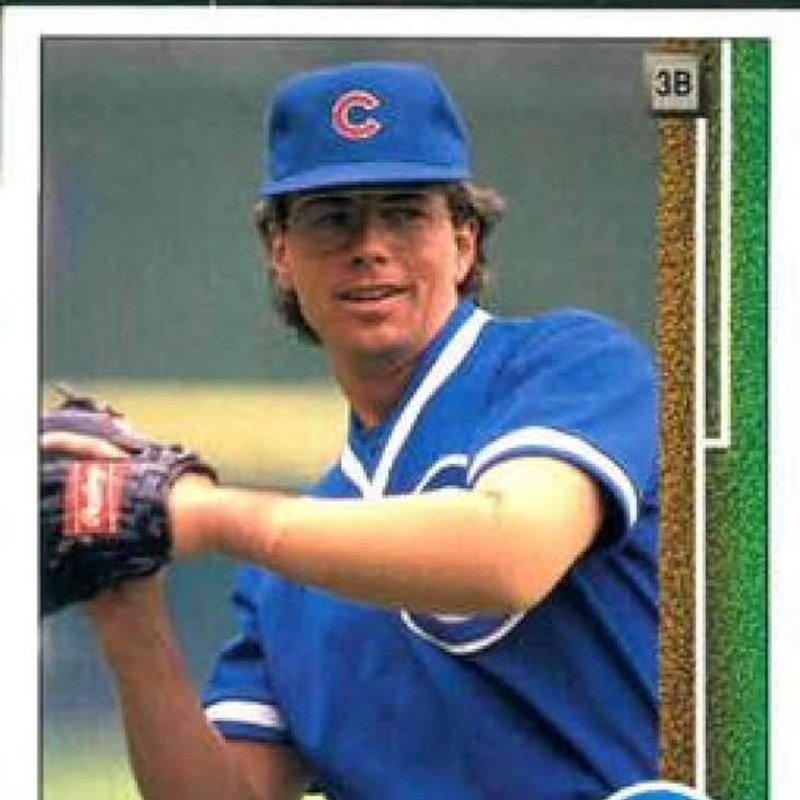 Vance Law is a former MLB infielder who spent 11 years in the major leagues, including two seasons with the Chicago Cubs from 1988-89. Quick: According to WAR, who was the fourth-most valuable position player on the 1988 Cubs after Andre Dawson, Ryne Sandberg, and Rafael Palmeiro? Well, if you purposefully clicked into this player page, I hope you guessed Vance Law, because that is the correct answer. Yes, among the whopping six All-Stars the Cubs had in 1988 (that aforementioned quartet, plus Greg Maddux and Shawon Dunston) was Law, a 31-year-old journeyman who had arguably the finest season of his career in Chicago. The team's starting third baseman for nearly every game that season, Law slashed .293/.358/.412 with 11 home runs, producing 2.2 WAR that bested every season of his career besides 1983 with the White Sox and 1985 with the Expos. If you're wondering how Law got voted into the All-Star game with solid but unspectacular numbers, look no further than his torrid stars, when he set the franchise record for consecutive games with a hit to open a season with 16. No one else comes within five games of that hit streak, with second-place serving as a three-way tie between Jimmy Slagle (1905), Ray Grimes (1923), and Frank Baumholtz (1952) at 11. The son of 1960 Cy Young winner Vern Law, Vance unfortunately fell back to earth in 1989, posting a .651 OPS and -0.4 WAR in 130 games as the team surged to a division title. He drew just three at-bats in the five-game NLCS loss to the Giants, striking out all three times. He left the Cubs after that season for a successful one-year stint with the Chunichi Dragons of the Japan Central League, which he parlayed into one final MLB season in 1991 with the Oakland Athletics. Before coming to the Cubs, Law played for the Pirates (1980-81), White Sox (1982-84), and Expos (1985-87). After his playing career, he returned to his alma mater and became the manager of Brigham Young's baseball team from 2000-2012, going 397–347–2 as BYU's head coach.
 -
Vance Law is a former MLB infielder who spent 11 years in the major leagues, including two seasons with the Chicago Cubs from 1988-89. Quick: According to WAR, who was the fourth-most valuable position player on the 1988 Cubs after Andre Dawson, Ryne Sandberg, and Rafael Palmeiro? Well, if you purposefully clicked into this player page, I hope you guessed Vance Law, because that is the correct answer. Yes, among the whopping six All-Stars the Cubs had in 1988 (that aforementioned quartet, plus Greg Maddux and Shawon Dunston) was Law, a 31-year-old journeyman who had arguably the finest season of his career in Chicago. The team's starting third baseman for nearly every game that season, Law slashed .293/.358/.412 with 11 home runs, producing 2.2 WAR that bested every season of his career besides 1983 with the White Sox and 1985 with the Expos. If you're wondering how Law got voted into the All-Star game with solid but unspectacular numbers, look no further than his torrid stars, when he set the franchise record for consecutive games with a hit to open a season with 16. No one else comes within five games of that hit streak, with second-place serving as a three-way tie between Jimmy Slagle (1905), Ray Grimes (1923), and Frank Baumholtz (1952) at 11. The son of 1960 Cy Young winner Vern Law, Vance unfortunately fell back to earth in 1989, posting a .651 OPS and -0.4 WAR in 130 games as the team surged to a division title. He drew just three at-bats in the five-game NLCS loss to the Giants, striking out all three times. He left the Cubs after that season for a successful one-year stint with the Chunichi Dragons of the Japan Central League, which he parlayed into one final MLB season in 1991 with the Oakland Athletics. Before coming to the Cubs, Law played for the Pirates (1980-81), White Sox (1982-84), and Expos (1985-87). After his playing career, he returned to his alma mater and became the manager of Brigham Young's baseball team from 2000-2012, going 397–347–2 as BYU's head coach. View full player
-
Hand up, had no idea how bad Strider has been this year. He's still whiffing and striking guys out a ton, but this is not the Strider of yore. Hopefully, the Cubs can take advantage,
-
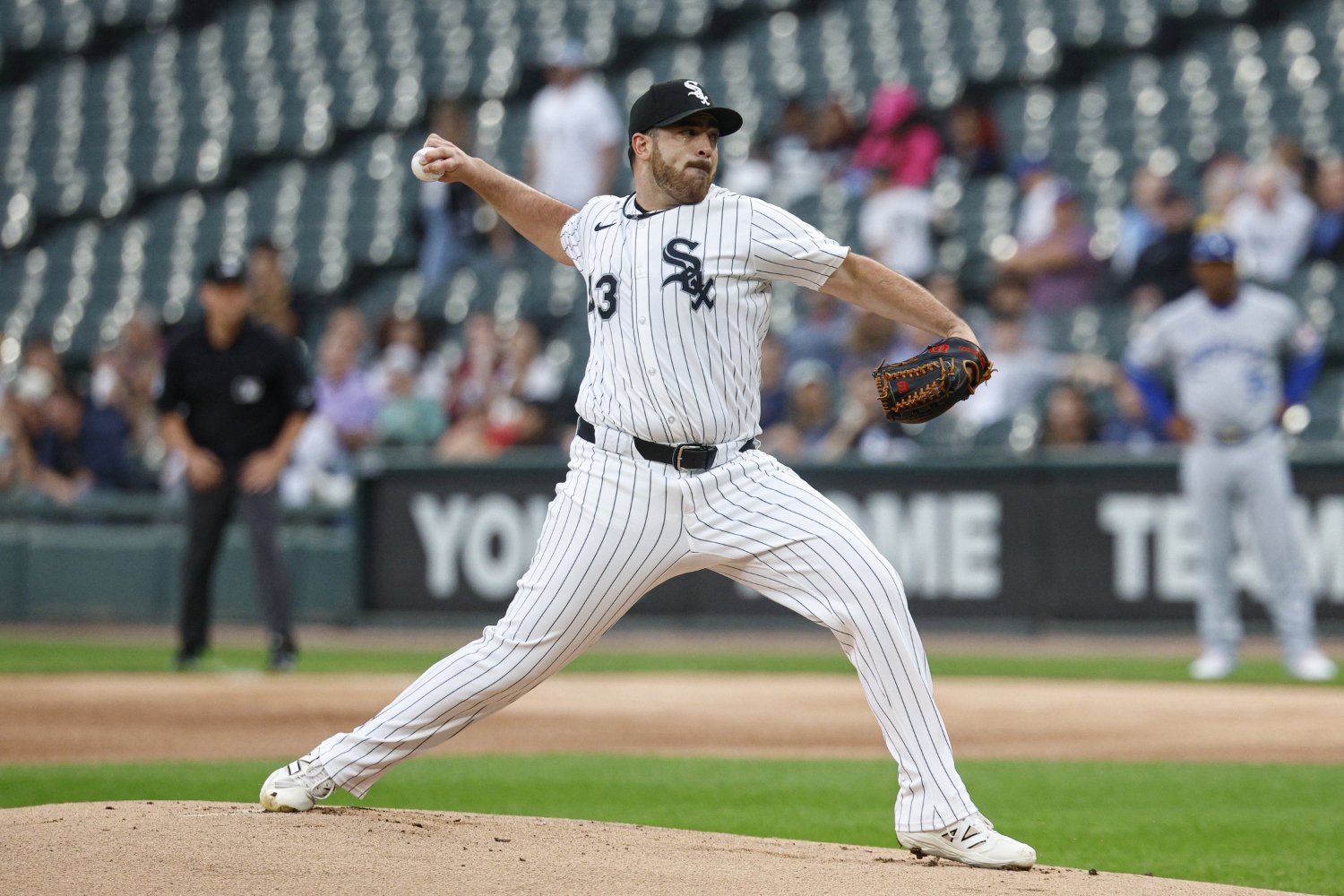 A quiet trade deadline doesn't mean you can't still upgrade your team. Earlier today, the Cubs brought in veteran first baseman Carlos Santana to round out their bench. Now, they're adding two more players to their roster just as rosters expand in September. Civale has been with the White Sox since he was traded for Andrew Vaughn a few months ago. He hasn't been great in either Chicago or Milwaukee this season (5.26 ERA on the season), but he was quite good in July, authoring a 3.86 ERA in 25 2/3 innings prior to the trade deadline. The Cubs now benefit from the White Sox's inability to trade him. Alcantara, meanwhile, gets his second crack at the majors after getting a brief cup of coffee at the end of last season. He's slashing .266/.349/.470 through 102 games in Iowa this year, and he appears ready to make a case for a long-term spot on the roster.
 -
A quiet trade deadline doesn't mean you can't still upgrade your team. Earlier today, the Cubs brought in veteran first baseman Carlos Santana to round out their bench. Now, they're adding two more players to their roster just as rosters expand in September. Civale has been with the White Sox since he was traded for Andrew Vaughn a few months ago. He hasn't been great in either Chicago or Milwaukee this season (5.26 ERA on the season), but he was quite good in July, authoring a 3.86 ERA in 25 2/3 innings prior to the trade deadline. The Cubs now benefit from the White Sox's inability to trade him. Alcantara, meanwhile, gets his second crack at the majors after getting a brief cup of coffee at the end of last season. He's slashing .266/.349/.470 through 102 games in Iowa this year, and he appears ready to make a case for a long-term spot on the roster. View full rumor
-
Report: Cubs Adding Carlos Santana For Stretch Run
Brandon Glick posted a topic in Chicago Cubs Talk
The one thing the Cubs successfully did at the trade deadline was address their porous bench, adding utility man Willi Castro just before the final buzzer sounded. Now, Castro hasn't been great in Chicago (.433 OPS), but his defensive versatility has been huge for a lineup that was overplaying its regulars. Now, the team is adding more depth to the bench, as they appear close to signing Carlos Santana, just days after the Guardians released him: I did a full write-up of Santana a few weeks ago prior to the trade deadline (in regard to his fit with the Red Sox, but the analysis still applies), so to paraphrase myself: he's a 39-year-old former catcher playing in his 16th MLB season. Offensively, Santana isn't quite the voracious slugger he once was, but he's still capable of producing when it counts. Through 116 games (455 plate appearances this season), the veteran is slashing .225/.316/.333, good for an 86 wRC+. His ISO (.109) is down at career-low levels, but his walk (11.4%) and strikeout rates (18.9%) remain positively elite. Santana has become a great defender at first base in recent years, and he's on pace for perhaps his best season with the glove yet. His seven Outs Above Average are in line with the 14 he gave Minnesota in 2024, and his 11 DRS tie his best mark (set in 2023). Cubs fans will remember him best from the 2016 World Series, when he tormented Cubs pitching to the tune of a .771 OPS. Hopefully, he can provide the kind of veteran leadership this club needs to make a deep run in the playoffs. View full rumor -
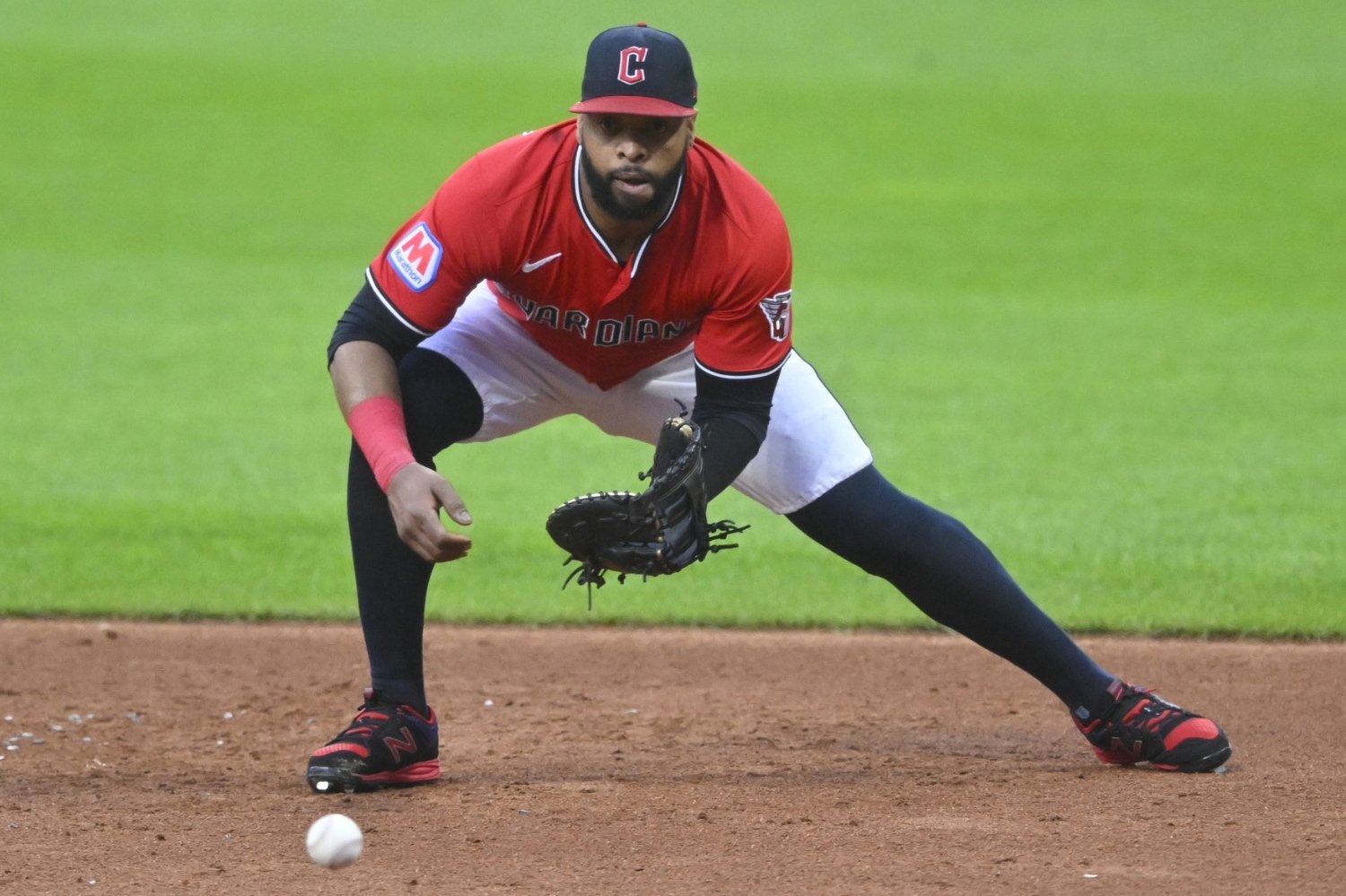 The one thing the Cubs successfully did at the trade deadline was address their porous bench, adding utility man Willi Castro just before the final buzzer sounded. Now, Castro hasn't been great in Chicago (.433 OPS), but his defensive versatility has been huge for a lineup that was overplaying its regulars. Now, the team is adding more depth to the bench, as they appear close to signing Carlos Santana, just days after the Guardians released him: I did a full write-up of Santana a few weeks ago prior to the trade deadline (in regard to his fit with the Red Sox, but the analysis still applies), so to paraphrase myself: he's a 39-year-old former catcher playing in his 16th MLB season. Offensively, Santana isn't quite the voracious slugger he once was, but he's still capable of producing when it counts. Through 116 games (455 plate appearances this season), the veteran is slashing .225/.316/.333, good for an 86 wRC+. His ISO (.109) is down at career-low levels, but his walk (11.4%) and strikeout rates (18.9%) remain positively elite. Santana has become a great defender at first base in recent years, and he's on pace for perhaps his best season with the glove yet. His seven Outs Above Average are in line with the 14 he gave Minnesota in 2024, and his 11 DRS tie his best mark (set in 2023). Cubs fans will remember him best from the 2016 World Series, when he tormented Cubs pitching to the tune of a .771 OPS. Hopefully, he can provide the kind of veteran leadership this club needs to make a deep run in the playoffs.
 -
I will not get too excited over a Rockies sweep. I will not get too excited over a Rockies sweep. I will not get too excited over a Rockies sweep. I will not get too excited over a Rockies sweep. I will not get too excited over a Rockies sweep. I will...
-
Image courtesy of © David Banks-Imagn Images With one month left to go in the regular season, there's just one thing on everyone's minds: awards! I jest, of course, because it appears that the Cubs will be playing baseball in October for the first time since 2020. The NL Central remains just out of arm's reach, but the North Siders still have playoff seeding and home-field advantage in the Wild Card Round to play for. Still, awards season always makes for fun discourse, even if the offense's ice-cold August and the team's overall .500 record for the month have splashed a dose of cold water on some of those dreams. The Cubs figure to be well represented in the voting process, but do they stand to come out on top in any category? We'll cover four of the five major awards: MVP, Cy Young, Rookie of the Year, and Gold (Platinum?) Gloves. Some sections will obviously be longer than others (spoiler alert: the Cubs have a ton of Gold Glove contenders), and we're going to ignore Manager of the Year because Craig Counsell is obviously the team's only contender, and he has little to no chance of winning it. Without further ado, let's take a look at which pieces of hardware the Cubs might take home after the season. National League MVP Award There's not a ton to say here, mostly because Shohei Ohtani exists. And, just in case he were catapulted off the face of the earth by an errant Los Angels trebuchet (you know how common those are), old friend Kyle Schwarber also exists, in all of his four-home-runs-in-one-game glory. If you're wondering which Cubs are going to get some down-ballot love, there's a couple of options. Pete Crow-Armstrong's otherworldly defense (more on that later) and speed/power combo (28 homers, 31 steals) will surely get him enough votes to finish in proximity of the top ten, and Kyle Tucker (team-leading 136 wRC+) currently shares the same odds as him to win the award outright (+20,000). Don't go betting the mortgage on either guy to have the greatest September ever and coming out on top in this race -- Ohtani's 45 home runs and 44 strikeouts (in 32 1/3 innings) on the mound are all but insurmountable -- but they've more or less lived up to the hype as the Cubs' star duo. National League Cy Young Award This one's a bit more frustrating than the MVP race, because the Cubs have a legitimate contender for Cy Young this year: Matthew Boyd. Among all NL pitchers, Boyd ranks fifth in ERA (2.82), tenth in FIP (3.41), eighth in fWAR (3.3), seventh in innings (153 1/3), 14th in strikeout rate (22.6%), seventh in walk rate (5.9%), and 11th in Win Probability Added (1.25). Simply put, this has been a magical season from the southpaw, and he immediately goes down as one of the best free agent signings in franchise history, regardless of how he performs in 2026. He's been worth the total value of his contract ($29 million) this year alone. Unfortunately, ranking in or near the top ten in every notable category isn't the same as ranking in the top three. Paul Skenes bests Boyd in each of those stats, and his lead for the ERA crown (his 2.05 ERA is 0.53 clear of second-place Freddy Peralta) is the same as the difference between fifth-place Boyd and 11th-place Clay Holmes. He won't win the pitching triple crown because the Pirates' laughable offense has given him practically no run support this year, but Zach Wheeler's season-ending injury all but cleared his lane to cruise to a first-place finish. Still, Boyd should finish inside the top five in voting, with a chance to make a shocking run to the podium if he can cap off his brilliant season with an even more brilliant September. National League Rookie of the Year Award This award has been up-and-down all season, but the Cubs appear to have two legitimate contenders for Rookie of the Year, depending on how they finish the season in September. In one corner stands Matt Shaw, the much-maligned third baseman who has become arguably the team's most important player in the second half. Since the All-Star break, Shaw is slashing .284/.325/.633, good for a 160 wRC+ that leads the Cubs in that time. His defense has also been stellar in recent months, and the former top prospects is clearly putting it all together after his early-season funk. Unfortunately, this is a full-season award, and that funk has his overall batting line sitting at .228/.292/.402 (92 wRC+). That won't be good enough to best Isaac Collins of the Brewers (127 wRC+) or Drake Baldwin of the Braves (122 wRC+), but Shaw's late-season surge has pushed his WAR into solid territory (1.2 fWAR). With a strong September, he should finish inside the top five in the voting process. Shaw shouldn't fret too much about that placement, though, because one of his Cubs teammates is emerging as the favorite to win this thing. Cade Horton, after a so-so start to his big league career, has been on fire since July, with a 0.86 ERA, 2.93 FIP, and 23.8% strikeout rate in 42.0 innings since the All-Star break. Yes, he's allowed just four runs in the second half, as this is becoming one of the most memorable stretches of Cubs pitching since Jake Arrieta's historic finish a decade ago. His overall season ERA now sits at just 2.92, and he's the resounding favorite to win the Rookie of the Year award in the Senior Circuit. It's probably too late for him to make a move in the Cy Young race, but if he carries this over to 2026, Skenes is going to have some tough competition. Gold Gloves The Cubs have so many contenders for this award. Let's just break them down player by player. Nico Hoerner Hoerner has been the best defensive second baseman in baseball by a mile this year -- his 12 Outs Above Average (OAA) are three better than second place Andrés Giménez, and he practically laps the field in the NL -- and his 1,100 innings at the position are more than enough to qualify him for every leaderboard, regardless of how frequently he plays the position in the final month of the season. His 18 Defensive Runs Saved (DRS) are almost twice as many as Brice Turang's 10 (second-place in the NL), and the same his true of Hoerner's nine Fielding Run Value (FRV). No matter who you ask, he's been the best keystone defender this year, and he'd be a real contender for the Platinum Glove were it not for one of his teammates. Dansby Swanson I've included Swanson here because of his pedigree (two Gold Gloves), but truth be told, he has no chance of winning the award at shortstop this year. Masyn Winn of the Cardinals has been on another planet (his 21 OAA and 15 FRV are leagues better than everyone else), and DRS actually prefers Mookie Betts (15) and Nick Allen (10). Swanson ranks third in that latter category in the NL (seven DRS), but he has just two OAA and FRV apiece. He could sneak in as a finalist, but Winn and Allen should finish as the top two. Matt Shaw Hey, I know this guy. I mentioned in the ROY section that Shaw's been great defensively, and his eight DRS attests to that (second in the NL). Unfortunately, Statcast's OAA (-2) and FanGraphs' FRV (-1) put a lot of stock into his defensive struggles at the beginning of the campaign, and his six errors rank tied for fifth at the hot corner in the Senior Circuit. Regardless of what voters make of that info, though, Ke'Bryan Hayes is going to win this award in perpetuity. His 18 OAA and 14 FRV are triple any other NL third baseman, and he's got Shaw beat in DRS by a significant margin. After a decade of Nolan Arenado cleaning up this award, it appears another hot corner dynasty has begun. Ian Happ Like Swanson, Happ is here more for pedigree than actual viability. He's the three-time reigning Gold Glover in left field in the NL, though only DRS grades him positively (six DRS). On brand recognition alone, he could get enough love in the voting to finish as a finalist, but Isaac Collins and Brandon Nimmo have been better than Happ according to most metrics. Kyle Tucker Another legacy addition to this list, Tucker won his Gold Glove with the Astros back in 2022. He's been quite solid in right field all year long (one DRS, one FRV, -2 OAA), but the triumvirate of Corbin Carroll, Sal Frelick, and eventual winner Fernando Tatis Jr. will likely keep Tucker from finishing on the podium. Pete Crow-Armstrong Might as well save the best for last. The man known as "PCA" leads all MLB outfielders (by a comfortable margin) with 19 OAA, and his 20 DRS and 20 FRV both top the National League, regardless of position. There's really now way to explain how outrageously good he's been in center field in 2025. He's a shoo-in for the Gold Glove award in center field (despite some tough competition from Victor Scott II), and he's probably the favorite for the Platinum Glove award in the NL at this point in time. What do you think about the Cubs' award chances this season? Let us know in the comments! View full article
-
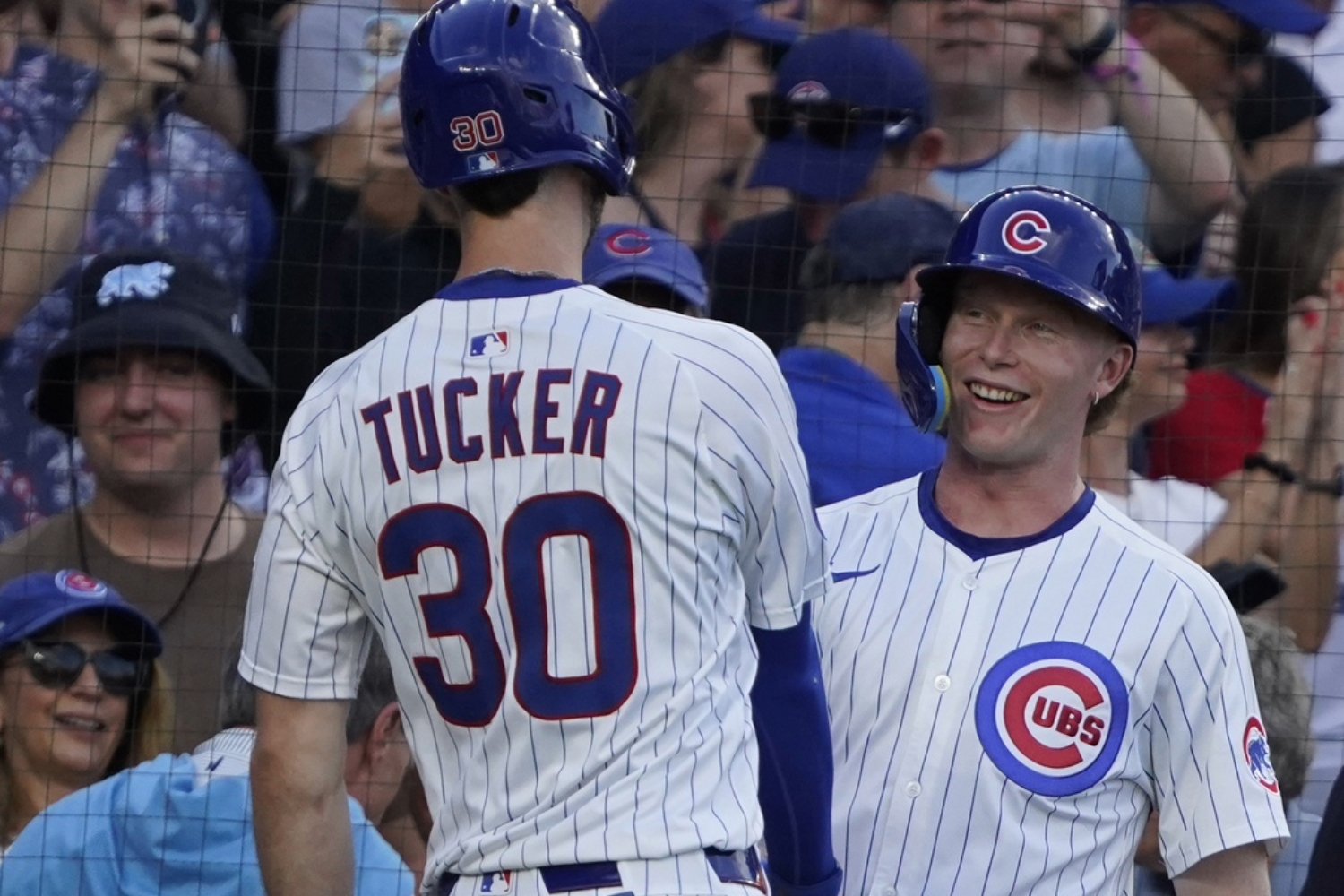 With one month left to go in the regular season, there's just one thing on everyone's minds: awards! I jest, of course, because it appears that the Cubs will be playing baseball in October for the first time since 2020. The NL Central remains just out of arm's reach, but the North Siders still have playoff seeding and home-field advantage in the Wild Card Round to play for. Still, awards season always makes for fun discourse, even if the offense's ice-cold August and the team's overall .500 record for the month have splashed a dose of cold water on some of those dreams. The Cubs figure to be well represented in the voting process, but do they stand to come out on top in any category? We'll cover four of the five major awards: MVP, Cy Young, Rookie of the Year, and Gold (Platinum?) Gloves. Some sections will obviously be longer than others (spoiler alert: the Cubs have a ton of Gold Glove contenders), and we're going to ignore Manager of the Year because Craig Counsell is obviously the team's only contender, and he has little to no chance of winning it. Without further ado, let's take a look at which pieces of hardware the Cubs might take home after the season. National League MVP Award There's not a ton to say here, mostly because Shohei Ohtani exists. And, just in case he were catapulted off the face of the earth by an errant Los Angels trebuchet (you know how common those are), old friend Kyle Schwarber also exists, in all of his four-home-runs-in-one-game glory. If you're wondering which Cubs are going to get some down-ballot love, there's a couple of options. Pete Crow-Armstrong's otherworldly defense (more on that later) and speed/power combo (28 homers, 31 steals) will surely get him enough votes to finish in proximity of the top ten, and Kyle Tucker (team-leading 136 wRC+) currently shares the same odds as him to win the award outright (+20,000). Don't go betting the mortgage on either guy to have the greatest September ever and coming out on top in this race -- Ohtani's 45 home runs and 44 strikeouts (in 32 1/3 innings) on the mound are all but insurmountable -- but they've more or less lived up to the hype as the Cubs' star duo. National League Cy Young Award This one's a bit more frustrating than the MVP race, because the Cubs have a legitimate contender for Cy Young this year: Matthew Boyd. Among all NL pitchers, Boyd ranks fifth in ERA (2.82), tenth in FIP (3.41), eighth in fWAR (3.3), seventh in innings (153 1/3), 14th in strikeout rate (22.6%), seventh in walk rate (5.9%), and 11th in Win Probability Added (1.25). Simply put, this has been a magical season from the southpaw, and he immediately goes down as one of the best free agent signings in franchise history, regardless of how he performs in 2026. He's been worth the total value of his contract ($29 million) this year alone. Unfortunately, ranking in or near the top ten in every notable category isn't the same as ranking in the top three. Paul Skenes bests Boyd in each of those stats, and his lead for the ERA crown (his 2.05 ERA is 0.53 clear of second-place Freddy Peralta) is the same as the difference between fifth-place Boyd and 11th-place Clay Holmes. He won't win the pitching triple crown because the Pirates' laughable offense has given him practically no run support this year, but Zach Wheeler's season-ending injury all but cleared his lane to cruise to a first-place finish. Still, Boyd should finish inside the top five in voting, with a chance to make a shocking run to the podium if he can cap off his brilliant season with an even more brilliant September. National League Rookie of the Year Award This award has been up-and-down all season, but the Cubs appear to have two legitimate contenders for Rookie of the Year, depending on how they finish the season in September. In one corner stands Matt Shaw, the much-maligned third baseman who has become arguably the team's most important player in the second half. Since the All-Star break, Shaw is slashing .284/.325/.633, good for a 160 wRC+ that leads the Cubs in that time. His defense has also been stellar in recent months, and the former top prospects is clearly putting it all together after his early-season funk. Unfortunately, this is a full-season award, and that funk has his overall batting line sitting at .228/.292/.402 (92 wRC+). That won't be good enough to best Isaac Collins of the Brewers (127 wRC+) or Drake Baldwin of the Braves (122 wRC+), but Shaw's late-season surge has pushed his WAR into solid territory (1.2 fWAR). With a strong September, he should finish inside the top five in the voting process. Shaw shouldn't fret too much about that placement, though, because one of his Cubs teammates is emerging as the favorite to win this thing. Cade Horton, after a so-so start to his big league career, has been on fire since July, with a 0.86 ERA, 2.93 FIP, and 23.8% strikeout rate in 42.0 innings since the All-Star break. Yes, he's allowed just four runs in the second half, as this is becoming one of the most memorable stretches of Cubs pitching since Jake Arrieta's historic finish a decade ago. His overall season ERA now sits at just 2.92, and he's the resounding favorite to win the Rookie of the Year award in the Senior Circuit. It's probably too late for him to make a move in the Cy Young race, but if he carries this over to 2026, Skenes is going to have some tough competition. Gold Gloves The Cubs have so many contenders for this award. Let's just break them down player by player. Nico Hoerner Hoerner has been the best defensive second baseman in baseball by a mile this year -- his 12 Outs Above Average (OAA) are three better than second place Andrés Giménez, and he practically laps the field in the NL -- and his 1,100 innings at the position are more than enough to qualify him for every leaderboard, regardless of how frequently he plays the position in the final month of the season. His 18 Defensive Runs Saved (DRS) are almost twice as many as Brice Turang's 10 (second-place in the NL), and the same his true of Hoerner's nine Fielding Run Value (FRV). No matter who you ask, he's been the best keystone defender this year, and he'd be a real contender for the Platinum Glove were it not for one of his teammates. Dansby Swanson I've included Swanson here because of his pedigree (two Gold Gloves), but truth be told, he has no chance of winning the award at shortstop this year. Masyn Winn of the Cardinals has been on another planet (his 21 OAA and 15 FRV are leagues better than everyone else), and DRS actually prefers Mookie Betts (15) and Nick Allen (10). Swanson ranks third in that latter category in the NL (seven DRS), but he has just two OAA and FRV apiece. He could sneak in as a finalist, but Winn and Allen should finish as the top two. Matt Shaw Hey, I know this guy. I mentioned in the ROY section that Shaw's been great defensively, and his eight DRS attests to that (second in the NL). Unfortunately, Statcast's OAA (-2) and FanGraphs' FRV (-1) put a lot of stock into his defensive struggles at the beginning of the campaign, and his six errors rank tied for fifth at the hot corner in the Senior Circuit. Regardless of what voters make of that info, though, Ke'Bryan Hayes is going to win this award in perpetuity. His 18 OAA and 14 FRV are triple any other NL third baseman, and he's got Shaw beat in DRS by a significant margin. After a decade of Nolan Arenado cleaning up this award, it appears another hot corner dynasty has begun. Ian Happ Like Swanson, Happ is here more for pedigree than actual viability. He's the three-time reigning Gold Glover in left field in the NL, though only DRS grades him positively (six DRS). On brand recognition alone, he could get enough love in the voting to finish as a finalist, but Isaac Collins and Brandon Nimmo have been better than Happ according to most metrics. Kyle Tucker Another legacy addition to this list, Tucker won his Gold Glove with the Astros back in 2022. He's been quite solid in right field all year long (one DRS, one FRV, -2 OAA), but the triumvirate of Corbin Carroll, Sal Frelick, and eventual winner Fernando Tatis Jr. will likely keep Tucker from finishing on the podium. Pete Crow-Armstrong Might as well save the best for last. The man known as "PCA" leads all MLB outfielders (by a comfortable margin) with 19 OAA, and his 20 DRS and 20 FRV both top the National League, regardless of position. There's really now way to explain how outrageously good he's been in center field in 2025. He's a shoo-in for the Gold Glove award in center field (despite some tough competition from Victor Scott II), and he's probably the favorite for the Platinum Glove award in the NL at this point in time. What do you think about the Cubs' award chances this season? Let us know in the comments!
 -
Today. the Cubs are at Coors Field and facing a rookie pitcher who, in his only other MLB outing (his MLB debut), surrendered four runs in 3 2/3 innings against the Pirates. As such, the Cubs are on no-hitter watch tonight.
-
If there's ever been a time for a series with the Rockies...
-
Joe Girardi is a former MLB player and manager who spent 15 seasons playing in the major leagues, including parts of seven seasons with the Chicago Cubs. Girardi began his career as a Cubs draft pick, getting selected in the fifth round of the 1986 MLB Draft out of Northwestern. He spent four years in the minor leagues before getting promoted to the majors on Opening Day 1989. His first tenure with the Cubs was relatively uneventful, as he played in 304 games from 1989-92 while slashing .262/.306/.323 with just three home runs, producing 1.7 WAR as one of Chicago's primary catching options. The North Siders did make the playoffs in his rookie campaign on 1989, though Girardi notched just one hit in four games as the division-winning Cubs were beaten in the NLCS in five games by the San Francisco Giants. After the 1992 season, the Cubs left Girardi unprotected in the MLB Expansion Draft, and the Colorado Rockies selected him with the 19th pick of the first round. He wasn't all that much better on the Rockies, batting .274/.323/.371 across three seasons in Colorado, making yet another (lackluster) playoff appearance in 1995. The Yankees finally freed Girardi from the Rockies' clutches, and though he only played four seasons in the Bronx, they were wildly eventful. He won three World Series (1996, 1998, 1999) and caught both Dwight Gooden's no-hitter and David Cone's perfect game. His RBI triple against old friend Greg Maddux in Game 6 of the 1996 World Series was one of the most important events of the late-90s Yankees dynasty. After his postseason heroics in New York, Girardi returned to the Cubs in free agency for one final hurrah. He was named an All-Star in 2000 as an injury replacement for Mike Piazza, and ultimately finished his career with the Cubs (across both tenures) batting .259/.310/.332 with 3.5 bWAR. He left the franchise after the 2002 season to join the St. Louis Cardinals, though he lasted just 16 games there in 2003 before getting released and ultimately retiring from playing. Of course, that was just the beginning of Girardi's story, as he went on to have a very successul coaching career, beginning in Miami. Despite winning the 2006 NL Manager of the Year award, the Marlins fired him after just one season in which the team went 78-84. He remains the only manager in MLB history to win the award with a losing record. Things turned around from there, as he returned to the Yankees in 2008 following Joe Torre's dismissal. He won the 2009 World Series there and won the AL East three times in his 10-year tenure as the Yankees' manager. Ultimately, between Miami, New York, and the Philadelphia Phillies (2020-22), Girardi posted an 1,120-935 record as a manager. Following his firing from Philadelphia, Girardi returned to the Cubs as a broadcaster on Marquee Sports Network, where he continues to appear to this day. He also appears on the YES network during select Yankees broadcasts. View full player
-
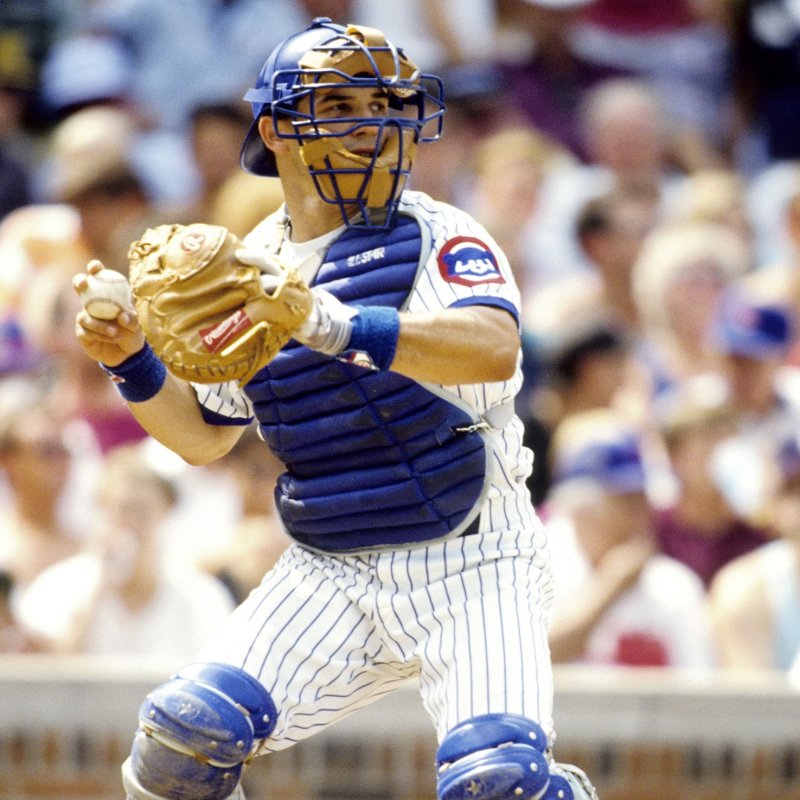 Joe Girardi is a former MLB player and manager who spent 15 seasons playing in the major leagues, including parts of seven seasons with the Chicago Cubs. Girardi began his career as a Cubs draft pick, getting selected in the fifth round of the 1986 MLB Draft out of Northwestern. He spent four years in the minor leagues before getting promoted to the majors on Opening Day 1989. His first tenure with the Cubs was relatively uneventful, as he played in 304 games from 1989-92 while slashing .262/.306/.323 with just three home runs, producing 1.7 WAR as one of Chicago's primary catching options. The North Siders did make the playoffs in his rookie campaign on 1989, though Girardi notched just one hit in four games as the division-winning Cubs were beaten in the NLCS in five games by the San Francisco Giants. After the 1992 season, the Cubs left Girardi unprotected in the MLB Expansion Draft, and the Colorado Rockies selected him with the 19th pick of the first round. He wasn't all that much better on the Rockies, batting .274/.323/.371 across three seasons in Colorado, making yet another (lackluster) playoff appearance in 1995. The Yankees finally freed Girardi from the Rockies' clutches, and though he only played four seasons in the Bronx, they were wildly eventful. He won three World Series (1996, 1998, 1999) and caught both Dwight Gooden's no-hitter and David Cone's perfect game. His RBI triple against old friend Greg Maddux in Game 6 of the 1996 World Series was one of the most important events of the late-90s Yankees dynasty. After his postseason heroics in New York, Girardi returned to the Cubs in free agency for one final hurrah. He was named an All-Star in 2000 as an injury replacement for Mike Piazza, and ultimately finished his career with the Cubs (across both tenures) batting .259/.310/.332 with 3.5 bWAR. He left the franchise after the 2002 season to join the St. Louis Cardinals, though he lasted just 16 games there in 2003 before getting released and ultimately retiring from playing. Of course, that was just the beginning of Girardi's story, as he went on to have a very successul coaching career, beginning in Miami. Despite winning the 2006 NL Manager of the Year award, the Marlins fired him after just one season in which the team went 78-84. He remains the only manager in MLB history to win the award with a losing record. Things turned around from there, as he returned to the Yankees in 2008 following Joe Torre's dismissal. He won the 2009 World Series there and won the AL East three times in his 10-year tenure as the Yankees' manager. Ultimately, between Miami, New York, and the Philadelphia Phillies (2020-22), Girardi posted an 1,120-935 record as a manager. Following his firing from Philadelphia, Girardi returned to the Cubs as a broadcaster on Marquee Sports Network, where he continues to appear to this day. He also appears on the YES network during select Yankees broadcasts.
 -
With the Cubs coming up on their first playoff run since 2020, what about the team is making fans nervous, and what is worth getting excited about? View full video
-
With the Cubs coming up on their first playoff run since 2020, what about the team is making fans nervous, and what is worth getting excited about?
-
As a favor to my mental health, I will not be watching the game today. I am hoping this means Shota will throw a perfect game.
-
For what it's worth, if the Cubs played in literally any other division, they'd be within two games of the division lead (or outright own it).
-
The West Coast road trip continues! Next up: old flame Justin Verlander.
-
Look, obviously I want the Cubs to win. A sweep would be so nice before the day off. But, if there was ever going to be anyone that threw a perfect game against the Cubs (not named Sandy Koufax), it's kinda hard for me to pick someone other than Kyle Hendricks.
-
Despite everything, if the Cubs win tonight, they'll be 20 games over .500 again. Season is far from over.
-
Question of the week: Matt Shaw and RotY
Brandon Glick replied to Brock Beauchamp's topic in Chicago Cubs Talk
Too little, too late to win. Might get some down-ballot love if he finishes strong.