Brandon Glick
-
Posts
1,153 -
Joined
-
Last visited
Content Type
Profiles
Joomla Posts 1
Chicago Cubs Videos
Chicago Cubs Free Agent & Trade Rumors, Notes, & Tidbits
2026 Chicago Cubs Top Prospects Ranking
News
2023 Chicago Cubs Draft Picks
Guides & Resources
2024 Chicago Cubs Draft Picks
The Chicago Cubs Players Project
2025 Chicago Cubs Draft Pick Tracker
2026 Chicago Cubs Draft Tracker: Picks & Bonuses
Blogs
Events
Forums
Store
Gallery
Everything posted by Brandon Glick
-
Playoff-bound with 10 games left. The 1st Wild Card is in sight.

-
It's clinch day!
-
Well, this is a fun pitching matchup.
-
Easiest series left on the schedule (besides the freefalling Mets). Time to take advantage.
-
Well, that was a disappointing Anthony Rizzo day.
-
Seiya Suzuki bobblehead day. Will he answer with a big performance?
-
Fun fact: Besides Yanier Diaz, no one in today's starting lineups has faced the opposing pitcher before.
-
What do Cubs fans have to look forward to in the final few weeks of the regular season? View full video
-
What do Cubs fans have to look forward to in the final few weeks of the regular season?
-
Originally drafted by the Boston Red Sox -- at the time helmed by Theo Epstein and Jed Hoyer -- in the sixth round of the 2007 MLB Draft, Rizzo signed out of Marjory Stoneman Douglas High School to play professional baseball. He quickly ascended to Top 100 prospect status after a 2010 season in which he hit 25 home runs and drove in 100 runs as a 20-year-old, though that prompted the front office to trade him to the San Diego Padres (where Jed Hoyer took over as general manager) along with Casey Kelly, Reymond Fuentes, and Eric Patterson in exchange for Adrian Gonzalez. Though he continued to annihilate minor league pitching, Rizzo struggled badly in his MLB debut for the Padres. In 128 at-bats, he hit just .141 while striking out 46 times. When the Padres acquired Yonder Alonso for Mat Latos, they deemed Rizzo superfluous at first base and sent him to the Chicago Cubs... where Jed Hoyer was once again serving as Theo Epstein's right-hand man. Indeed, in one of the best and most important trades in franchise history, the Cubs acquired Rizzo for Andrew Cashner on Jan. 6, 2012. There is so much to say about Rizzo's decade-long tenure on the North Side of Chicago, only some of which has to do with Hoyer's apparent obsession with the first baseman. The slugging lefty earned three All-Star nods, four Gold Gloves, a Platinum Glove, a World Series ring, and the 2017 Roberto Clemente award. Though most fans recognize him for that 2016 championship, Rizzo has stated that his work with fellow cancer survivors and community service in the greater Chicago area are the greatest feats of his career. In those 10 years on the North Side of Chicago, Rizzo accrued a whopping 37.1 bWAR, hitting .272/.372/.489 with 242 home runs, 784 RBIs, and 62 steals. He ranks sixth all-time in franchise history in home runs, 13th in RBIs, 15th in on-base percentage, 20th in hits (1,311), 10th in OPS (.861), 10th in extra-base hits (538), and, of course, first in hit by pitches (165). Across his entire 14-year MLB career, Rizzo finished eighth all-time in HBPs (222). Yes, Rizzo's unorthodox plate approach, where he choked way up on the bat with two strikes and crowded the plate like no one else in the modern game, was as endearing as it was bizarre to watch. It's hard to pick one, two, or even five favorite Rizzo memories. The tarp catch. That time he struck out Freddie Freeman. The ricochet catch in the World Series. The Bryzzo Souvenir Company. I mean, he caught the last dang out of the greatest World Series of all time! If you're asking me, I think I'd have to point to his home run against Clayton Kershaw and the Los Angeles Dodgers in the 2016 NLCS as my favorite Rizzo memory. The solo shot, which extended the Cubs' lead to 5-0, absolutely did not matter in the final box score (that five-run lead held the rest of the way), but that was the moment where I can remember feeling like, "Holy crap, the Cubs are actually going to win the pennant!" The crowd at Wrigley Field was so loud that the sound actually distorted on the broadcast. As Cubs fans, we'd become so conditioned to expect the other shoe to drop—we just knew, at some point, reality would set in. It was Rizzo who broke that curse for me. Though nothing is confirmed yet, it feels only right that, one day, Rizzo's No. 44 will become the seventh number retired by the franchise. Eventually, Rizzo was traded to the New York Yankees on July 29, 2021, in exchange for Alexander Vizcaíno and Kevin Alcántara; the former quickly left baseball after the deal, while the latter remains one of the top prospects in the Cubs' farm system. He remained in the Bronx for the remainder of his career, playing 370 games and parts of four seasons with the Yankees. His best season came in 2022, when he hit 32 home runs and posted an .817 OPS, though a mismanaged concussion in 2023 all but ended his prime. He returned with a muted performance in 2024 (.637 OPS in 92 games), though he did slash .267/.421/.300 in the postseason. After the season, the Yankees declined his team option, sending him to free agency for the first time in his career. He failed to find a major league contract, opting to sit out the season. On Sept. 10, 2025, Rizzo announced his retirement from professional baseball, joining the Cubs organization in a team ambassador capacity. View full player
-
- 1
-

-
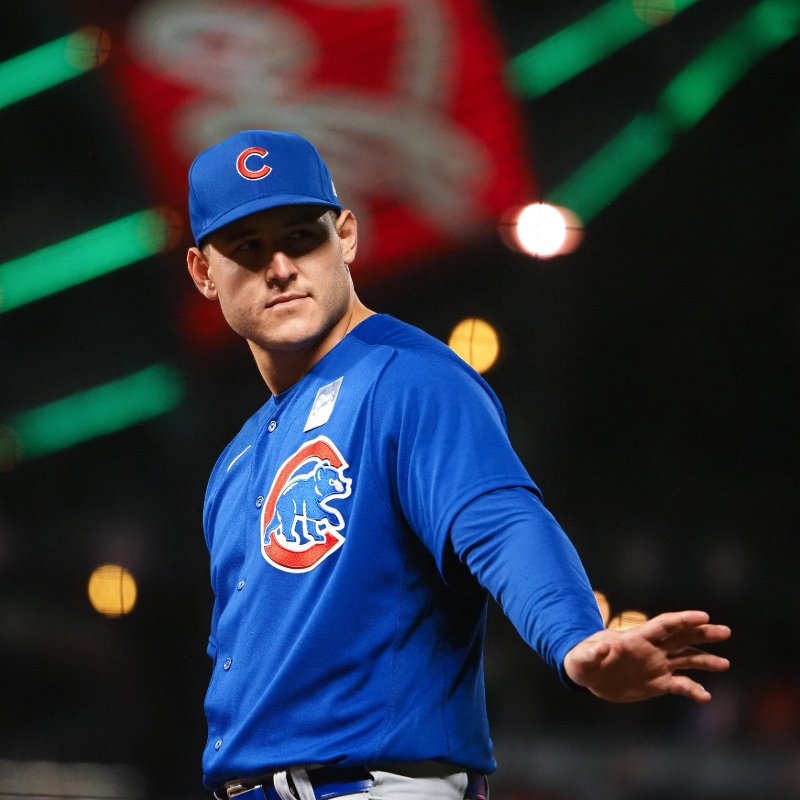 Originally drafted by the Boston Red Sox -- at the time helmed by Theo Epstein and Jed Hoyer -- in the sixth round of the 2007 MLB Draft, Rizzo signed out of Marjory Stoneman Douglas High School to play professional baseball. He quickly ascended to Top 100 prospect status after a 2010 season in which he hit 25 home runs and drove in 100 runs as a 20-year-old, though that prompted the front office to trade him to the San Diego Padres (where Jed Hoyer took over as general manager) along with Casey Kelly, Reymond Fuentes, and Eric Patterson in exchange for Adrian Gonzalez. Though he continued to annihilate minor league pitching, Rizzo struggled badly in his MLB debut for the Padres. In 128 at-bats, he hit just .141 while striking out 46 times. When the Padres acquired Yonder Alonso for Mat Latos, they deemed Rizzo superfluous at first base and sent him to the Chicago Cubs... where Jed Hoyer was once again serving as Theo Epstein's right-hand man. Indeed, in one of the best and most important trades in franchise history, the Cubs acquired Rizzo for Andrew Cashner on Jan. 6, 2012. There is so much to say about Rizzo's decade-long tenure on the North Side of Chicago, only some of which has to do with Hoyer's apparent obsession with the first baseman. The slugging lefty earned three All-Star nods, four Gold Gloves, a Platinum Glove, a World Series ring, and the 2017 Roberto Clemente award. Though most fans recognize him for that 2016 championship, Rizzo has stated that his work with fellow cancer survivors and community service in the greater Chicago area are the greatest feats of his career. In those 10 years on the North Side of Chicago, Rizzo accrued a whopping 37.1 bWAR, hitting .272/.372/.489 with 242 home runs, 784 RBIs, and 62 steals. He ranks sixth all-time in franchise history in home runs, 13th in RBIs, 15th in on-base percentage, 20th in hits (1,311), 10th in OPS (.861), 10th in extra-base hits (538), and, of course, first in hit by pitches (165). Across his entire 14-year MLB career, Rizzo finished eighth all-time in HBPs (222). Yes, Rizzo's unorthodox plate approach, where he choked way up on the bat with two strikes and crowded the plate like no one else in the modern game, was as endearing as it was bizarre to watch. It's hard to pick one, two, or even five favorite Rizzo memories. The tarp catch. That time he struck out Freddie Freeman. The ricochet catch in the World Series. The Bryzzo Souvenir Company. I mean, he caught the last dang out of the greatest World Series of all time! If you're asking me, I think I'd have to point to his home run against Clayton Kershaw and the Los Angeles Dodgers in the 2016 NLCS as my favorite Rizzo memory. The solo shot, which extended the Cubs' lead to 5-0, absolutely did not matter in the final box score (that five-run lead held the rest of the way), but that was the moment where I can remember feeling like, "Holy crap, the Cubs are actually going to win the pennant!" The crowd at Wrigley Field was so loud that the sound actually distorted on the broadcast. As Cubs fans, we'd become so conditioned to expect the other shoe to drop—we just knew, at some point, reality would set in. It was Rizzo who broke that curse for me. Though nothing is confirmed yet, it feels only right that, one day, Rizzo's No. 44 will become the seventh number retired by the franchise. Eventually, Rizzo was traded to the New York Yankees on July 29, 2021, in exchange for Alexander Vizcaíno and Kevin Alcántara; the former quickly left baseball after the deal, while the latter remains one of the top prospects in the Cubs' farm system. He remained in the Bronx for the remainder of his career, playing 370 games and parts of four seasons with the Yankees. His best season came in 2022, when he hit 32 home runs and posted an .817 OPS, though a mismanaged concussion in 2023 all but ended his prime. He returned with a muted performance in 2024 (.637 OPS in 92 games), though he did slash .267/.421/.300 in the postseason. After the season, the Yankees declined his team option, sending him to free agency for the first time in his career. He failed to find a major league contract, opting to sit out the season. On Sept. 10, 2025, Rizzo announced his retirement from professional baseball, joining the Cubs organization in a team ambassador capacity.
 -
Legendary Cubs first baseman Anthony Rizzo has returned to the franchise to retire. What are some of the best moments of his tenure in Chicago? View full video
-
Legendary Cubs first baseman Anthony Rizzo has returned to the franchise to retire. What are some of the best moments of his tenure in Chicago?
-
The Cubs have won two straight and the Brewers have lost three in a row... and the Cubs are still 5.5 games back in the division. First NL Wild Card, here we come! How are you feeling about the state of the Cubs right now?
-
It was less than 12 months ago that Anthony Rizzo was taking World Series at-bats for the New York Yankees. Far removed from his prime years with the Chicago Cubs, the first baseman was still a key contributor for a team with championship aspirations. Fast-forward to today, and Rizzo has been out of work since the Los Angeles Dodgers beat the Bronx Bombers in Game 5 on Oct. 30, 2024. He was involved in various rumors for first-base-needy teams, including the Cubs, but nothing ever materialized for him in free agency. He sat out the entirety of the regular season, and the expectation was that he'd pursue a contract for the 2026 campaign. Then, a surprise: Anthony Rizzo announced he would be retiring immediately, as a member of the Chicago Cubs. It's a fitting end to a terrific career, one that arguably borders on "legendary" (and certainly would be there had the team not unceremoniously dumped him at the 2021 trade deadline). The history of the Cubs cannot be written without Rizzo, and his influence on that 2016 championship team was immense. So, let's give him the career retrospective he deserves. Originally drafted by the Boston Red Sox -- at the time helmed by Theo Epstein and Jed Hoyer -- in the sixth round of the 2007 MLB Draft, Rizzo signed out of Marjory Stoneman Douglas High School to play professional baseball. He quickly ascended to Top 100 prospect status after a 2010 season in which he hit 25 home runs and drove in 100 runs as a 20-year-old, though that prompted the front office to trade him to the San Diego Padres (where Jed Hoyer took over as general manager) along with Casey Kelly, Reymond Fuentes, and Eric Patterson in exchange for Adrian Gonzalez. Though he continued to annihilate minor league pitching, Rizzo struggled badly in his MLB debut for the Padres. In 128 at-bats, he hit just .141 while striking out 46 times. When the Padres acquired Yonder Alonso for Mat Latos, they deemed Rizzo superfluous at first base and sent him to the Chicago Cubs... where Jed Hoyer was once again serving as Theo Epstein's right-hand man. Indeed, in one of the best and most important trades in franchise history, the Cubs acquired Rizzo for Andrew Cashner on Jan. 6, 2012. There is so much to say about Rizzo's decade-long tenure on the North Side of Chicago, only some of which has to do with Hoyer's apparent obsession with the first baseman. The slugging lefty earned three All-Star nods, four Gold Gloves, a Platinum Glove, a World Series ring, and the 2017 Roberto Clemente award. Though most fans recognize him for that 2016 championship, Rizzo has stated that his work with fellow cancer survivors and community service in the greater Chicago area are the greatest feats of his career. In those 10 years on the North Side of Chicago, Rizzo accrued a whopping 37.1 bWAR, hitting .272/.372/.489 with 242 home runs, 784 RBIs, and 62 steals. He ranks sixth all-time in franchise history in home runs, 13th in RBIs, 15th in on-base percentage, 20th in hits (1,311), 10th in OPS (.861), 10th in extra-base hits (538), and, of course, first in hit by pitches (165). Across his entire 14-year MLB career, Rizzo finished eighth all-time in HBPs (222). Yes, Rizzo's unorthodox plate approach, where he choked way up on the bat with two strikes and crowded the plate like no one else in the modern game, was as endearing as it was bizarre to watch. It's hard to pick one, two, or even five favorite Rizzo memories. The tarp catch. That time he struck out Freddie Freeman. The ricochet catch in the World Series. The Bryzzo Souvenir Company. I mean, he caught the last dang out of the greatest World Series of all time! If you're asking me, I think I'd have to point to his home run against Clayton Kershaw and the Los Angeles Dodgers in the 2016 NLCS as my favorite Rizzo memory. The solo shot, which extended the Cubs' lead to 5-0, absolutely did not matter in the final box score (that five-run lead held the rest of the way), but that was the moment where I can remember feeling like, "Holy crap, the Cubs are actually going to win the pennant!" The crowd at Wrigley Field was so loud that the sound actually distorted on the broadcast. As Cubs fans, we'd become so conditioned to expect the other shoe to drop—we just knew, at some point, reality would set in. It was Rizzo who broke that curse for me. Though nothing is confirmed yet, it feels only right that, one day, Rizzo's No. 44 will become the seventh number retired by the franchise. Eventually, Rizzo was traded to the New York Yankees on July 29, 2021, in exchange for Alexander Vizcaíno and Kevin Alcántara; the former quickly left baseball after the deal, while the latter remains one of the top prospects in the Cubs' farm system. He remained in the Bronx for the remainder of his career, playing 370 games and parts of four seasons with the Yankees. His best season came in 2022, when he hit 32 home runs and posted an .817 OPS, though a mismanaged concussion in 2023 all but ended his prime. He returned with a muted performance in 2024 (.637 OPS in 92 games), though he did slash .267/.421/.300 in the postseason. After the season, the Yankees declined his team option, sending him to free agency for the first time in his career. He failed to find a major league contract, opting to sit out the season. On Sept. 10, 2025, Rizzo announced his retirement from professional baseball, joining the Cubs organization in a team ambassador capacity. View full article
-
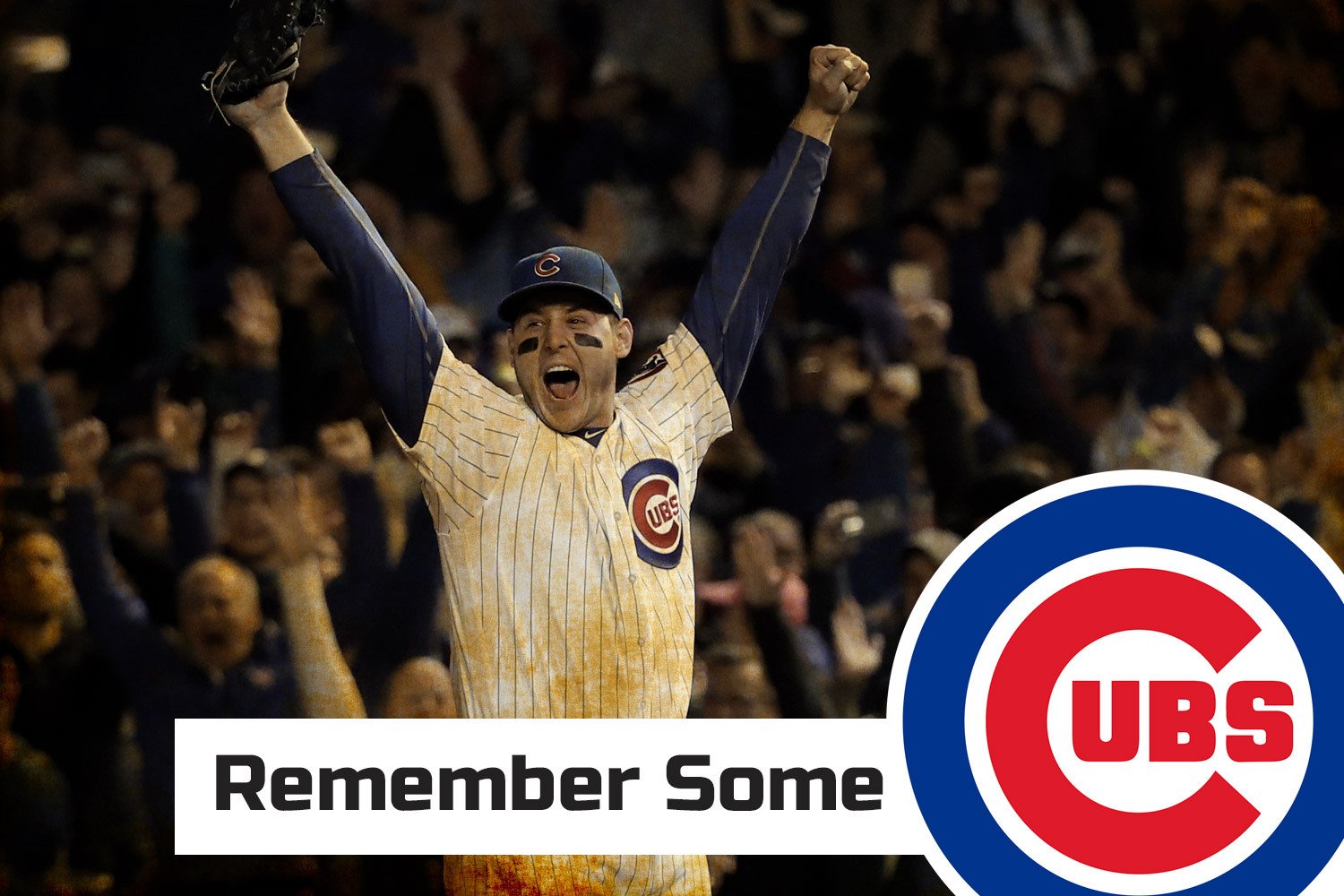 It was less than 12 months ago that Anthony Rizzo was taking World Series at-bats for the New York Yankees. Far removed from his prime years with the Chicago Cubs, the first baseman was still a key contributor for a team with championship aspirations. Fast-forward to today, and Rizzo has been out of work since the Los Angeles Dodgers beat the Bronx Bombers in Game 5 on Oct. 30, 2024. He was involved in various rumors for first-base-needy teams, including the Cubs, but nothing ever materialized for him in free agency. He sat out the entirety of the regular season, and the expectation was that he'd pursue a contract for the 2026 campaign. Then, a surprise: Anthony Rizzo announced he would be retiring immediately, as a member of the Chicago Cubs. It's a fitting end to a terrific career, one that arguably borders on "legendary" (and certainly would be there had the team not unceremoniously dumped him at the 2021 trade deadline). The history of the Cubs cannot be written without Rizzo, and his influence on that 2016 championship team was immense. So, let's give him the career retrospective he deserves. Originally drafted by the Boston Red Sox -- at the time helmed by Theo Epstein and Jed Hoyer -- in the sixth round of the 2007 MLB Draft, Rizzo signed out of Marjory Stoneman Douglas High School to play professional baseball. He quickly ascended to Top 100 prospect status after a 2010 season in which he hit 25 home runs and drove in 100 runs as a 20-year-old, though that prompted the front office to trade him to the San Diego Padres (where Jed Hoyer took over as general manager) along with Casey Kelly, Reymond Fuentes, and Eric Patterson in exchange for Adrian Gonzalez. Though he continued to annihilate minor league pitching, Rizzo struggled badly in his MLB debut for the Padres. In 128 at-bats, he hit just .141 while striking out 46 times. When the Padres acquired Yonder Alonso for Mat Latos, they deemed Rizzo superfluous at first base and sent him to the Chicago Cubs... where Jed Hoyer was once again serving as Theo Epstein's right-hand man. Indeed, in one of the best and most important trades in franchise history, the Cubs acquired Rizzo for Andrew Cashner on Jan. 6, 2012. There is so much to say about Rizzo's decade-long tenure on the North Side of Chicago, only some of which has to do with Hoyer's apparent obsession with the first baseman. The slugging lefty earned three All-Star nods, four Gold Gloves, a Platinum Glove, a World Series ring, and the 2017 Roberto Clemente award. Though most fans recognize him for that 2016 championship, Rizzo has stated that his work with fellow cancer survivors and community service in the greater Chicago area are the greatest feats of his career. In those 10 years on the North Side of Chicago, Rizzo accrued a whopping 37.1 bWAR, hitting .272/.372/.489 with 242 home runs, 784 RBIs, and 62 steals. He ranks sixth all-time in franchise history in home runs, 13th in RBIs, 15th in on-base percentage, 20th in hits (1,311), 10th in OPS (.861), 10th in extra-base hits (538), and, of course, first in hit by pitches (165). Across his entire 14-year MLB career, Rizzo finished eighth all-time in HBPs (222). Yes, Rizzo's unorthodox plate approach, where he choked way up on the bat with two strikes and crowded the plate like no one else in the modern game, was as endearing as it was bizarre to watch. It's hard to pick one, two, or even five favorite Rizzo memories. The tarp catch. That time he struck out Freddie Freeman. The ricochet catch in the World Series. The Bryzzo Souvenir Company. I mean, he caught the last dang out of the greatest World Series of all time! If you're asking me, I think I'd have to point to his home run against Clayton Kershaw and the Los Angeles Dodgers in the 2016 NLCS as my favorite Rizzo memory. The solo shot, which extended the Cubs' lead to 5-0, absolutely did not matter in the final box score (that five-run lead held the rest of the way), but that was the moment where I can remember feeling like, "Holy crap, the Cubs are actually going to win the pennant!" The crowd at Wrigley Field was so loud that the sound actually distorted on the broadcast. As Cubs fans, we'd become so conditioned to expect the other shoe to drop—we just knew, at some point, reality would set in. It was Rizzo who broke that curse for me. Though nothing is confirmed yet, it feels only right that, one day, Rizzo's No. 44 will become the seventh number retired by the franchise. Eventually, Rizzo was traded to the New York Yankees on July 29, 2021, in exchange for Alexander Vizcaíno and Kevin Alcántara; the former quickly left baseball after the deal, while the latter remains one of the top prospects in the Cubs' farm system. He remained in the Bronx for the remainder of his career, playing 370 games and parts of four seasons with the Yankees. His best season came in 2022, when he hit 32 home runs and posted an .817 OPS, though a mismanaged concussion in 2023 all but ended his prime. He returned with a muted performance in 2024 (.637 OPS in 92 games), though he did slash .267/.421/.300 in the postseason. After the season, the Yankees declined his team option, sending him to free agency for the first time in his career. He failed to find a major league contract, opting to sit out the season. On Sept. 10, 2025, Rizzo announced his retirement from professional baseball, joining the Cubs organization in a team ambassador capacity.
 -
Jameson Taillon is back (again)... and he has to face Chris Sale. Let's hope this ends well.
-
Were those the quintessential Cubs and Bears losses last night or what? That was like living through 25 years of ineptitude in one night.
-
It's a good thing the Bears are playing tonight so I can ditch this game if it goes south...
-
Need a series win here.
-
The Cubs have three viable options to serve as their ace for the postseason. Will Cade Horton, Matthew Boyd, or Shota Imanaga get the nod to start Game One?
-
The Cubs have three viable options to serve as their ace for the postseason. Will Cade Horton, Matthew Boyd, or Shota Imanaga get the nod to start Game One? View full video
-
The Cubs' front office made up for a weak trade deadline by making a number of moves to close out September, including adding Carlos Santana and Aaron Civale. View full video
-
The Cubs' front office made up for a weak trade deadline by making a number of moves to close out September, including adding Carlos Santana and Aaron Civale.
-
I can't lie, I really enjoy watching Javier Assad pitch. I think he's the No. 4 starter on this team right now, ahead of Rea and even Taillon (when he's healthy).